



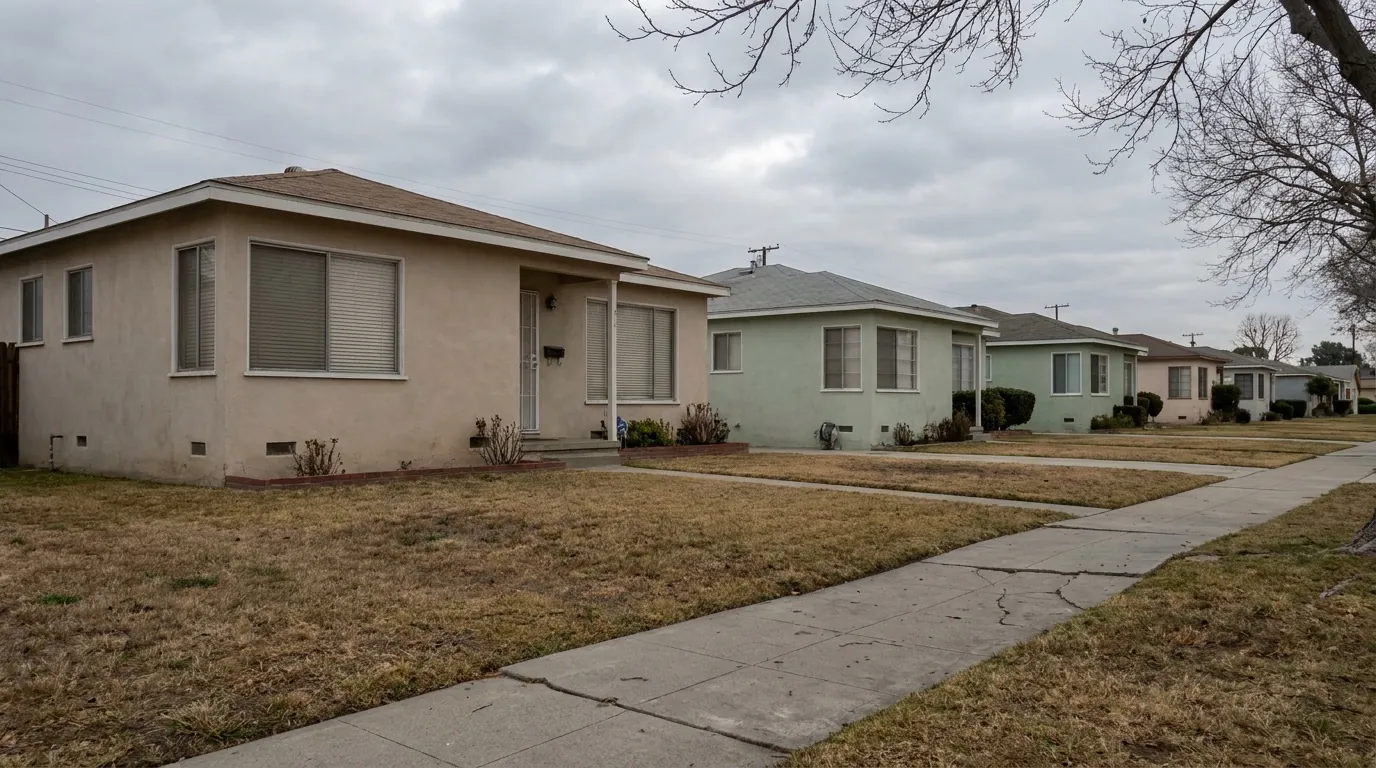
Every conversation about buying a home in the United States arrives, sooner or later, at the same question: what if what happened in 2008 happens again? It is a fair question — that was the only period in four decades when American home prices actually fell, and fell hard.
The market's short answer is that the system changed. The long answer, which is the one that matters to anyone about to sign a mortgage, requires understanding what exactly broke — because the broken part was not home prices. It was credit.
What broke
Between 2003 and 2006, American mortgage lending began approving people who had no way to pay. Three practices explain almost everything:
- Loans with no proof of income. The so-called stated income or "no-doc" loans: the borrower declared income and the bank accepted it. That is the "I showed a pay stub and I was approved" you still hear today.
- Payments that started cheap and exploded later. Adjustable-rate mortgages with a promotional teaser rate for the first two years. The math only worked if the house appreciated and could be refinanced before the reset.
- Risk that left the balance sheet of whoever lent the money. The debts were packaged into securities and resold. Whoever originated the loan did not absorb the loss from a default — and, with no loss in sight, the incentive was to originate volume, not quality.
When prices stopped rising, the saving refinance vanished. Payments reset, delinquency spiked, banks repossessed homes and dumped that inventory on the market all at once. Falling prices left more people owing more than the house was worth, which produced more surrendered homes — the loop that became a global crisis.
The size of the damage, in numbers
It was not a scare: the average price of homes in the United States fell more than 20% between the first quarter of 2007 and the second quarter of 2011. In the fourth quarter of 2008 alone, some indexes measured a drop of more than 18% over twelve months — the worst reading since those series began.
That is the hole that shows up on the annual appreciation chart when the line crosses zero. And it is why the American market spent the following decade rewriting the rules on who can borrow.
What changed in the rules — and it was not little
- Dodd-Frank (2010). The financial reform law created the Consumer Financial Protection Bureau (CFPB) and mandated regulation of mortgage origination.
- The "ability to repay" rule (Ability-to-Repay / Qualified Mortgage), in force since January 2014. The lender is required to verify and document income, assets, debts and history before approving. Loans based on stated, unverified income effectively left the residential market.
- Mandatory transparency at closing (TRID, 2015). The borrower receives a standardized cost estimate up front and the final document in advance, in order to compare. No more surprises at the signing table.
- Independent appraisal of the property. The appraisal came to be ordered with safeguards against pressure from the agent or the seller — inflated appraisals were one of the fuels of the bubble.
- Risk retention. Whoever packages debt for resale must, as a rule, keep a slice of the risk. The incentive switched sides.
Why today's picture is different
Three structural differences explain the market's confidence — and none of them is optimism:
Those who owe can pay. The American mortgage book after 2014 is dominated by borrowers with verified income and good credit, on fixed-rateloans. There is no time bomb of payments that reset on their own.
There is an equity cushion. After years of appreciation, most owners owe far less than the house is worth. In 2008, a 10% drop pushed millions of families into owing more than the property was worth. Today, an equivalent drop hurts without producing a wave of surrendered homes.
Homes are scarce, not surplus. The 2008 crisis was one of excess supply dumped all at once. The current American problem is the opposite — more than a decade of insufficient construction and few homes for sale. Prices fall when supply is in surplus; that is not the picture.
What could still go wrong
Being unlikely is not being impossible, and real estate is local. A regional employment shock, a sharp rise in insurance costs (a hot topic in California), a natural disaster or a heavy tax change can knock down prices in a specific city without the whole country entering a crisis.
The practical conclusion is boring and sound: do not buy counting on a crash to hand you a discount, and do not buy in fear of one either. Buy with margin — a payment that still fits if your income drops, and a horizon long enough to ride out a bad cycle without having to sell.
This text is informational and does not replace legal or financial advice. Federal and state rules change; confirm the current version before deciding.
Sources and verification
- Federal Reserve History — The Great Recession and Its Aftermath: timeline of the mortgage credit crisis and its effects.
- FHFA — House Price Index: decline of more than 20% in the average price between the 1st quarter of 2007 and the 2nd quarter of 2011.
- Dodd-Frank Wall Street Reform and Consumer Protection Act (2010) — creation of the CFPB and mandate to regulate credit origination.
- CFPB — the Ability-to-Repay / Qualified Mortgagerule, effective January 10, 2014: obligation to verify income, debts and ability to repay.
- CFPB — TILA-RESPA Integrated Disclosure (TRID / "Know Before You Owe"), in force since October 2015.
- Appraisal independence rules (appraisal independence) and risk retention in securitization, arising from Dodd-Frank.
Watch this part of the episode:
What we learned from the 2008 crisis and what changed — starting at 4:18 · CADÊ BRAZIL
This article is a reference edition of episode 17 of the podcast and is subject to edits and editorial additions. For the full conversation, watch the episode. — Updated on 10/08/2026.