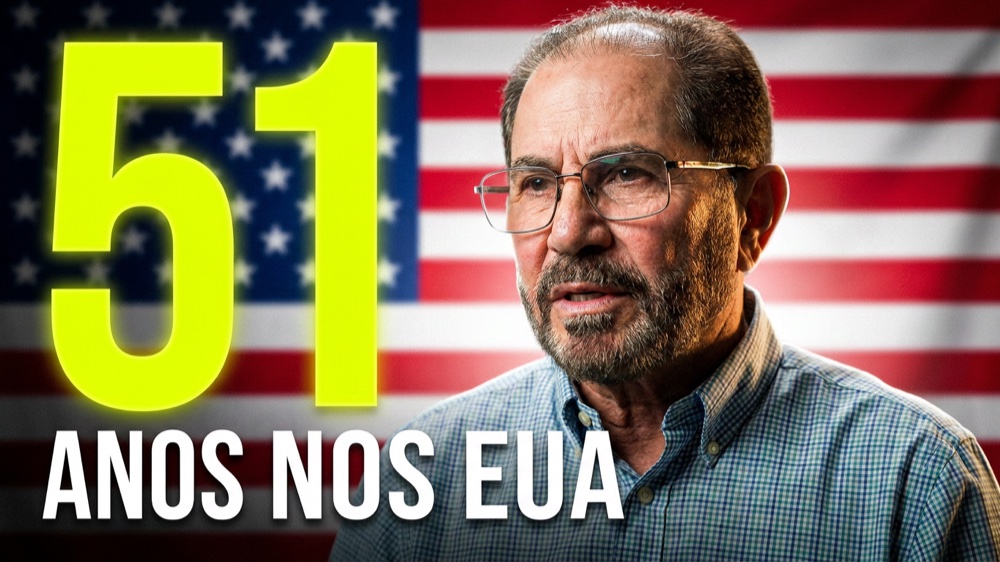


Most Brazilians who die in Los Angeles have someone who answers for them. But not all. In the first episode of the segment "911: Emergency in Los Angeles," Pastor Miguel Albanês tells two stories that sit at the far end of immigrant loneliness — and that help explain what happens, under the law and in practice, when no one shows up.
José's case: the family that said no
José (not his real name) had lived in the United States for many years. He had cancer, went through hospitals and, when there was no treatment left, moved into a hospice — end-of-life palliative care. He died there, in his early fifties. The only relative anyone could reach, in Brazil, replied that he had no relationship with him and wanted nothing to do with it. The pastor doesn't know what happened between the two — breaks like that usually have a long history. The last the pastor heard, months later, the body was still at the Medical Examiner (the county coroner). "I believe he'll be buried as an indigent." "Indigent," here, says nothing about the person's income: it means no one claimed the body.
What the county does with an unclaimed body
Under California law, when no relative with the right to decide takes responsibility, the body becomes the county's charge (Health and Safety Code, section 7104). In Los Angeles, the Medical Examiner tries to locate the family; if no one claims the body, the county arranges cremation. The ashes are kept at the county crematory in Boyle Heights for about three years — a window during which a relative can still claim them by paying a fee. After that, they are buried in a common grave, with an annual interfaith ceremony at the county cemetery. In Brazil, this is what people call being buried as an indigent.
The family can reverse this as long as the process isn't over. And the opposite happens too: the pastor recalls families who badly wanted to come to the funeral but couldn't get a visa, or gave up after earlier denials, and asked friends here to handle everything — with a small ceremony filmed for the parents back in Brazil.
The sailor's case: the body that disappeared
The second story is even harder to accept. A church member, a Brazilian raised in Uruguay, had been a sailor and left children in several European countries. He lived far from all of them and at one point lived in a motorhome. He got sick, was hospitalized and then transferred. When the church went looking, the hospital said he had been taken to another facility whose name it didn't know; the other facility said it never received the patient. A police officer friend tried to help and was told that, without a record, not even the police can find someone. A daughter located in Europe also didn't want to get involved.
If this happens to someone you know, there are formal paths: the hospital's decedent affairs office usually keeps a record of where each body went; the county Department of Medical Examiner can be asked by name; and the Consulate of Brazil can help locate relatives through Brazilian records.
What happens to the belongings of someone who dies alone
In the sailor's case, no one knows what became of a Mercedes, the motorhome, possible bank accounts and paintings that might have had value — money that, the pastor says, could have paid for a dignified burial. Jason Lanzarini, who spent almost two years training in auctions, explains how abandoned property ends up at auction in the United States. California's rules help put timelines on this conversation:
- Self-storage unit: once rent is past due, the company can, after giving notice, sell the contents at a lien sale (California's self-storage law, Business and Professions Code, sections 21700 and following). The process takes a few months, not years. A letter mailed to the address of someone who has died reaches no one.
- Home with unpaid property tax: in California, unpaid property tax puts a property into tax default; after five years in default, the county can take it to auction (Revenue and Taxation Code, section 3691). The timeline is long, but the end result is what the episode describes: a family that doesn't know about the property can lose it.
- Car: if it's financed and the payments stop, the lender can repossess it; if it's left on the street, it gets towed and, with no one to pay the fees, goes to auction.
- Bank account: after about three years with no activity, the balance is transferred to the State — the California State Controller's Unclaimed Property program. Here the difference is a good one: in California there is no deadline to claim. Heirs can search by name on the Controller's website and request the money, with documentation.
For estates where no one is in a position to act, Los Angeles County has the Public Administrator, an office that can investigate, protect the assets and administer the estate of someone who dies without a representative — but it doesn't replace a family that decides to take on the case.
Why this is, above all, a contact problem
The pastor returns to the point that runs through the whole episode: most Brazilians have family who care; what's missing is contact information. He suggests that churches, community groups and the consulate itself think about a protocol — and he makes an appeal to listeners: leave with someone, here and in Brazil, names, phone numbers and a list of what you own; include your spouse and adult children on that list, especially whoever doesn't handle the household finances; anyone with minor children should put in writing who would take care of them. Someone who has distanced themselves from family for safety reasons can leave that list with a trusted person here, without involving anyone back in Brazil. How to build that list is the topic of the next two episodes of the segment.
Sources and verification
- California Health and Safety Code, sections 7100 and 7104 — legal order of who is responsible for the body, and the county's role when no one steps up.
- Los Angeles County Department of Medical Examiner and Office of Decedent Affairs — cremation of unclaimed bodies, storage of ashes and burial at the county cemetery.
- California Business and Professions Code, sections 21700 and following (California Self-Service Storage Facility Act) — sale of storage unit contents for nonpayment.
- California Revenue and Taxation Code, section 3691 — timeline for the sale of property with delinquent property taxes.
- California State Controller's Office — Unclaimed Property (search and recovery of funds with no statute of limitations); Los Angeles County Public Administrator.
- The cases described are accounts given by Pastor Miguel Albanês in the episode; names have been changed.
Who's speaking here: Brasileiros em Los Angeles is the podcast of the Brazilian Community in the Los Angeles area, hosted by Jason Lanzarini, who has organized the Community's Facebook groups in California since 2014. This episode opens the segment "911: Emergency in Los Angeles" with Pastor Miguel Albanês of the First Brazilian Baptist Church of Los Angeles (PIBBLA), who for years has supported Brazilian families through deaths. The names of the people in the cases are fictitious.
Please note: the rules described apply to California — and, in several respects, to Los Angeles County. Procedures differ in other states and counties. This text is general information, not legal advice: for a specific case, consult a professional licensed in California.
Watch this part of the episode:
José's case: dying in hospice, the family's painful abandonment, and a burial as an unclaimed person — starting at 28:52 · ☆ Brasileiros em Los Angeles
This article is a reference edition of episode 1 of the podcast and is subject to edits and editorial additions. For the full conversation, watch the episode. — Updated on 07/10/2026.