
When you buy a house in California, one item in the inspection report tends to change the course of the negotiation: galvanized iron plumbing. It isn't a hidden or rare defect — it's the original pipe in many homes built up to the 1960s in Los Angeles and across the state. The problem is what it reveals about the age of the plumbing and what it does to your insurance.
On the Cadê Brazil podcast, home inspector Aguiar, a guest of realtor Dina Silveira and Jason Lanzarini, sums up the logic: nobody builds a house today and installs galvanized pipe. If the pipe is there, it has been there for decades.
What galvanized pipe is and why it ages badly
Galvanized pipe is steel tubing coated with a layer of zinc to resist corrosion. It was the standard for water lines in American homes for much of the 20th century, until it was replaced by copper and, more recently, by the plastic tubing known as PEX. Over time, the zinc wears away on the inside and the steel rusts. The rust builds up into scale that narrows the water passage — hence the weak pressure and yellowish water in so many older homes — and thins the pipe wall until it leaks.
According to Aguiar, the presence of galvanized pipe already indicates plumbing more than 40 years old and, on the inside, most likely overtaken by rust. The service life usually estimated for this material is between 40 and 60 years — in a house from the 1950s or 1960s, the original plumbing is already past that mark.
There is also a health issue: the Environmental Protection Agency (EPA), the federal environmental agency, warns that old galvanized pipes can accumulate lead coming from sections of lead pipe in the system and release it into the water. Lead is a concern mainly for children and pregnant women; until the problem is fixed, use only cold water for drinking and cooking and let it run for a few seconds after hours without use. Anyone with doubts can have the water tested by a certified laboratory.
Why a leak is so serious in an American house
Most houses in California have a wood frame sitting on a concrete slab or over a crawl space. Water leaking inside a wall or under the floor for weeks soaks the wood, rots the structure and opens the door to mold and termites. That's why the inspector looks for signs of leaks under the sinks, in the bathrooms, in the kitchen and in the crawl space under the floor — and records the plumbing material in the report. "Any kind of leak there is in the house, I'm going to identify it," says Aguiar. The inspection is visual — a leak inside a closed wall may not show up.
Insurance and galvanized pipes
This is where the subject hits your wallet. Many homeowners insurance companies refuse the policy or require the plumbing to be replaced when it's galvanized, precisely because of the risk of leaks and structural damage. The question about the type of plumbing usually appears on the insurer's questionnaire or in the inspection the insurer does before accepting the house.
Aguiar warns about the risk of leaving that information out: if a leak happens and the insurer finds out there was galvanized pipe in the house, it may refuse to cover the damage. California law backs this up — under the California Insurance Code (sections 330 to 334), concealing a material fact when taking out the policy, intentionally or not, allows the insurer to rescind the contract; in practice, the insurer has to show the fact was material, and the decision can be challenged. Hiding the pipe can mean being left without coverage precisely for the claim it caused.
The practical way out, Dina and Jason point out, is to deal with the galvanized pipes in the negotiation: buy the house knowing you'll replace them, and use the cost of the repipe to talk price with the seller. Given home values in California, that cost often becomes a discount that settles the issue.
Copper or PEX: today's two options
In a full replacement (repipe), the most common materials are:
- Copper: rigid pipe, with every joint soldered. Durable — Aguiar speaks of "almost lifetime" durability — and with a good reputation for water quality. It's more expensive in both material and labor, precisely because of the soldering at every connection.
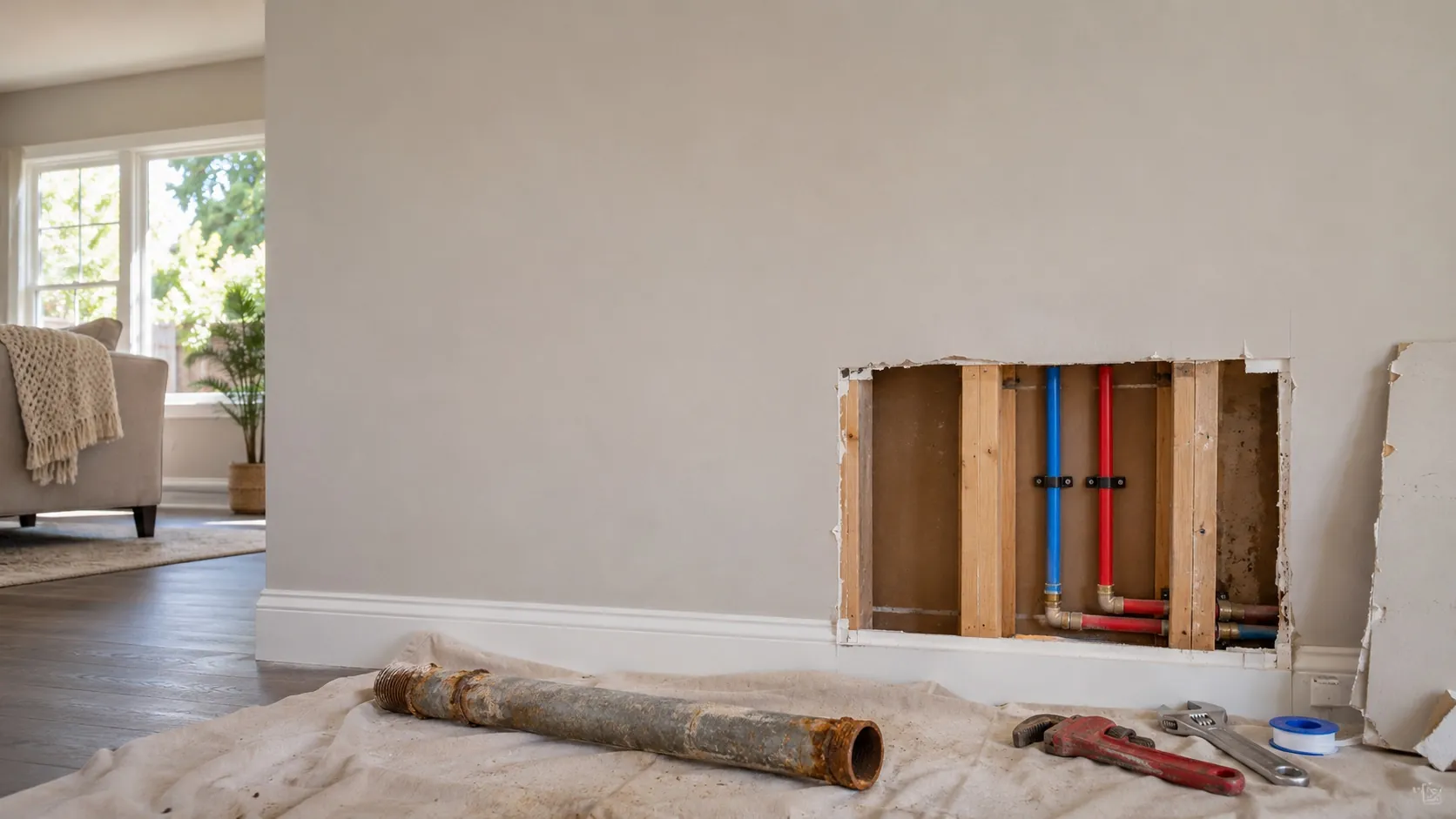
- PEX: cross-linked polyethylene tubing, usually blue for cold water and red for hot, with push-in or crimp fittings. According to Aguiar, it can cost about three times less than copper, installation is faster and repairs are simple: you cut out only the section with the problem. PEX became accepted statewide in the California Plumbing Code starting with the 2010 edition; before that, it depended on local approval.
Both meet code. The choice usually comes down to budget, the owner's preference and the access the house offers.
What sets the price: where the pipes run
The cost of repiping varies a lot — from a few thousand dollars to figures around US$ 15,000, according to the examples Aguiar cites — and the factor that weighs most is access:
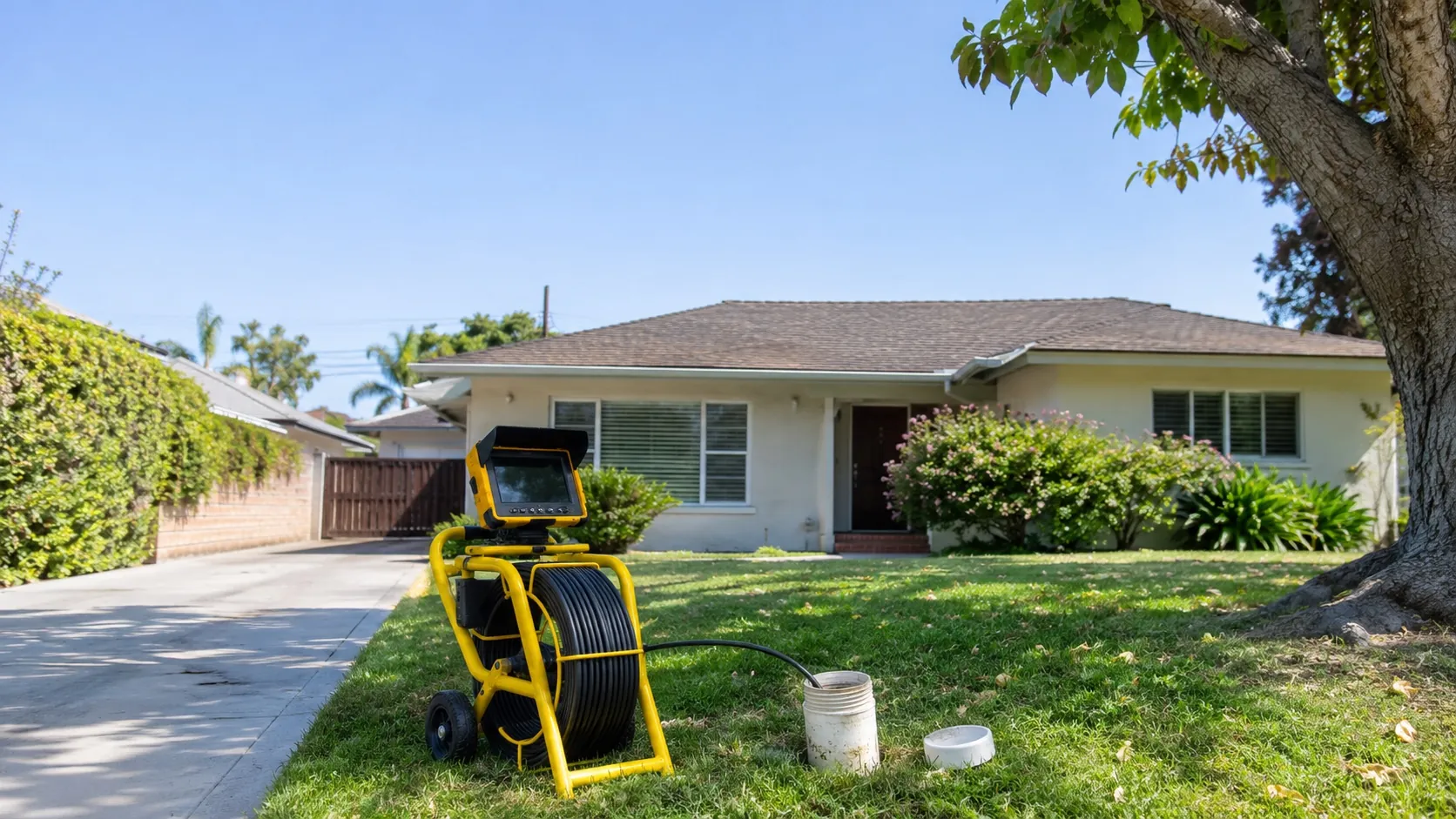
- House with a crawl space, the gap between the floor and the ground that the inspector crawls through: the new plumbing runs underneath and goes straight up to each faucet. It's the simplest case. Dina Silveira considers this type of house more advantageous precisely because any future leak is easy to fix.
- House on a slab, with the concrete floor poured directly on the ground: pipe embedded in the slab means breaking up the floor — the most expensive repair.
- Pipes inside the walls: the walls have to be opened. The difference compared with Brazil, mentioned in the episode, is that interior walls here are drywall (gypsum board), much easier to open and patch than masonry. Even so, there's the cost of patching and painting.
In new construction, Aguiar says, PEX usually runs through the attic, between the ceiling and the roof, and comes down through the walls. In older houses without that path, the repipe is often done from below.
Permit and city inspection
Replacing a home's plumbing is work that requires a permit from the city's building department — in Los Angeles, the Los Angeles Department of Building and Safety (LADBS). As Aguiar explains, the wall cannot be closed before the city inspector sees the exposed plumbing and approves the installation. If you're buying, it's worth asking the seller whether a repipe that was already done had a permit and final inspection: unpermitted work can become a problem at resale and with insurance.
How to use this when buying
- Check the inspection report for the material of the water lines and for any signs of leaks.
- While still within the contract's inspection period, ask the insurer whether it will accept the house and get a quote from a licensed plumber.
- With the quote in hand, negotiate: a repair by the seller, a credit at closing or a price reduction — the outcome will depend on the market and on how much the seller needs to sell.
- Renters can ask the landlord in writing for a water test and for leaks to be repaired.
Sources and verification
- California Insurance Code, sections 330 to 334 — concealment of a material fact and the right to rescind an insurance contract.
- California Plumbing Code (Title 24, Part 5), 2010 edition onward — statewide residential use of PEX.
- U.S. Environmental Protection Agency (EPA) — guidance on lead in drinking water and old galvanized pipes.
- Los Angeles Department of Building and Safety (LADBS) — permits and inspections for plumbing work.
- Transcript of the Cadê Brazil podcast episode with realtor Dina Silveira, Jason Lanzarini and home inspector Aguiar.
Who's speaking here: the Cadê Brazil podcast is hosted by Jason Lanzarini, who since 2014 has run the Facebook groups of the Brazilian Community in California. This episode was recorded with realtor Dina Silveira, a specialist in the South Bay market in Los Angeles, and features as its guest Aguiar, a home inspector serving Southern California.
General information for the Brazilian Community in California — not legal, financial or technical advice. For your specific case, consult a professional licensed in California.