



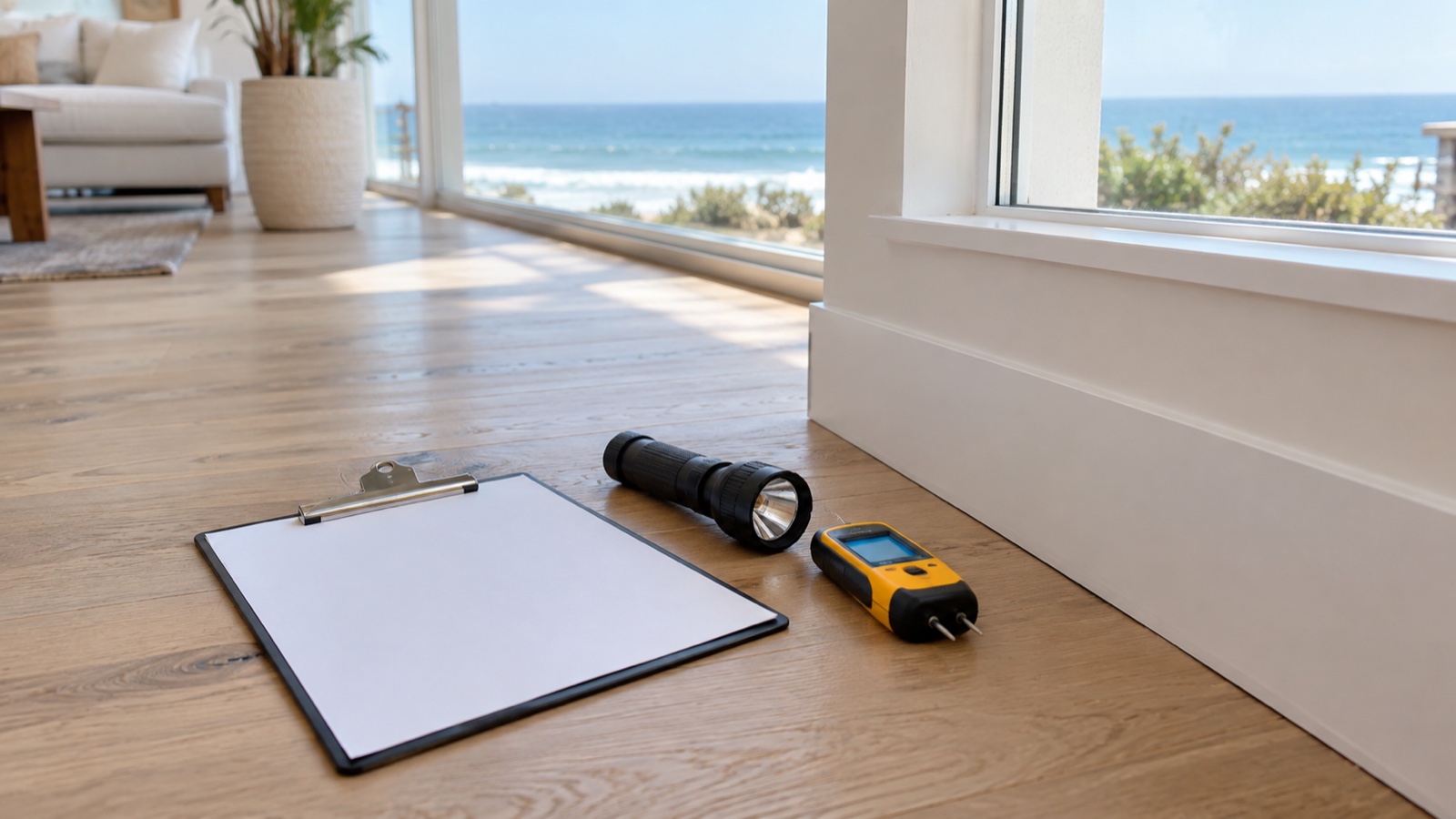
Anyone arriving from Brazil and walking through Los Angeles neighborhoods sooner or later comes across a strange sight: an entire house covered by a striped tarp, like a circus tent. Jason Lanzarini says in the episode that he had exactly that reaction. The tarp is the most visible sign of a problem that buyers of homes near the beach need to take seriously: termites, moisture and mold.
Why the American house is more vulnerable
The vast majority of homes in Southern California have wood framing: beams, walls and, in many cases, the base the house rests on. It's an efficient system well suited to an earthquake region, but it turns termites from a nuisance into a structural problem.
"I remember the doors in my house dropping a lot of little dust, which is termites, and we didn't care. Here, if that happens, you're already on alert, because it's structural." — Jason Lanzarini, in the episode
Near the ocean, constant humidity makes things worse. Dina Silveira explains that damp wood moves more and deteriorates faster; moisture also encourages mold, which affects the health of the people living in the house, and wood rot (dry rot).
The region's termites — and that tarp
On the Southern California coast, the dominant type is the drywood termite (western drywood termite), which lives inside the wood itself and doesn't need contact with soil. The tiny pellets it expels, similar to sawdust or fine sand, are exactly the "little dust" Jason describes. There are also subterranean termites, which come up through the soil and build mud tubes on foundations.
When a drywood termite infestation is spread throughout the house, the standard treatment is tent fumigation: the whole house is covered by the tarp and receives a gas (usually sulfuryl fluoride) that reaches inside the wood. Residents leave home for about two to three days, and food and medicine must be bagged or removed. Localized infestations can be spot-treated, without a tent.
In the episode, the two mention pressure from neighbors and the city to get the problem treated. In practice, what most often forces treatment during a sale is the buying process: the termite report, the lender's requirements and the negotiation between the parties.
The termite report: Section 1 and Section 2
In California, the inspection for wood-destroying organisms (Wood Destroying Organisms, WDO) is done by a company licensed by the state structural pest control board. The report separates findings into two main categories:
- Section 1: active infestation or existing damage (live termites, rotten wood, fungus). This is what needs to be fixed.
- Section 2: conditions that may lead to problems in the future if nothing is done, such as leaks, wood in contact with soil or excessive moisture.
Most lenders only release the loan with Section 1 cleared, proven by a recent clearance certificate (clearance). Who pays for the repair is negotiated in the contract. In many transactions the seller takes on Section 1, but there's no fixed rule, and it should be defined in writing.
The general inspection: where Brazilians tend to slip
Beyond the termite report, the general home inspection evaluates the roof, visible structure, electrical, plumbing, heating and signs of leaks. In California it isn't required by law, but the standard purchase contract gives the buyer a period to investigate the property (17 days, unless otherwise agreed), and that's when the inspection should happen.
"Brazilians are more focused on how beautiful the house is than on the structure. When they see it's gorgeous, wonderful, they don't even want to know what it's like inside." — Dina Silveira, in the episode
Dina says she recommends an inspection to all her clients. The reason is financial: structural work discovered after the purchase can cost tens of thousands of dollars, sometimes for repairs that can't be put off.
Checklist for a home near the ocean
- Always ask for the termite (WDO) report and read both sections, not just the summary.
- Inspect the crawl space, the area under raised homes: that's where moisture, damaged wood and signs of subterranean termites show up.
- Look for stains, a moldy smell and fresh paint in isolated spots, which can hide leaks.
- Check windows, exterior doors and frames, which suffer most from sea air.
- If you suspect mold, consider a specialized assessment, which isn't part of the general inspection.
- Put maintenance in the budget. A beach home needs preventive treatment, painting and checkups more often.
And what if the inspection reveals a problem the seller already knew about and didn't disclose? California law has clear rules on this, the subject of a separate article in this newspaper.
This article is for information only. Treatment procedures and financing requirements vary; follow the guidance of the inspector, the licensed pest control company and your real estate agent.
Sources and verification
- University of California Statewide IPM Program — biology and control of the drywood termite (Incisitermes minor) and subterranean termites in California.
- California Structural Pest Control Board — WDO inspections and classification of findings into Section 1 and Section 2.
- Market practice: lenders requiring Section 1 clearance; cost allocation defined in the contract.
- California Association of REALTORS® — standard 17-day period for the investigation contingency in the residential purchase agreement (RPA).
- Transcript and chapters of episode 13 of the Cadê Moradia podcast (May 2026), with Dina Silveira and Jason Lanzarini.
Watch this part of the episode:
Warning: inspection, mold and termites in beach homes — starting at 15:50 · CADÊ BRAZIL
This article is a reference edition of episode 13 of the podcast and is subject to edits and editorial additions. For the full conversation, watch the episode. — Updated on 16/09/2026.