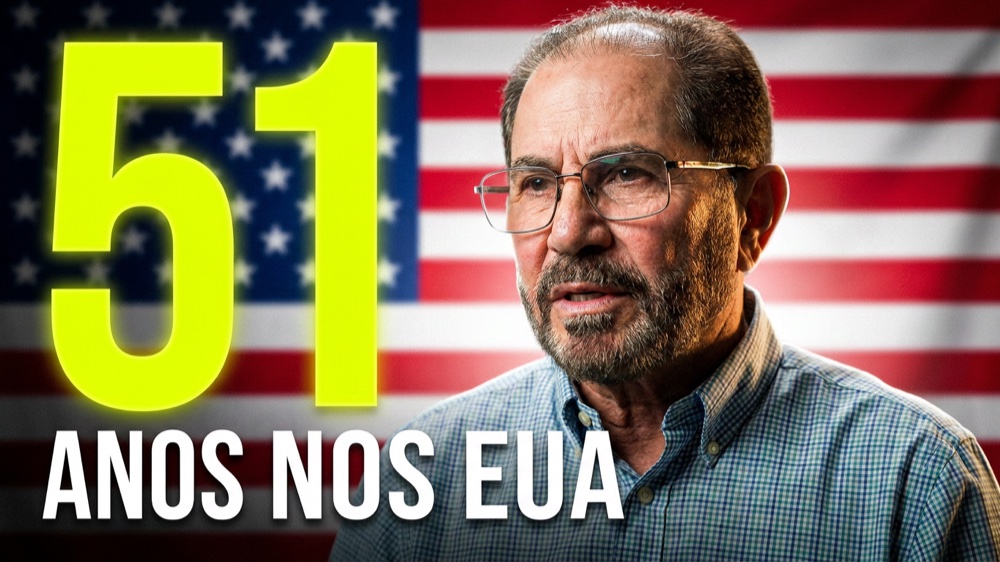


Three episodes in, the "911: Emergency in Los Angeles" segment gets to what it promised from the start: a checklist. Pastor Miguel Albanês and host Jason Lanzarini turn the cases told throughout the series — bodies no one came looking for for days, families who knew nothing — into a list of things to get done. The underlying rule is just one: having it isn't enough; someone needs to know you have it and where it is — and that goes for both people in a couple: each one makes their own list.
1. People and contacts
The first item is your contact network, discussed in detail in the previous episode: people close to you here, who would quickly notice you're missing, and family contacts in Brazil. Their suggestion is to organize this into two WhatsApp groups — a primary one, of complete trust, with at least two people in the United States and two in Brazil, at different addresses; and a secondary one, with friends and housemates, that only points to the primary. And if there's someone you're afraid of, that person goes in neither group.
2. Life insurance: insurer, policy and beneficiaries
The pastor tells of two cases in which friends and family "thought" the person had life insurance. In one, a search showed there was no policy at all; in the other, the family called from Brazil knowing about the insurance, but without the insurer's name or the policy number. Without that, collecting is nearly impossible. Write it down: insurer, policy number and who the beneficiaries are.
3. Bank accounts
"All of a sudden the person has twenty, thirty thousand dollars in an account, and it ends up with the State." In California, accounts with no activity for about three years are transferred to the State Controller's unclaimed property program — the money isn't lost: heirs can claim it at any time, but it takes paperwork. The pastor suggests a privacy rule: you don't need to say how much you have, only which bank.
One step the episode doesn't mention that solves a lot: banks usually let you name a beneficiary for the account in case of death (a payable on death account); in that case the money generally goes straight to the person named, on presentation of the death certificate, without going through probate.
4. Property: address, mortgage, tax and insurance
If you own a home — even one rented out to someone else — your family needs to know the address and where things stand. A bill addressed to someone who has died doesn't get opened by anyone; in California, property tax that's five years delinquent sends the home to auction. The pastor suggests a photo of the property tax bill, the mortgage contract and the homeowners insurance policy, which the lender usually requires. He says his own mortgage servicer once charged him for the insurance twice — which is why it matters to know who pays what.
Here too there's a tool that avoids probate: California allows a transfer on death deed (formally, a revocable transfer on death deed), in which the owner names who receives the property — it only applies to residential property of up to four units and has formal requirements. For homeowners, attorneys often recommend a trust — the subject of another article in this series.
5. Power of attorney: for life, not for after death
Speaking from his experience walking with families, not as an attorney, the pastor suggests giving a trusted person a power of attorney "in case of death," saying what to do with the car, the house and the account. The intention is great, but one important clarification: under California law (and Brazilian law too), a power of attorney ends when the person who granted it dies. It's useful while the person is alive — and the right version for a hospital stay or incapacity is the durable power of attorney — durable because it stays in effect if the person loses the capacity to decide. For medical decisions there's the advance health care directive (which includes a power of attorney for health care), which names who decides for the patient.
After death, the person who acts is the executor named in a will, the successor trustee named in a trust, or the administrator appointed by the judge in probate. And, as the pastor points out, it does no good for someone to have authority if they don't know where the assets are.
6. Doctor, medications and allergies
Your doctor's name and phone number, the medications you take, allergies. This speeds up the coroner's release of the body and, before that, saves lives: "You arrive at the hospital unconscious — what medication are they going to give you? Will they know if you're allergic?"
7. Personal documents
Passport, green card or certificate of citizenship, driver's license, birth and marriage certificates, car titles. Originals in a fireproof and waterproof box or a bank safe deposit box; photos of everything in the primary group's document — the primary group is complete-trust only: no one outside it needs to see these documents. "Even if there's a fire, you already have somewhere to start."
8. Minor children
Put in writing who takes care of them and that person's contact information.
9. Rented storage unit and other commitments
If you rent a storage unit, say where it is and how to get in: two or three months without payment and the contents go to auction. The same goes for a financed car, subscriptions and recurring bills.
10. If it happens: registering the death and certificates
For the family, the pastor lays out the steps: wait for the local death certificate, which takes a few days; order several copies (he ordered six); notify the consulate, which handles the Brazilian registration; get an apostille on whatever will be used in Brazil; notify INSS if the person received a benefit. "And remember that everything is the family's responsibility, not the consulate's."
What's discussed in the episode
The pastor and Jason agree to turn the list into a document the Brazilian Community can download and fill out. Until it comes out, this article gathers what was said, with the additions from California law. If you'd like to receive the document when it's ready, comment MATÉRIA on this article's post.
Sources and verification
- California State Controller's Office — Unclaimed Property.
- California Probate Code, sections 5600 et seq. — revocable transfer on death deed; section 4152 — termination of the agent's authority upon death; section 4124 — durable power of attorney; section 4701 — statutory advance health care directive form.
- California Revenue and Taxation Code, section 3691 — sale of tax-defaulted property.
- California Business and Professions Code, sections 21700 et seq. — sale of storage unit contents for nonpayment.
- Consumer Financial Protection Bureau — payable on death accounts.
- Cases described: accounts from Pastor Miguel Albanês in the episode.
Who's speaking here: Brasileiros em Los Angeles is the Brazilian Community's podcast in the Los Angeles area, hosted by Jason Lanzarini, who since 2014 has run the Community's Facebook groups in California. This is the third and final episode of the series on the deaths of Brazilians in the "911: Emergency in Los Angeles" segment, with Pastor Miguel Albanês of the First Brazilian Baptist Church of Los Angeles (PIBBLA), who has walked with families through these cases for years.
Note: the rules described apply to California and, in several points, to Los Angeles County; consular procedures and airline requirements change over time. This text is general information, not legal advice: for a specific case, consult a professional licensed in California and confirm the rules with the consulate.
Watch this part of the episode:
Start of the Planning and Prevention Checklist — starting at 32:45 · ☆ Brasileiros em Los Angeles
This article is a reference edition of episode 3 of the podcast and is subject to edits and editorial additions. For the full conversation, watch the episode. — Updated on 07/10/2026.