



Midway through the episode, the conversation turns to a topic that looks like a detail but is actually one of the biggest sources of confusion for people arriving from Brazil: what counts as a city, a county, and a neighborhood here.
"What we call a city here is, roughly speaking, a neighborhood in Brazil." — from the episode
The comparison that helps (and where it breaks down)
The comparison made on the show is good for giving a sense of scale. Los Angeles County has around 10 million residents — a population comparable to the city of São Paulo. The City of Los Angeles, within it, has about 4 million. The rest is spread across dozens of other cities.
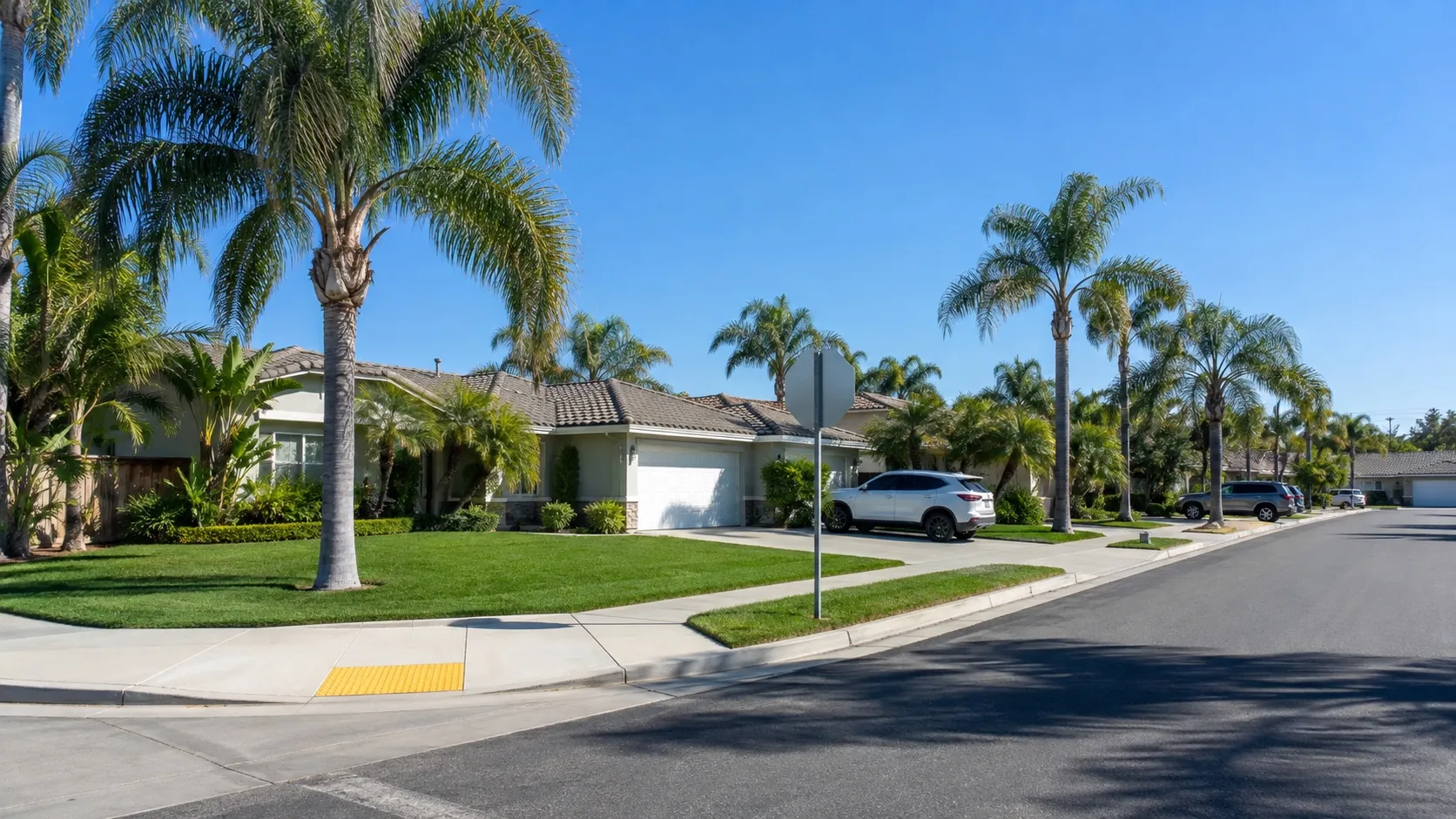
But the comparison has a limit, and the agents make a point of flagging it: an American city is not a neighborhood. It has its own mayor, city council, budget, police force or policing contract, building code, and zoning plan. Cross a corner, and you don't change neighborhoods — you change governments.
Los Angeles County has 88 incorporated cities, plus unincorporated areas administered directly by the county. Orange County has 34 cities. That's why names that sound like "regions" — South Bay, for example — actually bundle together several independent cities.
The case that sums it all up: the school around the corner
The most concrete example in this segment comes from one of the agents' own account: her house sits a few doors from a corner, and on the other side of that traffic light, it's already a different city. Her kids couldn't attend the school right on that corner.
That's the practical lesson that saves the most headaches:
- a public school is determined by the school district that serves that address, not by distance;
- school districts have their own boundaries, which don't always follow the city line;
- a listing that mentions a good school's name is no guarantee that address is actually served by it;
- confirmation happens on the district's official attendance boundary map, using the exact address — before making an offer.
Zoning: the city calls the shots
Another point made clearly: the city decides zoning — what can be residential, commercial, industrial, how many units fit on a lot, height, setbacks. State and county rules apply on top, like California's ADU legislation, but day-to-day enforcement runs through the city's own planning department.
In practice, that means the answer to "can I build a unit in the backyard?", "can I do a short-term rental?", "can I run a business out of my house?" changes from city to city, sometimes even between neighboring ones. It's the most common mistake Brazilian buyers make: treating the rule that applied to a friend as if it applied region-wide.
How the cities ended up this way
The explanation that comes up in the conversation is historical, and it checks out: each city started as a settlement and grew until it bumped up against its neighbor. One of the agents tells the story of Santa Clarita, formed by neighboring communities that incorporated into a single city — one government instead of five. Santa Clarita was in fact incorporated in 1987, bringing together communities like Newhall, Saugus, Canyon Country, and Valencia.
A quick checklist before making an offer
- What city is the address actually in? Confirm it — the name that shows up on your mail doesn't always match the jurisdiction.
- Is it incorporated, or under the county? That changes who enforces the rules and who provides services.
- Which school district serves this address? Confirm on the official map.
- What does zoning allow on this lot? Ask the city's planning department, not the neighbor.
- What municipal fees apply? A transfer tax on sale, for instance, exists in some cities and not in others.
Sources and verification
- U.S. Census Bureau — population of Los Angeles County (about 10 million) and the City of Los Angeles (about 4 million).
- County of Los Angeles and County of Orange — number of incorporated cities (88 and 34, respectively) and unincorporated areas.
- City of Santa Clarita — incorporated in 1987 from the valley's communities.
- California Department of Education — school districts and attendance boundary maps by address.
- The account of the school on the other side of the corner and the city/neighborhood comparison: the show's agents on the episode (March 2026).
- Transcript of episode 6 of the Cadê Moradia podcast.
Watch this part of the episode:
City, county, and neighborhood: the American division (approximate excerpt) — starting at 25:54 · CADÊ BRAZIL
This article is a reference edition of episode 6 of the podcast and is subject to edits and editorial additions. For the full conversation, watch the episode. — Updated on 18/09/2026.