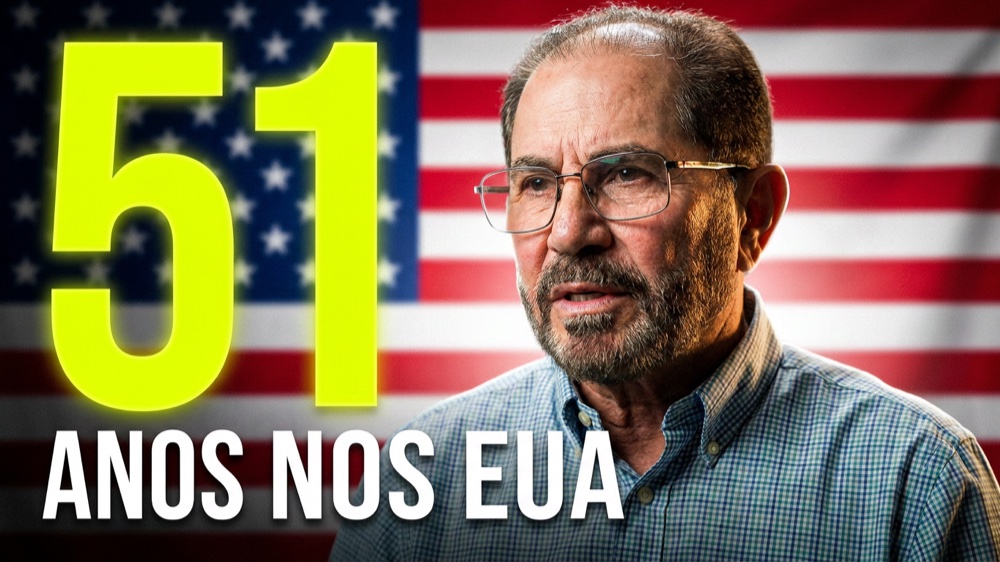


Between repatriating the body and cremation, in the pastor's experience, most Brazilian families in Los Angeles end up choosing the latter. In the third episode of the "911: Emergency in Los Angeles" segment, Pastor Miguel Albanês shares what he has learned walking families through these cases — and what comes next: what to do with the ashes. It's a topic full of questions, so much so that host Jason Lanzarini asked viewers for help in the comments.
Why cremation became the norm
The short answer is cost. According to the pastor, cremation runs about a fifth of the cost of repatriating a body. In the case he followed, the cremation itself cost around $600; what weighed was the funeral home's daily fees while the coroner had not yet released the body — almost two weeks. "Cremation is the last step," he sums up: first come the release, the death certificate and the authorization to dispose of the body. Jason admits he thought it was enough to "call an Uber and send it straight to the crematory" — and learns it doesn't work that way. Anyone who can't afford it should tell the funeral home and reach out to their church before signing any contract.
Flying the ashes to Brazil
The pastor recounts what the family he was helping was told when they considered taking the ashes home: the urn the funeral home hands over isn't suitable for travel, you need a travel-approved urn, and the airline has rules. The points that usually apply:
- Documents: death certificate, cremation certificate and the authorization for disposition of the remains (in California, the funeral home arranges the Permit for Disposition of Human Remains, issued by the county registrar). In another episode of the podcast, a guest who went through this says the funeral home provided the travel document for the urn. Bring originals and copies.
- X-ray: the TSA, which runs screening at U.S. airports, allows ashes in carry-on luggage as long as the urn can be screened by X-ray. Wood, plastic or cardboard urns usually go through; metal and stone may block screening. Out of respect, the officer will not open the urn, even if the passenger asks — if it can't be screened, it doesn't fly. Arrive early: screening the urn tends to take longer.
- Airline: each one has its own policy (some only accept it in the cabin, others ask for advance notice). Call ahead.
- Arrival in Brazil: have the paperwork on hand; since entry rules can change, it's worth checking with the Brazilian consulate before you travel.
The family the pastor was helping ended up giving up on taking the ashes and decided to scatter them here.
Scattering at sea: not at the water's edge
The sister of the woman who died wanted to scatter the ashes at sea. The pastor explains that, in practice, families hire an authorized company that takes everyone out by boat. The reason is the law:
- California law requires a minimum distance from shore — confirm the number with the funeral home — and the federal rule for the ocean is stricter: at least three nautical miles from land, with notice to the Environmental Protection Agency (EPA) within 30 days.
- The disposition permit must state what will be done, and whoever scatters the ashes records the location and date afterward.
That's why scattering at sea companies head out to open water and take care of the paperwork. Scattering the ashes on the sand or in the surf, on the sly, is not allowed — and, as the two point out, someone may find it odd and call the police — a contact no one wants, least of all someone without papers.
On land: with permission from whoever owns the place
On land, California law allows ashes to be scattered where there is no local prohibition, with written permission from the property owner or the agency in charge — a park, for example — and in a way that they are not visible. Keeping the urn at home is also allowed. The pastor notes that a lot varies from city to city: "You live across the street, it's another city, and sometimes the law is completely different." When in doubt, the funeral home itself can advise, because it deals with this every day.
States, counties and cities
The segment ends with an explanation that holds for every immigrant: in the United States, each state has broad autonomy, each county has its own rules, and so does each city. What is allowed in one may be banned in the next — from fireworks to ashes. Before a tribute at a special place, ask.
Sources and verification
- California Health and Safety Code, sections 7116 and 7117 — scattering of ashes on land and at sea; Cemetery and Funeral Bureau (Department of Consumer Affairs).
- U.S. Environmental Protection Agency — general permit for burial at sea (Marine Protection, Research, and Sanctuaries Act): ashes at least three nautical miles from land and notice within 30 days.
- Transportation Security Administration (TSA) — traveling with cremated remains.
- California Department of Public Health — Permit for Disposition of Human Remains.
- Costs and the case described: account by Pastor Miguel Albanês in the episode.
Who's talking: Brasileiros em Los Angeles is the podcast of the Brazilian Community in the Los Angeles area, hosted by Jason Lanzarini, who since 2014 has run the Community's Facebook groups in California. This is the third and final episode of the series on the deaths of Brazilians in the "911: Emergency in Los Angeles" segment, with Pastor Miguel Albanês of the First Brazilian Baptist Church of Los Angeles (PIBBLA), who has walked families through these cases for years. All three episodes of the series are on the Brasileiros em Los Angeles podcast.
Note: the rules described apply to California and, in several respects, to Los Angeles County; consular procedures and airline requirements change over time. This text is general information, not legal advice: for a specific case, consult a professional licensed in California and confirm the rules with the consulate.
Watch this part of the episode:
Rules and costs for taking ashes to Brazil or scattering them at sea in the U.S. — starting at 24:45 · ☆ Brasileiros em Los Angeles
This article is a reference edition of episode 3 of the podcast and is subject to edits and editorial additions. For the full conversation, watch the episode. — Updated on 07/10/2026.