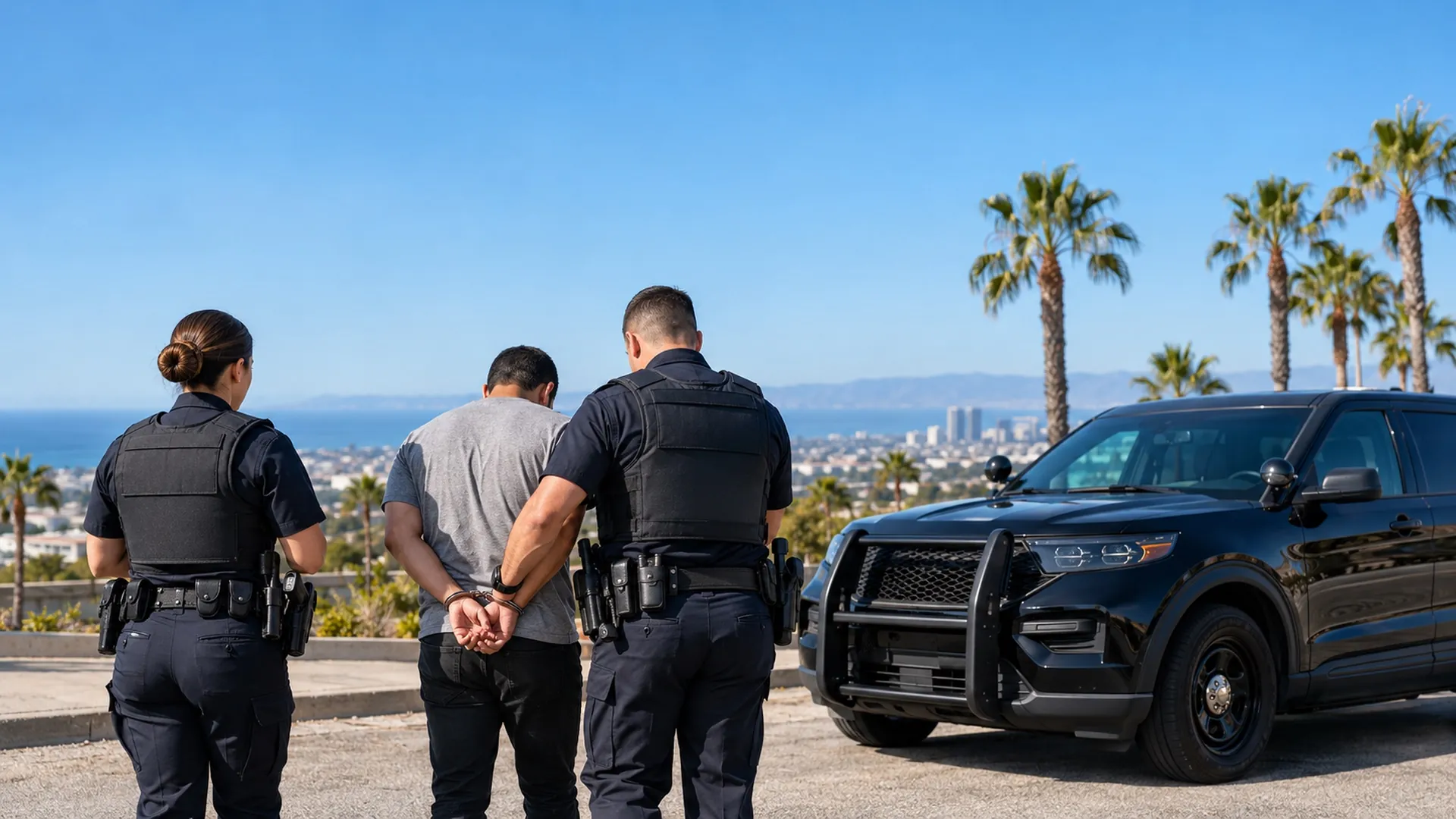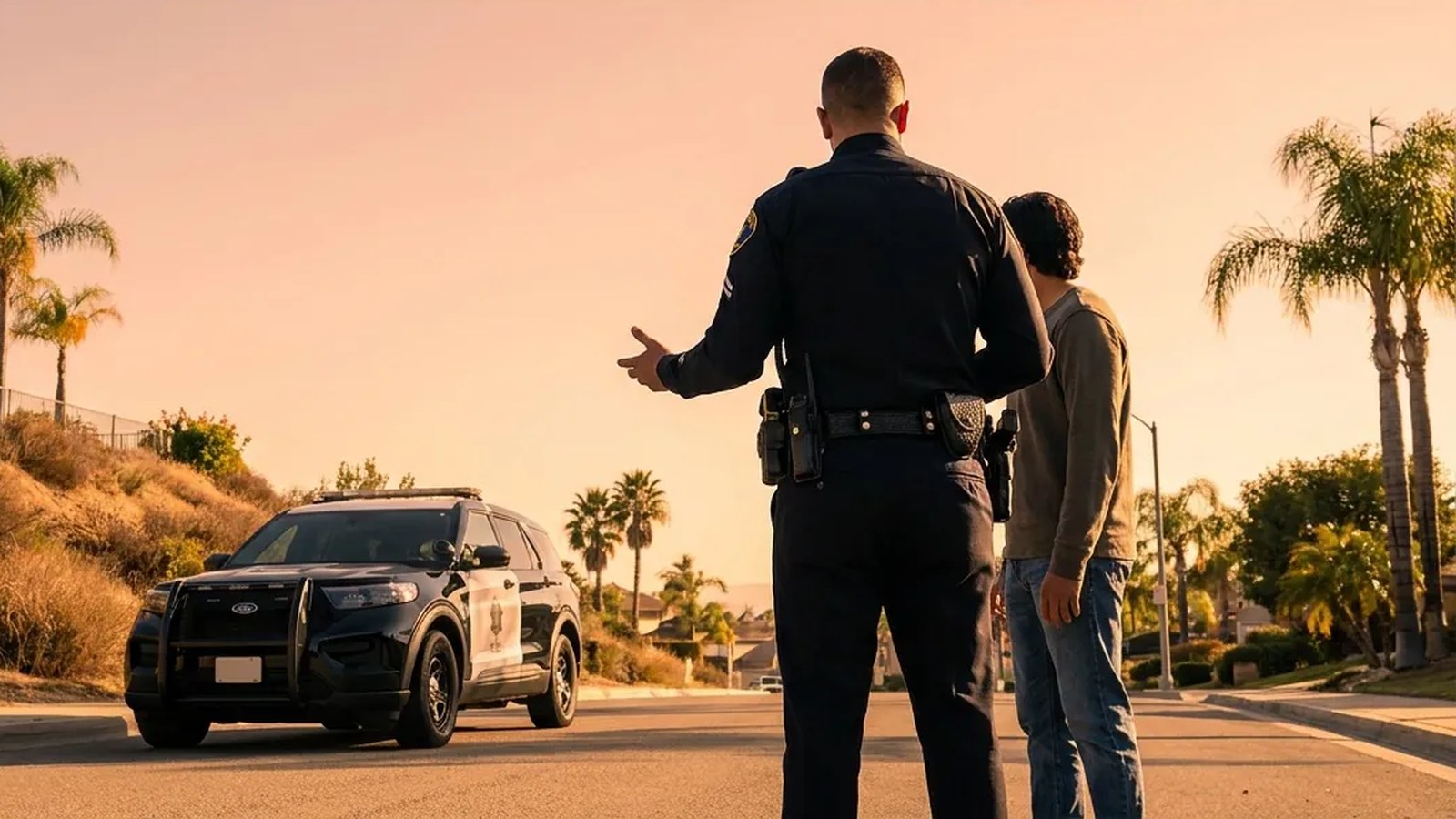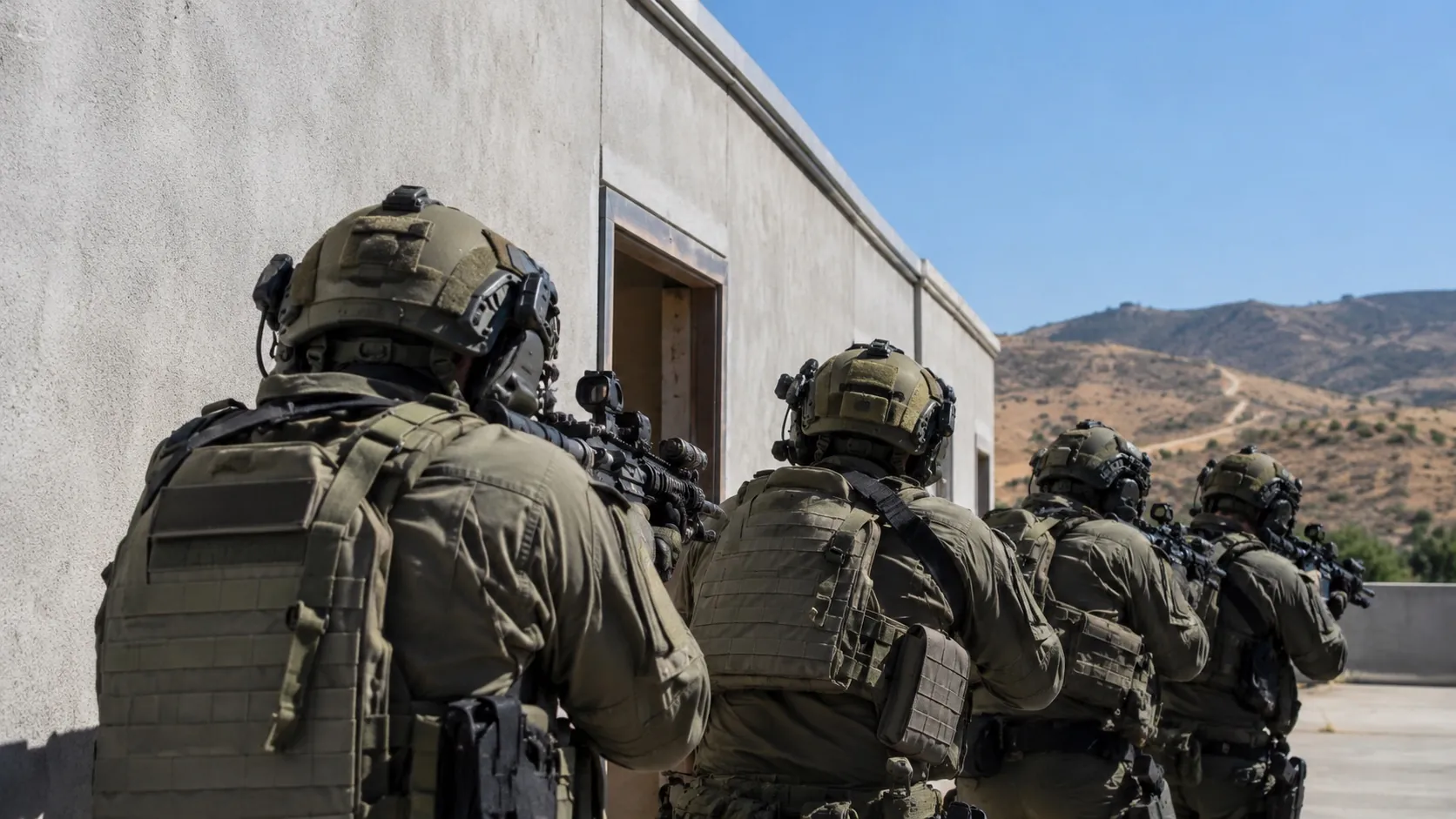


The Brazilians had already gotten the message about the course: two weeks, a lot of planning and a lot of case studies. But why so short? In episode 48 of Palavrão Tático, Eliel Teixeira and Edwin Wu explained to Paulo Brandão and Felipe Teixeira — police officers from Brazil's Federal District who came to Los Angeles for SWAT School — the logic behind the American model: the course doesn't make the operator. It gives the officer the green light to start becoming one — inside the team, over years.
Why not a 60-day "mega-course"
The idea of a long, military-style course — 60 days, 90 days, six months — has been discussed and shelved, the hosts said, for two reasons. The first is practical: units don't want to lose an officer for that long. "How long is the course? Forty, fifty days? No, my friend, hold on." The guests laughed: it's the same in Brazil.
The second has to do with what the course is: it exists because the State requires a qualification before an officer can take part in that kind of operation. It gives a general grounding in each area of SWAT work. Specialization comes later, through on the job training. "There's no way to simulate the multitude and the complexity of every type of operation an officer is going to face. The most we can do is equip him with the most basic tools." And a long course has its own cost: more injuries, more people dropping out along the way.
What California requires
The qualification the hosts are talking about is grounded in law. The California Penal Code (section 13514.1) directed POST to develop guidelines and standardized training for SWAT teams. POST guidelines recommend that every new member complete an 80-hour basic SWAT course — two weeks — and take part in ongoing team training, plus role-specific training for positions such as precision marksman, negotiator and commander. The basic course covers planning, legal issues, building entry, hostage rescue, the use of chemical agents and less-lethal force, among other topics.
From the command post to the tactical stack
Once through the course, the new operator doesn't start going through doors. According to the hosts, on search warrants it can take about a year and a half before he sees the inside of the location. The progression they described is gradual:
- it starts at the command post;
- then driving the armored vehicle, without getting out of it;
- then up to the armored vehicle's turret, "where you get to breathe the outside air of the operation";
- then down to the door and to the perimeter containment;
- and only after that into the tactical line — the stack, the formation that makes entry.
"There's no way to cram all of that into a course." Each stage teaches how the operation works from a different angle, under the eyes of people who have done it hundreds of times.
Bomb squad, hazmat and the rest of the package
The same goes — and takes even longer — for the specialties. A bomb technician, the hosts said, takes about three years from joining SWAT to being fully operational: once certified, he works under the wing of an experienced bomb tech until he can say "I can handle this call on my own." In the United States, bomb technician certification for public safety officers is issued by the FBI's Hazardous Devices School in Huntsville, Alabama — the only center in the country that certifies these professionals. Hazardous materials follows a similar path.
And then there are the weapons requirements, the technology and less-lethal equipment, and serving the court order itself — arrest warrant, search warrant. "Look at everything we've got on our plate."
Full-time or part-time
So that people at home understand, the hosts made a point of explaining: there are a lot of SWAT teams in the United States, and the overwhelming majority are not full-time. The officer works patrol; an incident comes up, he puts on "the Ninja Turtle outfit," runs the operation, takes the gear off and goes back on patrol. That's why the public sometimes watches a team's operation without the proficiency of a full-time unit and finds it odd.
Full-time, SWAT-only teams are few — the hosts put the number at about five in the country (there is no official count). Los Angeles has two: LAPD Metropolitan Division SWAT and the Los Angeles County Sheriff's Department (LASD) Special Enforcement Bureau. New York and Miami also maintain permanent teams. There are also full-time units that take on other duties — K-9, explosives, civil unrest or counterterrorism — like the one at one of the departments mentioned in the episode, with 27 operators. The standards of the NTOA, the National Tactical Officers Association, address both realities and recommend minimum training and staffing standards for each.
Two schools at the roots of SWAT
History also explains the differences in style between teams. The need arose in the 1960s, with bank robberies, kidnappings and shooters that the street cop was not equipped to deal with. The Philadelphia Police Department created a special weapons and tactics unit in 1964 to respond to a wave of bank robberies; in Los Angeles, the LAPD team took shape between 1967 and 1968 under the leadership of then-Inspector Daryl Gates, and made the SWAT acronym famous.
As the hosts see it, two schools of thought came out of that. One looked to the Armed Forces for its technique — "you watch how the team moves and you say: these guys learned from the military." The other, Los Angeles, started from a different principle: "we're not the military; we have to build this based on our reality, within the limits that police work demands." For a long time the two ran in parallel; today, they say, they look more alike.
It's not "next week"
Media influence — from the 2003 movie S.W.A.T. to the TV series that aired from 2017 to 2024 — also created an unrealistic expectation in the United States: joining the police and, the week after graduating from the academy, taking the SWAT course. That's not how it works. There's a whole career path before an officer is even eligible to compete for a spot, and in some departments, according to the hosts, that can take more than a decade on the job. Only then comes the test, the two-week course — and the year and a half until the first door.
What the two of them think about it
In the episode, Eliel Teixeira and Edwin Wu talk about how training works inside American teams, from the first assignments at the command post to the tactical stack, and about the origins of SWAT in Los Angeles. The full conversation, with the questions from the Federal District officers, is in the episode.
Sources and verification
California Penal Code § 13514.1. California Commission on Peace Officer Standards and Training (POST), SWAT Operational Guidelines and Standardized Training Recommendations and the basic SWAT course (80 hours). National Tactical Officers Association (NTOA), Tactical Response and Operations Standard (TROS). FBI, Hazardous Devices School (Redstone Arsenal, Huntsville, Alabama). History of the LAPD SWAT unit (Metropolitan Division) and of the Philadelphia Police Department. The progression of assignments, training timelines and the count of full-time teams are accounts from the episode's participants and vary by department.
Who's talking here: Eliel Teixeira and Edwin Wu are active-duty police officers in the Los Angeles area, California — Brazilian-born, American citizens, with long careers in law enforcement. In this episode, they welcome Paulo Brandão, a police officer in Brazil's Federal District for 27 years, and Felipe Teixeira, a police officer in the Federal District for 16 years, who came to Los Angeles for SWAT School.
Note: everything described here applies to California rules — and, on several points, to each officer's specific department. In other U.S. states the rules change; in Brazil, each police force has its own organic law and internal regulations.
This article is a reference edition of episode 48 of Palavrão Tático and is subject to edits and editorial additions. For the full conversation, watch the episode. — Updated on 08/10/2026.