



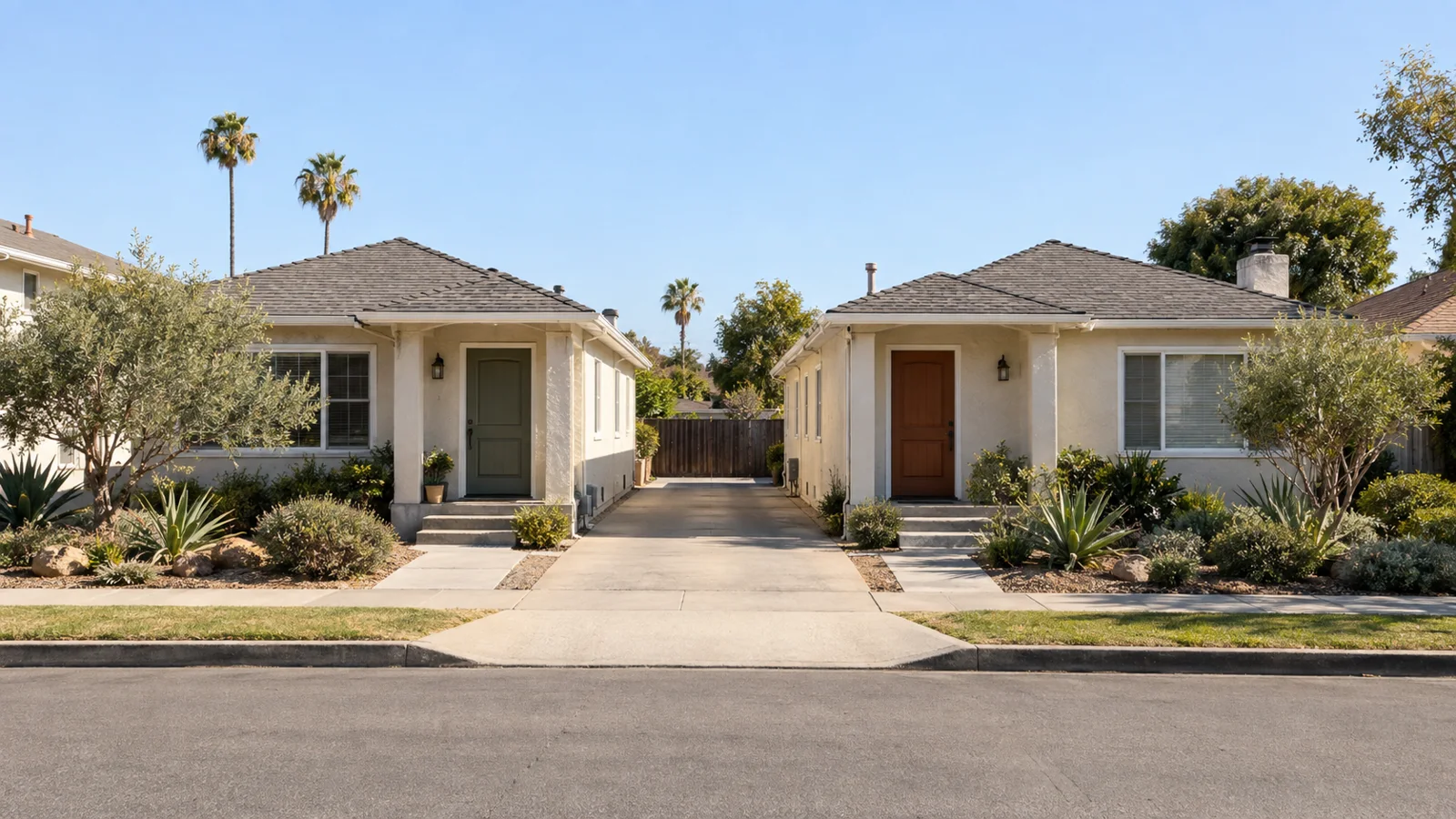
In the middle of the conversation about buying or renting, the show's realtors describe what one of them calls "the best strategy there is" for anyone who wants rental properties without starting out with a lot of money. In the United States, it even has a nickname — house hacking — and the logic is simple. But it also comes with rules the buyer needs to know so a strategy doesn't turn into fraud.
How it works
- You buy to live in, using a primary residence mortgage, which accepts the smallest down payment available.
- You live in the property for a period — the realtors talk about a year or two.
- You buy the next property to live in, again with a primary residence down payment.
- The first one is put up for rent.
- You repeat the process.
The advantage, they explain, is not needing the "serious money" of an investment purchase. And there's a practical detail: a smaller property is easier to rent and cheaper to maintain than a big house.
Why the down payment changes so much
The realtors point out that for someone buying as an investor, the down payment requirement is higher — they cite 20%. Generally speaking, conventional mortgages for investment property ask for 15% to 25%, and the rates tend to be higher. For a primary residence, there are routes with a much smaller down payment:
- conventional with 3% to 5% down, in programs for first-time buyers or within income limits;
- FHA, with 3,5% down (credit score from 580);
- VA, with zero down, for eligible service members and veterans.
In the episode, the FHA down payment comes up as 3%; the program's minimum is 3.5%, and the 3% refers to certain conventional mortgages. The differences between these options are detailed in other articles in this paper.
The rule that holds it all up: actually living there
The smaller down payment exists because the risk of someone who lives in the property is lower for the lender. That's why primary residence mortgages carry occupancy requirements:
- FHA: the buyer has to move in within 60 days of closing and live in the property as a primary residence for at least one year. As a rule, a person can only have one active FHA loan at a time — there are exceptions, such as relocating far away for work or a growing family.
- Conventional: the buyer declares the intent to occupy the property as a primary residence, and market practice is to consider at least 12 months.
Legitimate life changes happen — a new job in another city, a growing family — and nothing stops you from renting out once the period is met. What you cannot do is declare you will live there without that intent. That is occupancy fraud, which can lead the lender to demand immediate repayment of the debt and constitutes a federal crime of false statement on a loan application.
Variations on the strategy
- A 2-to-4-unit property: FHA allows you to buy a duplex, triplex or fourplex with 3.5% down, as long as the buyer lives in one of the units. The rent from the others helps pay the mortgage.
- Renting out a room: the realtors point out that, if the buyer is willing to share the house, a roommate helps with the payment.
- An ADU: on a house with a lot, building a unit out back generates income without leaving the property (the subject of another series in this paper). In a condo, that isn't possible; in a townhome, it depends on the rules.
- From condo to house: start with a condo, build equity and take the step to a single-family house, where later you can build for income — the path described by the realtor.
The realtors also point out one advantage of owning over other investments: if work sends the person to another state, they don't have to sell — they can rent it out, and the property keeps producing.
The math for anyone becoming a landlord
- The rent has to cover more than the payment: taxes, landlord insurance (which is different and more expensive), maintenance, vacancy and, if there is one, property management.
- The insurance changes: once you stop living there, the homeowners policy has to be switched.
- Tenancy rules: in California, limits on increases and protections against no-fault eviction apply to many properties (see this paper's article on rent control).
- Taxes: rental income is taxable, with deductions of its own; and, at sale, losing primary residence status can affect the capital gains exclusion. Talk to an accountant.
- Qualifying for the next mortgage: the lender will consider the new payment and, under its own rules, the rental income from the first property.
This text is for informational purposes and is not a recommendation on investment, financing or legal or tax matters. Confirm your mortgage's occupancy requirements with your lender.
Sources and verification
- HUD Handbook 4000.1 (FHA Single Family Housing Policy Handbook) — requirement to occupy within 60 days and for at least one year, minimum 3.5% down payment, purchase of 2-to-4-unit properties by an occupant and the one-FHA-loan-at-a-time rule.
- Fannie Mae Selling Guide — occupancy classification (primary residence, second home and investment) and minimum down payments.
- 18 U.S. Code, section 1014 — the crime of making a false statement on a loan application to federally insured institutions.
- Transcript of episode 10 of the Cadê Moradia podcast (April 2026). The timestamp given is approximate, interpolated between the chapters "Exemplo real: Apartamento em Culver City" (22:08) and "Manutenção: Condomínio (HOA) vs. Casa" (28:00).
Watch this part of the episode:
Buy to live in and then rent out (approximate timestamp) — starting at 23:30 · CADÊ BRAZIL
This article is a reference edition of episode 10 of the podcast and is subject to edits and editorial additions. For the full conversation, watch the episode. — Updated on 17/09/2026.