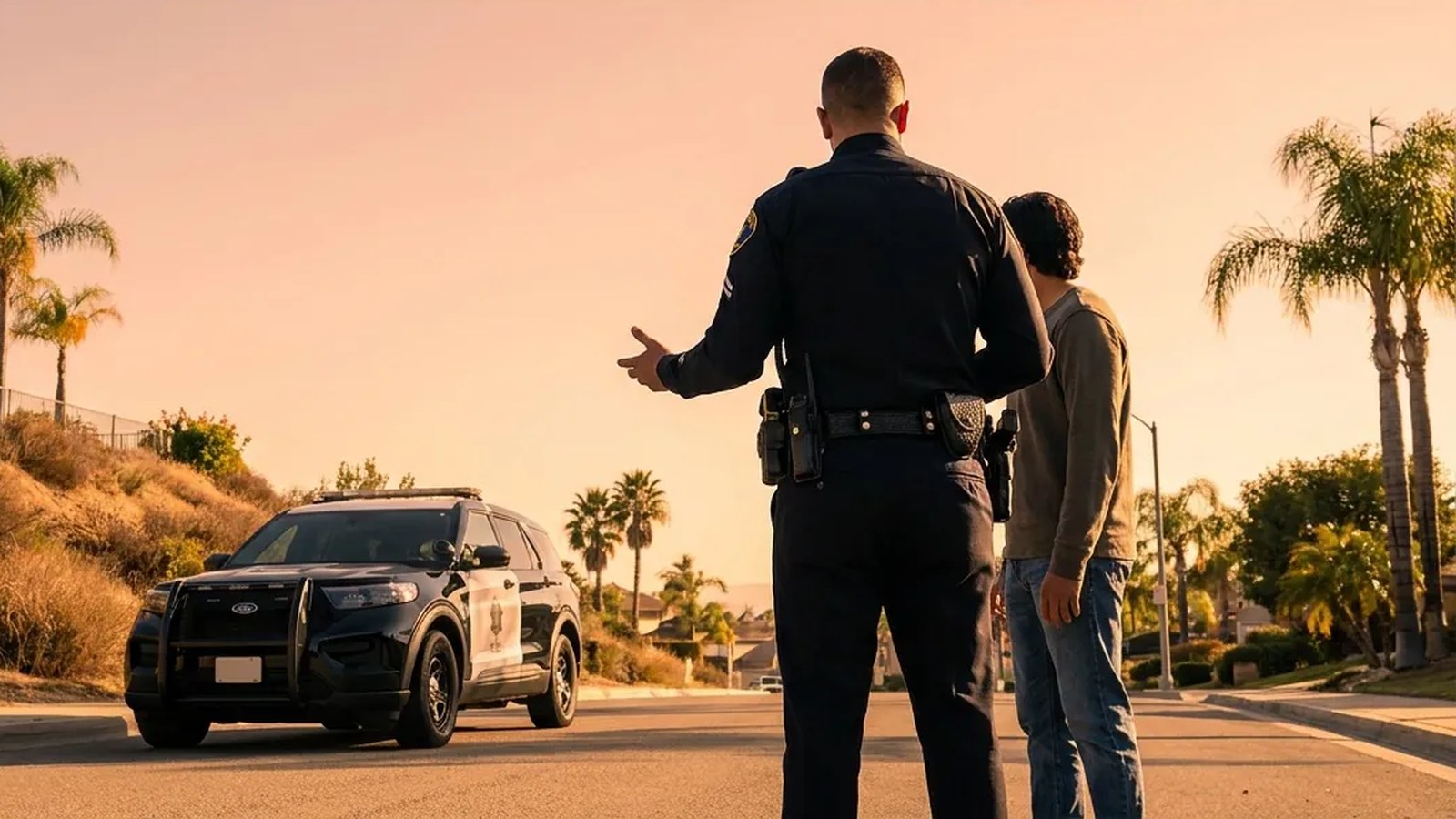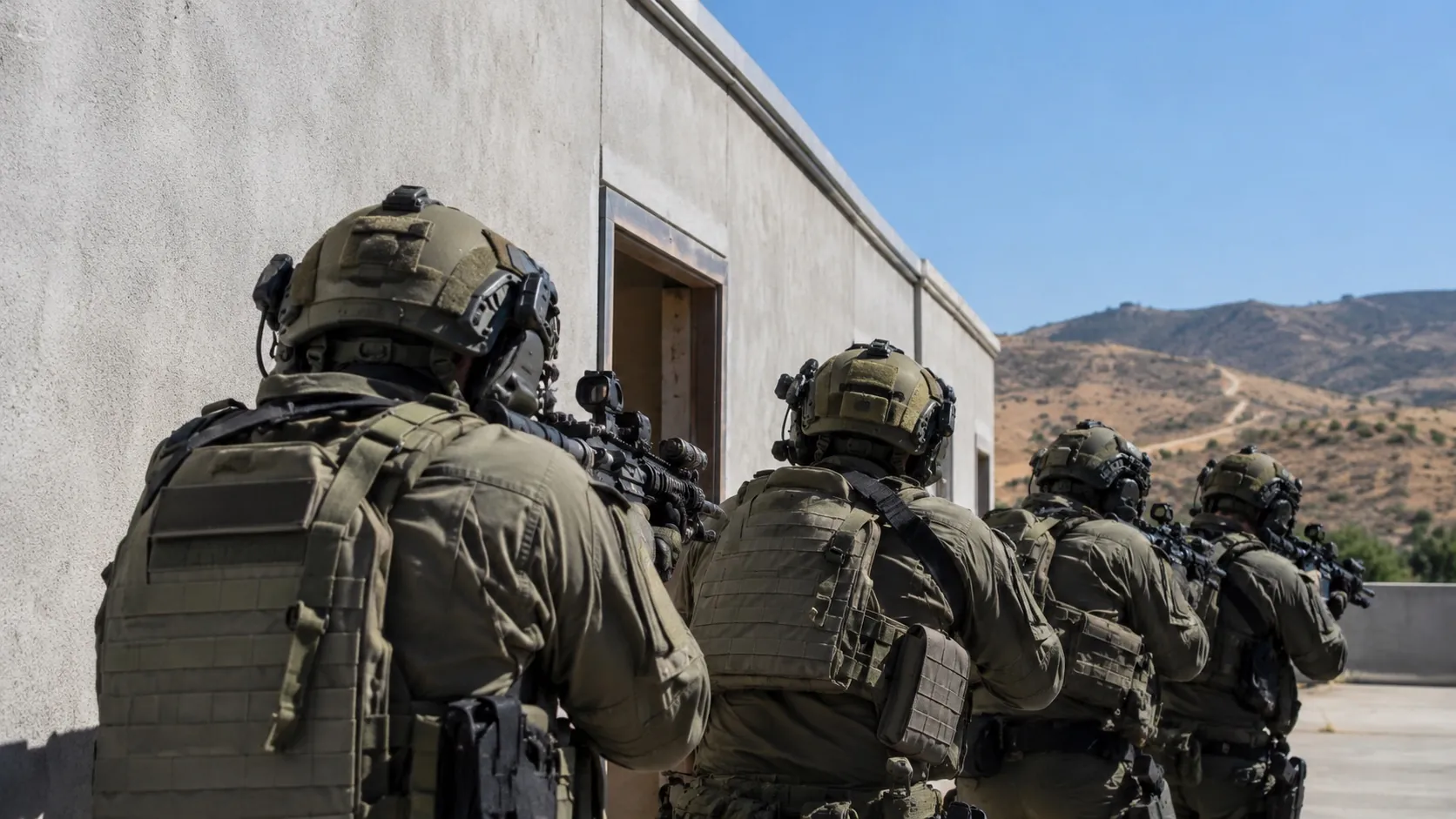


In episode 48 of Palavrão Tático, the conversation about training operators reached a question that, for one of the guests, comes before any curriculum: who is your unit? Paulo Brandão and Felipe Teixeira, police officers from Brazil's Federal District who were in Los Angeles for SWAT School, talked with Eliel Teixeira and Edwin Wu about what they call the BOPE effect — and about why copying another team's course is, in the words of one of them, "starting off wrong."
The Elite Squad effect
The 2007 film gave special operations in Brazil an aura nobody had planned. BOPE became a powerful brand, and its course a synonym for toughness. The problem, according to the guest, is that "everybody, every unit, wanted to run a course just like BOPE's." And the reality of Rio de Janeiro, he pointed out, falls outside every parameter other police forces deal with: "it's urban warfare." The graduates of that unit's special operations course are "caveiras" because they have a particular profile, a specific deployment. "I don't do even a third of what they do. Why would I run the same course?"
Who are you? The question before the curriculum
The first thing, for him, is having an identity. "You have to know what you are. And what you want to be." A unit that doesn't know that ends up copying — "it's a Ctrl+C, Ctrl+V." And the copy brings along drills that make sense for another team's mission and none for yours.
The question also has a horizon: what the unit needs to be five or ten years from now. "I can't picture my unit five years from now being the same thing it is today. That would be very mediocre."
When the "courage test" goes wrong
The risk shows up when something goes wrong. To illustrate, the guest used a hypothetical example: the instructor tells a student to jump from the 15th floor as a test of courage. As long as the student lands alive, nobody asks anything. "The problem will be the day he dies." Then comes the question nobody wants to answer: why did you make the student do that, if his job doesn't require anything like it? "Oh, because I watched Elite Squad, because that's how the course is." That doesn't cut it.
That's why he insists the instructor answers for whatever happens in a course — "it's my CPF," as Brazilians say, meaning his own name and personal liability are on the line. Stress in training has a scientific basis: stress inoculation, described by psychologist Donald Meichenbaum in the 1980s, shows that gradual, controlled exposure to pressure prepares a person to function under it. The key word is controlled — and tied to what the officer will actually face. Suffering without a purpose isn't training; it's risk.
Fifteen days: what makes the cut and what doesn't
The math gets tighter when time is short. If the chief won't release an officer for a two-month course and all you have is fifteen days, the guest explained, you can't burn training hours on platform jumps or diving the unit will never use. "I have to look at what matters for my unit." Identity is what decides what goes in and what stays out.
That's what he saw and praised at SWAT School in Los Angeles: a small number of hours, but spread across legal issues, physical fitness, planning, and even a class with a psychologist on stress. It's not a complete education — it's a foundation, and the training continues inside the team.
Teaching how to think
For him, the real "game changer" in this kind of course is something else: equipping the officer with techniques and tactics, yes, but above all with critical thinking to make decisions in the reality of their own unit. The example comes from home: the way the Federal District police serve a search warrant has its reasons — the local statistics, the type of residence, the local contingencies. Somewhere else it will be different. "You have to show the officer taking the course what options they have and the best way to do it where they are, in their agency." An officer who only repeats movements doesn't learn to decide. The research on decision-making under pressure points the same way: psychologist Gary Klein, studying firefighters and military personnel, showed that experienced professionals decide by recognizing patterns from situations they've already lived through — and that's what scenario-based training tries to build.
The guest rounded it out with what he calls the three paths of knowledge: the horizontal (discovering something new), the vertical (going deeper into what you already knew) and the interpersonal (seeing how someone else does it). "I already know everything about the phone. Now I'm going to learn how Eliel uses that phone." That third path is what he says he's taking home from Los Angeles: not necessarily technique or doctrine, but the way the unit works day to day — "this is something I can take back to my unit."
The humility of the outsider
Asked what American police could do better, the guests made a point of not falling into the opposite trap. It's a short time, there's the language barrier — sometimes a person says something with a different connotation — and it would be presumptuous to say something is wrong. "What you do here works for you. In my reality, my technique works for me." What matters is what can be learned and taken home.
Language, in fact, was the most concrete challenge. Tactics are universal, but the legal classes come packed with abbreviations and code section numbers — "two forty-five," for example, is how California officers refer to Penal Code section 245, assault with a deadly weapon. When questions came up, they asked at the end of class, and the instructors, they said, were helpful the whole time. And they were treated as equals. The hosts explained why: in American policing, the heavy filtering happens at the academy and in field training; whoever has made it through that is a full-fledged officer, and from then on, even between instructor and student, "we're still colleagues."
What the two of them think about this
In the episode, Eliel Teixeira and Edwin Wu talk about what they ask every student who comes from outside — what's missing for them to learn — and about the peer-to-peer treatment among experienced officers in the courses. Paulo Brandão's full answer on identity, short courses and critical thinking is in the episode.
Sources and verification
Elite Squad (Tropa de Elite), directed by José Padilha (2007). Donald Meichenbaum, Stress Inoculation Training (1985). Gary Klein, Sources of Power: How People Make Decisions (MIT Press, 1998). California Penal Code § 245 (assault with a deadly weapon). California Commission on Peace Officer Standards and Training (POST), basic SWAT course and Field Training Program. The "courage test" example is hypothetical, used by the guest to illustrate his argument; the assessments of Brazilian courses are the opinions of the episode's participants.
Who's talking here: Eliel Teixeira and Edwin Wu are active-duty police officers in the Los Angeles area, California — Brazilian-born, American citizens, with long careers in law enforcement. In this episode, they welcome Paulo Brandão, a police officer in Brazil's Federal District for 27 years, and Felipe Teixeira, a police officer in the Federal District for 16 years, who came to Los Angeles for SWAT School.
Note: everything described here applies to California rules — and, on several points, to each officer's specific department. In other U.S. states the rules change; in Brazil, each police force has its own organic law and internal regulations.
This article is a reference edition of episode 48 of Palavrão Tático and is subject to edits and editorial additions. For the full conversation, watch the episode. — Updated on 10/10/2026.