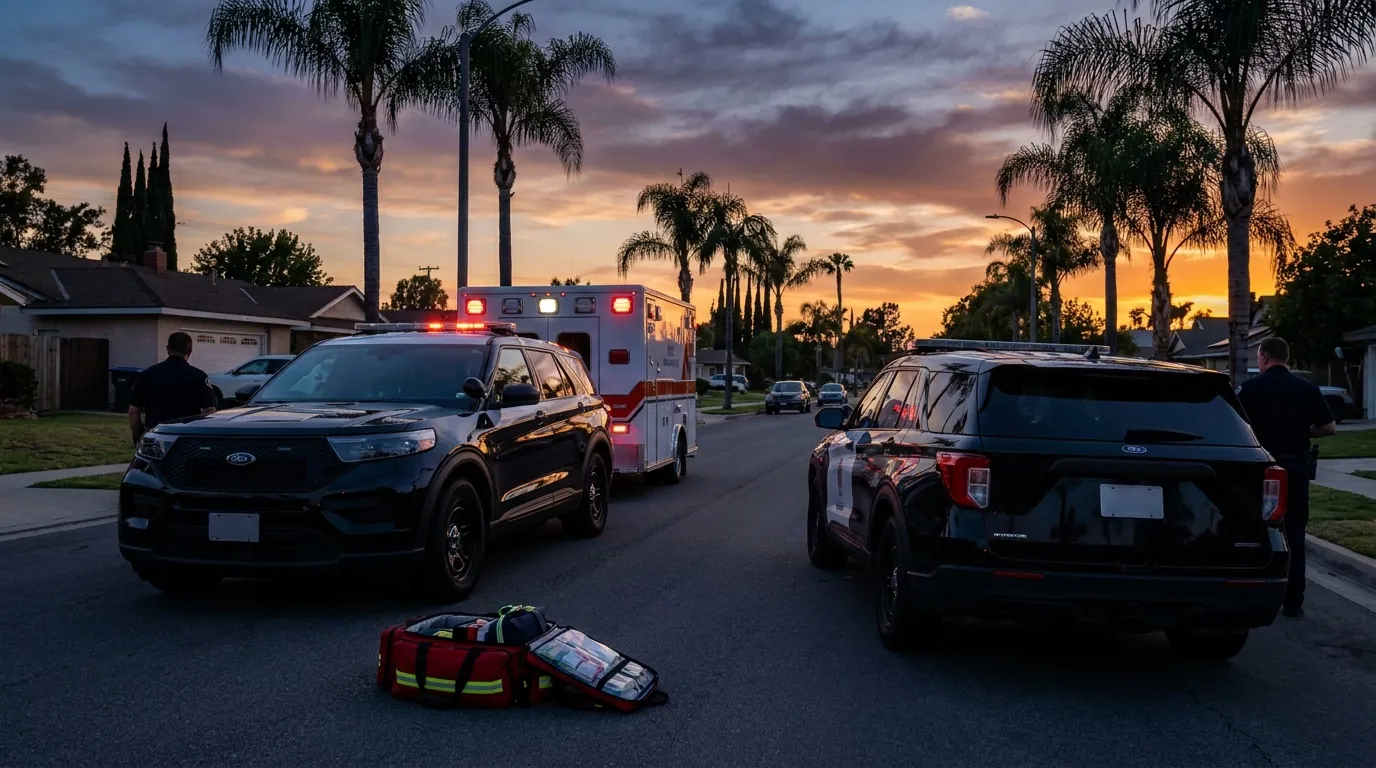

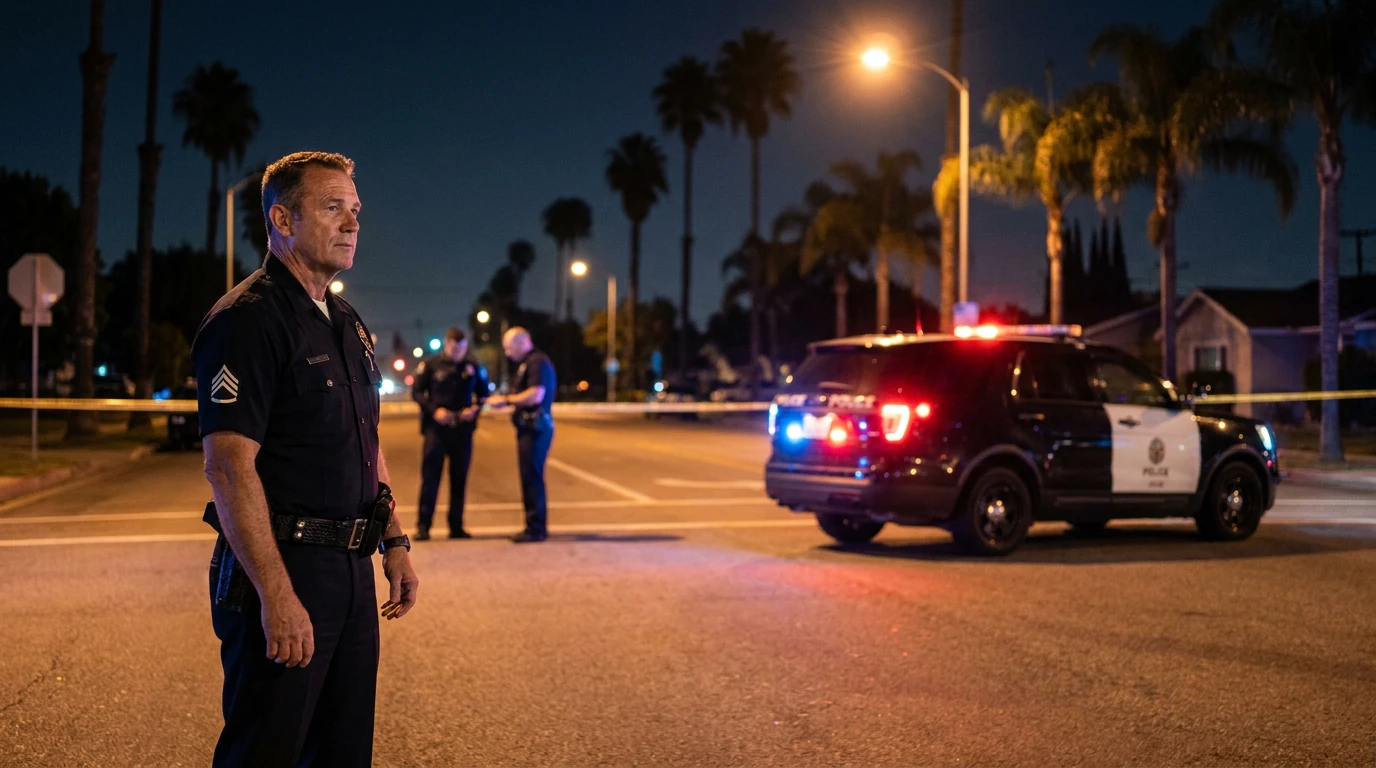
There is a moment in a police career when being good at the job stops being enough — and starts being a problem in itself. It is when the street cop becomes a supervisor. The promotion comes with a raise, with sergeant's stripes and with responsibility. It also comes with a trap nobody writes into the job announcement: the set of reflexes that made you an excellent cop is exactly what has to be taken apart for you to become a decent supervisor.
Before anything else, a structural difference that explains all the rest: American policing is a single-track career. Unlike Brazil, where there are separate careers for the work itself and for management — enlisted and officer, agent and chief, each with its own front door —, here everybody comes in through one door only. Nobody joins already as a boss. Only after spending time doing the actual job, on the line, can somebody become a supervisor and move up. The consequence is direct: every supervisor here was once the cop he now commands — and that is exactly why this transition has its own unique challenges, and it is also part of what explains the success of American policing.
This piece is about that transition — what the literature in the field has already documented about it, what California requires from whoever takes the job, and how it shows up in the practice of those who have lived through the change.
1. What the research calls "the most brutal transition of the career"
The move from doer to supervisor is one of the most studied subjects in management — and in policing it picks up an extra layer. The classic study is by John Van Maanen, of MIT, in "Making Rank: Becoming an American Police Sergeant" (1984), which followed newly promoted officers and described the core discomfort of the job: the sergeant has to break with the peer group without losing its acceptance. Yesterday you were one of the guys on the shift; today you are the one who evaluates, corrects and answers for them. Van Maanen shows that many new supervisors resolve that tension the wrong way — by going on acting like street cops, so it does not look like they "went over to management".
In the management literature outside policing, the finding is the same. Linda Hill, of Harvard Business School, in "Becoming a Manager", documented that the most common mistake of the first-time manager is to keep delivering the technical work he had mastered, instead of doing the new work — which is coordinating, developing people and taking responsibility for the group's result. Her research is about executives; the description fits a patrol sergeant word for word.
There is also the old warning of the Peter Principle (Laurence J. Peter, 1969): in a hierarchy, people tend to be promoted for performance in their current job, until they reach a post where they are no longer competent. Making good arrests does not predict good supervising — they are different trades, with different skills.
2. The part nobody warns you about: the promotion can feel like a demotion
The subject here is career advancement: what happens to the officer who decides to move up into a supervisory position — in California law enforcement, which is what this piece is about. And the first shock is not theoretical: going up in the hierarchy can feel like going down in the career. Whoever made it into a specialized unit holds a spot earned with years on the road, with more autonomy and more command over his own work. Accepting supervision means giving up that spot to start over in another role, on another rung.
In practice, the promotion usually means going back to the line — leaving the specialized unit and taking a crew on the street. For a lot of people it feels like being back at square one: you left patrol, moved up to the specialized unit and now you are back in the same place — except now you answer for everybody who is there.
"I was in the specialized unit, in that good life. I accepted the responsibility of supervision and landed right back on the street. For a lot of people that hurt."
Reading it as a demotion, though, is wrong — and understanding why is the key to the transition. It is not the same job in a worse place. It is another job that happens to take place in the same spot. Going back to the street is not punishment: it is where supervision is actually learned, because it is where the decisions happen. What changes is the seat you occupy on the call.
3. The trained reflex — and why it starts working against you
Here is the hardest point to explain to anyone who has never lived it: the problem is not lack of preparation. It is too much training in the wrong behavior for the new job.
The clearest parallel came from the Army, in the account Eliel Teixeira gave on the episode. Eight years as enlisted infantry, making sergeant, built a specific automatism in him: the infantryman is always on the firing line, finger on the trigger, closing distance and engaging the enemy. The whole training points that way — and the better the soldier, the stronger the reflex.
After officer candidate school came the return to the Infantry School — now as an officer, a platoon leader. On the first field mission, moving the element, the old reflex spoke louder: the first thing he did, already as an officer, was squeeze the trigger. The instructor's chewing out came right away, followed by a set of push-ups he still remembers. And the lesson, which holds exactly the same for policing:
"If you are decisively engaged with the enemy, there is no way to pay attention to what the line on the right and the line on the left are doing. You focused on the enemy and lost focus on what matters to the officer."
That is the operational definition of the problem. The supervisor who gets into the call with his own hands stops seeing the call. He gains a pair of hands and loses control of the scene — which was, precisely, the reason he was there.
4. What changes in practice: from "respond and solve" to "listen and step back"
The cop's natural reaction to an incident is to respond and solve. The supervisor's has to be to listen and take the back seat — the take a backseat of the American jargon. Getting out of the call in order to be able to see the whole call: who is where, what resource is missing, what the radio is not saying, what the next decision is.
For somebody who spent more than a decade on the street, that is counterintuitive to the point of hurting. And it is an honest thing to admit — not out of incompetence, but because the body learned to move before the head decides.
Three practical translations of that shift:
- Show up and don't touch. The supervisor's first move on scene is to build the picture, not to take over the task.
- Ask before correcting. The officer who is on the incident has information the supervisor does not have; the correction comes afterwards, and almost always away from the crew.
- Take on what nobody wants. The hard call, the paperwork, the conversation with the angry citizen, the responsibility for a subordinate's mistake — that is the job, not a detour from it.
5. What the research shows about supervision styles
There is empirical evidence on which supervisor style produces which kind of behavior on the street. Robin Shepard Engel, working from the data of the Project on Policing Neighborhoods, proposed a typology of first-line supervisors that became a reference in the field, with four profiles:
- Traditional — pushes for productivity and paperwork, focused on control and on enforcing the rule.
- Innovative — oriented to the relationship with the community and to new ways of solving problems.
- Supportive — shields the crew from the brass and from the system, prioritizes motivation and protection of the subordinate.
- Active — leads by example, goes to the scene and works alongside, while keeping the supervisory role.
The finding that matters to whoever is stepping into supervision: the supervisor's style influences officers' street behavior in a measurable way — it is not a personality detail, it is an operational variable. The "active" profile is the one that moves the crew's behavior the most, and it is also the one that demands the most balance: it is the thin line between being present and taking the call for yourself. That is exactly where the old reflex knocks down the new supervisor.
6. Degree or street? The debate that splits the profession
There is a legitimate discussion about the weight of formal education in promotion. On one side, the practical argument: between two equivalent candidates, the one with a college degree or a graduate degree has the edge — and, in supervisory and command positions, that carries real weight.
On the other, the caveat from the people on the street: education does not replace the actual job. A résumé full of certificates, with no recent practice, produces the supervisor who does not know what he is asking for — and the crew figures it out within a week. The uncomfortable question that sums up the argument is: when was the last time you got in a car and arrested somebody?
That street intuition has backing in management research. The concept of the knowledge worker — the worker whose main input is applied knowledge, coined by Peter Drucker back in the 1950s — describes today's cop well: he decides alone, in the middle of the street, based on technical and legal repertoire, and not on an order given step by step. And Drucker was categorical on one point that matters here: this kind of worker is not managed by task supervision — he is managed by somebody who understands the work he does.
On the empirical side, Amanda Goodall's research on expert leadership shows the same thing in numbers and across quite different sectors: organizations led by people with proven hands-on experience in the core work — hospitals run by physicians, universities by serious researchers, teams by former elite athletes — perform better than those led by career managers without that background. The reading for policing is direct: a degree without road time does not produce a good supervisor. Education organizes the thinking; credibility and repertoire come from having done the work — and that is what the crew tests on the first serious call.
The honest synthesis is that the two things solve different problems, and neither covers the absence of the other. Education forces structured thinking, gives access to research in the field and trains you to make an argument in writing — something the supervisor does all the time, in reports, evaluations and use-of-force justifications. Practice gives repertoire and legitimacy. Whoever does not put theory and practice together does not become a good cop — and becomes an even worse supervisor.
The real risk is not in requiring a degree, but in promoting on theory alone: the candidate who knows how to answer the promotional exam, but has no road time. It is the Peter Principle operating with an academic finish.
7. How this works in the Los Angeles area
In California, officer training is regulated by POST (Commission on Peace Officer Standards and Training), and supervision is no exception: whoever is promoted has to go through a specific supervisory course, within a set deadline after taking the job, on top of the certification requirements of the career.
Before any classroom, though, there is an earlier filter: every police agency requires a minimum time in the core job — years of work as an officer on the line — before anybody can even sit for the promotional exam to supervisor or sergeant. And the vast majority go beyond the formal minimum: they want a broad, deep body of experience, built on real calls. Nobody reaches supervision without having done the work.
It is worth noting the limit of that, though: the course delivers the theory — policy, legal liability, performance evaluation, conducting an administrative investigation. The application is learned on the shift, with a more experienced supervisor nearby. No classroom takes the old reflex out of the supervisor — the one that puts his hands into the call instead of commanding it (it is the same finger-on-the-trigger trap described in section 3).
And there is a particularity of the Los Angeles area that changes the experience of taking on supervision here. The county is a mosaic of agencies: besides LAPD and the Sheriff's Department (LASD), dozens of cities keep their own police force — each with its own internal policy, its own promotional process and its own way of assigning supervisors. Two neighboring cities can require quite different things from a new sergeant.
Volume weighs in too. Because of the size of the operation, it is in Los Angeles that a lot of procedure is born and tested before becoming standard elsewhere — which means more written policy, more documentation and more scrutiny over the supervisor's decision.
In practice, the right question for anyone going up for promotion in the area is not "what does California require", but "what does my department require — and how does it assign and evaluate supervisors". The state rule is the floor; the rest changes from city to city.
8. A playbook for the first months of supervision
- Assume you are going to screw up the old way. The reflex to solve is going to show up on the first serious call. Knowing that shortens the correction time.
- Arrange with an experienced supervisor to call you out. After the promotion, blunt correction stops coming on its own — whoever is in charge tends to get less honest feedback, not more. So it has to be asked for, and arranged in advance with somebody who has already made the same crossing.
- Go back to the street on purpose. Not as someone who got demoted — as someone learning a new trade in the place where it happens, because that is where the learning and the growth of this stage of the career actually take place. And there is pride in it: the supervisor starts contributing to the success of each subordinate and to the future of the agency itself. It is an investment, not wasted time — and the experience piled up here is one of the most valued things from then on.
- Separate correction from exposure. Correcting in front of the crew destroys more than the mistake being corrected.
- Accept the bill. Less overtime, less autonomy, more responsibility — and the return comes in career, not in next month's paycheck.
What the two of them think about it
What you have read up to here is the context: what the research documents, what California requires and how the thing works in the departments of the Los Angeles area. What no study delivers is the position of those who supervise today — and that is what the episode has.
On the show, Eliel and Edwin speak with no hedging about what a department should value in a promotion, what to do with the supervisor who has lost touch with the street and why going back to the shift — which looks like punishment — is the only way to learn the job. It is the kind of read that only comes from whoever is carrying the stripes today.
Sources and further reading on the subject
- VAN MAANEN, John. Making Rank: Becoming an American Police Sergeant. Work and Occupations, 1984.
- ENGEL, Robin Shepard. Studies on patrol supervision styles (typology of first-line supervisors), from the Project on Policing Neighborhoods.
- HILL, Linda A. Becoming a Manager: How New Managers Master the Challenges of Leadership. Harvard Business School Press.
- PETER, Laurence J.; HULL, Raymond. The Peter Principle, 1969.
- DRUCKER, Peter F. Concept of the knowledge worker and the management of knowledge work (from Landmarks of Tomorrow, 1959).
- GOODALL, Amanda H. Research on expert leadership — performance of organizations led by people with proven experience in the core work.
- California POST — Commission on Peace Officer Standards and Training: supervisory course and certification requirements (post.ca.gov).
The first-person account of the transition — leaving the specialized unit, going back to the shift and the episode at the Infantry School — is from Eliel Teixeira, on episode 42 of Palavrão Tático.
Who speaks here: Eliel Teixeira and Edwin Wu are working police officers in the Los Angeles area, California — Brazilian-born, American citizens, with long careers in law enforcement. On Palavrão Tático, they talk about policing for cops and enthusiasts, with no translation into civilian language.
Heads-up: everything described here applies to California rules — and, on several points, to each one's specific department. In other American states (Florida, Texas, New York…) the rules can be quite different.
Watch this part of the episode:
The switch that flips when you leave the street and become a supervisor — starting at 31:20 · Palavrão Tático
This article is a reference edition of episode 42 of Palavrão Tático and is subject to edits and editorial additions. For the full conversation, watch the episode. — Updated on 09/08/2026.