



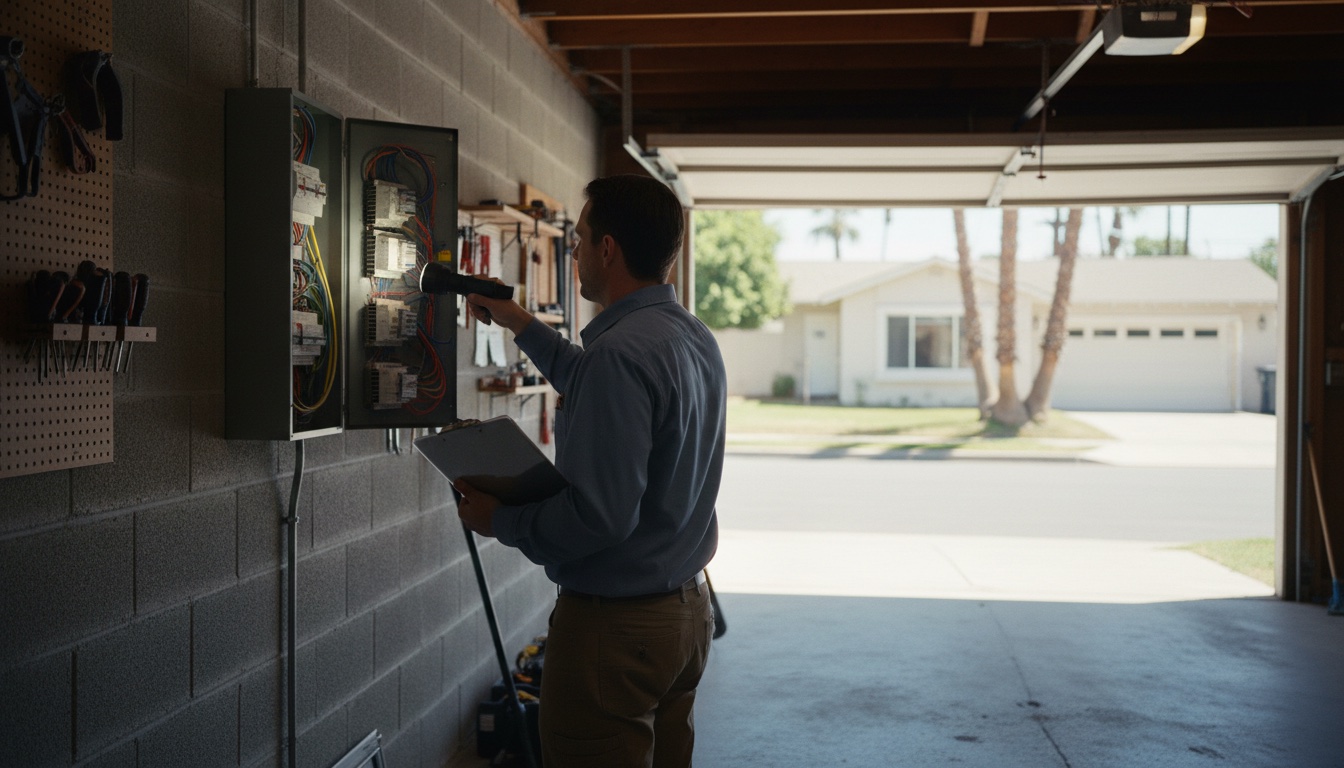
“It's not a basic inspection, it's a deep inspection of the house.” Sammy Veicer describes the scope and his co-host is surprised — because anyone who has bought property in Brazil has rarely been through anything like it.
The report, he says, usually comes in at around 90 pages. And one remark sums up the value of the service: “I don't know of a single inspection that turns up nothing. It will always find something.”
Required, it is not. Universal, nearly
California law does not require the buyer to inspect. What exists is the contract: the RPA expressly recommends investigating the property and states that skipping it is a risk assumed by the buyer.
In practice, though, it has become the standard. “There's no one who doesn't do the inspection,” Sammy says. The only situation in which he has seen someone waive it was in a very hot market, with dozens of offers on the same house — the buyer waived the inspection to make the offer more attractive than the competition. That's an as is purchase, and it's the exception, not the rule.
One warning usually goes unnoticed: waiving the inspection does not erase the seller's duty to disclose. They remain obligated to report the defects they know about. What you lose is the chance to find the ones they don't know about — and those are precisely the ones that tend to cost dearly.
The 17 days
The standard contract deadline for investigating the property is 17 days after acceptance of the offer. Everything fits inside that window: scheduling, inspecting, reading the report, hiring specialists if needed and deciding what to ask of the seller.
It's tight, and that's why the calendar matters. A good inspector in a competitive area has a waiting list. The practical math: booking the general inspection in the first days of the window leaves room for the second round, with the specialists — which is where the expensive problems show up.
That same 17-day window applies, by default, to the loan and appraisal contingencies. All three run together.
What the general inspector looks at
The general inspection is visual and non-destructive — they don't open walls. But it covers the whole house:
- Structure and foundation — cracks, uneven floors, signs of soil settlement.
- Roof — condition of the shingles or membrane, flashing, signs of leaks.
- Electrical — panel, outlets, grounding, exposed wiring.
- Plumbing — faucets, pressure, leaks, water heater.
- HVAC — whether heating and air conditioning work.
- Openings — literally whether every window and every door opens and closes. A door that swings shut on its own is usually a symptom of an out-of-level floor.
- Moisture and mold — stains, smell, signs of past water intrusion.
About this professional's credentials, a fact almost no one knows: California does not license home inspectors. What exists is chapter 9.3 of the Business and Professions Code (sections 7195 to 7199), which defines the activity and the standard of care required. In the absence of a state license, the market organized itself around associations — CREIA and ASHI are the benchmarks. Asking for the credential before hiring is the bare minimum.
The report that tells you to order another report
The most important line in the general report is usually a referral. It's the inspector saying that item is beyond their scope. In the episode, the example is the roof: “I'm not a roof specialist, so I recommend you get a second inspection.”
The most common specialized inspections:
- Structural — an engineer, when there's a significant crack or suspected soil movement.
- Roof — because the remaining service life changes the math by thousands of dollars.
- Sewer camera — cheap next to the damage it prevents, essential in an older home.
- Termite and pests — the pest inspection is separate from the general one.
- Mold, when there's a sign of persistent water intrusion.
A referral in the report is not defensive boilerplate. It's where the big money tends to be hidden.
What it costs and who pays
The general inspection is paid for by the buyer. The figure cited in the episode is around $600 — consistent with what is charged in an expensive area like coastal Orange County. The national U.S. average sits in the $300 to $430 range, rising to $400 to $500 or more for homes above 3,500 square feet.
It's the most pragmatic comment in the segment: “it's no end of the world, next to the asset you're buying.” A few hundred dollars to examine an asset worth over a million.
There's also the variation in which the seller orders the inspection before listing (the pre-listing inspection) and hands the finished report to whoever makes an offer. Sammy says one agent on his team uses that strategy to bring transparency to the listing — and makes the right caveat: it does not replace your own inspection. That report was commissioned by the other side.
How to make good use of your 17 days
- Book before you need it. Talk to the inspector while you're still house-hunting.
- Be there for the inspection. What they say walking through the house is worth as much as the report.
- Read the summary and the recommendations first. Ninety pages are intimidating; what decides things is in the referrals.
- Don't confuse wear with defect. Every house has maintenance items. What matters is what's expensive, urgent or structural.
Cadê Moradia has already devoted a full episode to the topic, with a Brazilian inspector as a guest — worth a look for anyone who wants to understand the report item by item.
Sources and verification
- California Business and Professions Code, chapter 9.3, sections 7195–7199 — rules governing home inspection activity; the state does not require a specific license for the inspector.
- CREIA (California Real Estate Inspection Association) and ASHI — reference associations and standards of practice in the state.
- California Association of REALTORS® — standard 17-day deadline for the property investigation contingency in the RPA; inspection recommended, not required.
- National home inspection cost surveys (2025–2026) — average around $340, common range of $296 to $424, with higher figures for large homes and expensive markets.
- Transcript of episode CM018 of the Cadê Moradia podcast, with Sammy Veicer.
Watch this part of the episode:
Deep Inspection — starting at 10:06 · CADÊ BRAZIL
This article is a reference edition of episode 18 of the podcast and is subject to edits and editorial additions. For the full conversation, watch the episode. — Updated on 10/08/2026.