
People buying a home in California usually hire a general inspection and assume the whole property has been checked. But there is one stretch that inspection doesn't reach: the pipe that carries sewage from the house to the main line in the street. That stretch has its own inspection, done with a camera — the sewer line inspection, also called a sewer scope.
On the Cadê Zapp · South Bay podcast, home inspector Aguiar, who serves Southern California, explained the difference to realtor Dina Silveira and Jason Lanzarini. During the general inspection, he flags any visible leak in the house — under sinks, in bathrooms, in the kitchen. The sewer line leaving the house is a separate, "very specific" evaluation.
How the camera inspection works
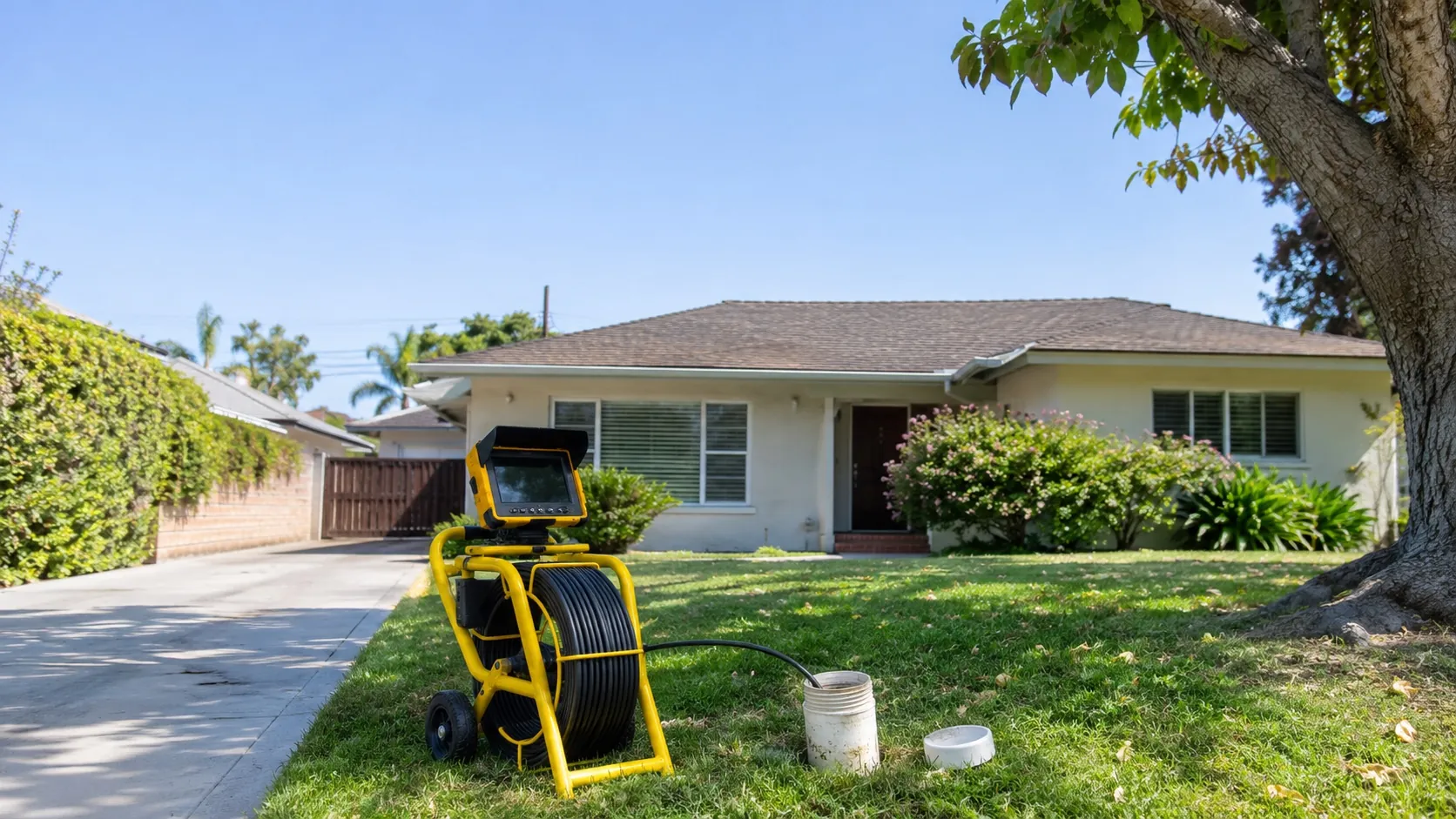
The inspector feeds a camera attached to a flexible cable through the sewer cleanout, usually a pipe with a threaded cap near the house, in the yard or along the side. The camera travels the lateral to the public main connection and records the inside of the pipe. The result is a video showing the approximate location of each problem — which helps the plumber quote the repair.
The exam usually takes less than an hour and, in the Los Angeles area, typically costs a few hundred dollars. It is hired separately from the general inspection — a service Aguiar now offers as well.
What the camera finds
- Tree roots: the most common case mentioned in the episode. Roots get into pipe joints looking for water, grow inside and, over time, lift and break the line.
- Cracked, broken or offset pipe: joints that separated as the soil shifted and with the small, frequent earthquakes in California.
- Belly: a sagging section where water and waste sit still.
- Blockages: rocks, built-up grease, objects.
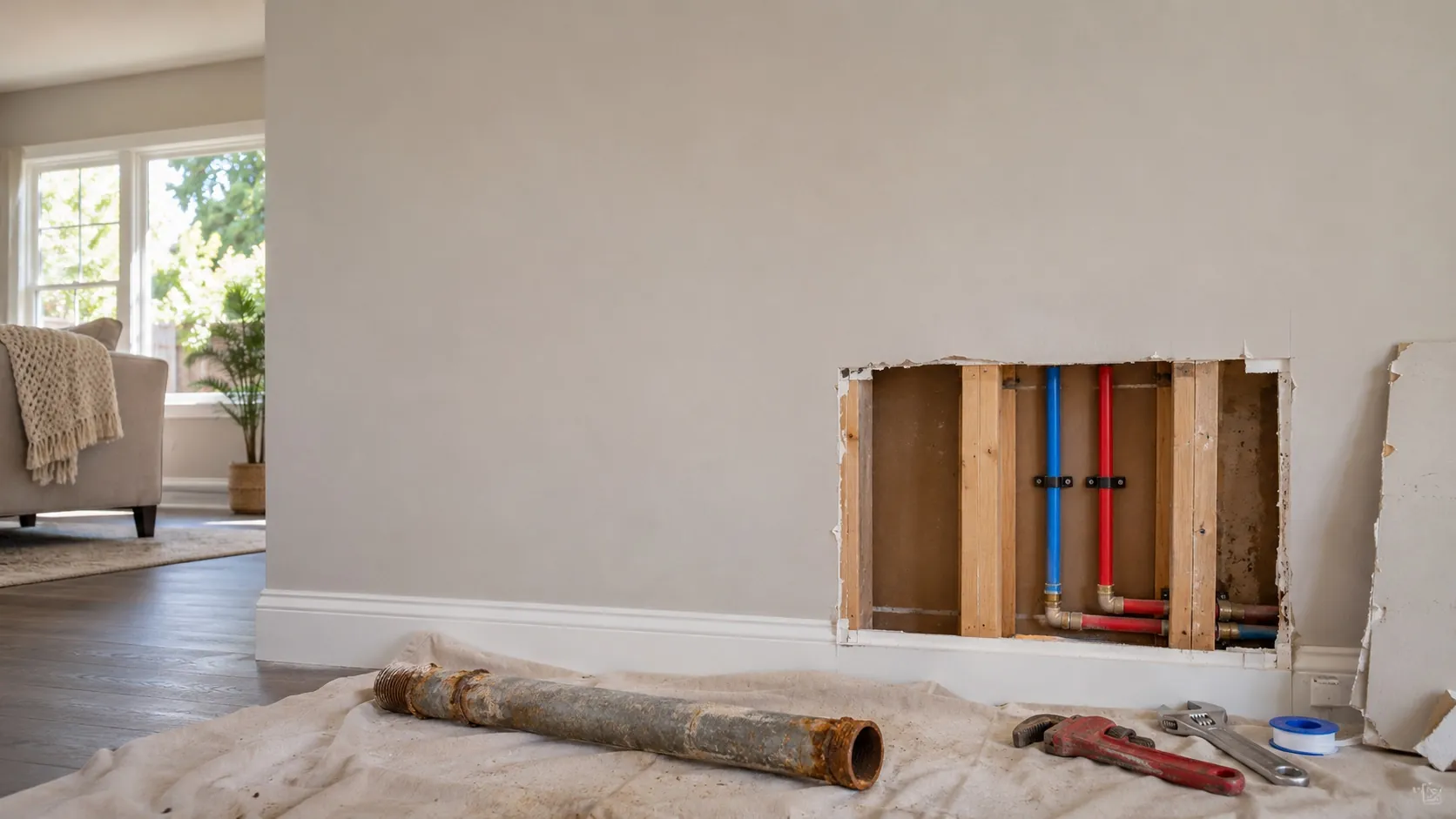
- Old materials: older homes in the region often have clay, cast iron or even bituminous fiber (Orangeburg) laterals — a material used in the mid-20th century that deforms over time.
None of these problems shows up during a normal walk-through: the sewer may be working today and clog a few weeks after move-in.
Who is responsible for the pipe to the street
This is a difference from Brazil that catches many people by surprise. As Aguiar and Dina explain in the episode, the owner is responsible for the piping from the house to the point where it connects to the main in the street; from there on, it's the city's responsibility.
In the City of Los Angeles, LA Sanitation and Environment (LASAN), the city's sanitation department, states that the property owner is responsible for maintaining and repairing the house lateral up to the connection with the public main — including the section that runs under the sidewalk and the street. Rules vary from city to city, and some parts of California even require a certificate showing the lateral is in good condition at the time of sale, as in parts of the East Bay, in the San Francisco area.
How much the repair can cost
It depends on the problem and the location:
- Roots or a clog: mechanical cleaning or hydro-jetting, usually a few hundred dollars — but roots come back if the pipe is open.
- Damaged section: a spot repair or a trenchless lining, which can reach a few thousand dollars.
- Replacing the lateral, especially when the broken section is under the street: it requires a city permit, excavation and asphalt replacement, and can exceed $10,000.
Ask for the inspection video and a second quote before authorizing any repair. That's why the sewer inspection makes the most sense before closing on the purchase, while the buyer can still negotiate.
When it's worth doing
- Older homes, especially those built before the 1980s.
- Lots with large trees near the sewer line path.
- A house that sat empty for a long time (the problem may not have shown up from lack of use).
- A history of clogs, slow drains or sewage smell in the yard.
- Renters who notice a slow drain or sewage smell should notify the landlord in writing — the lateral repair is the owner's responsibility.
With the video and the quote in hand, the buyer can ask the seller for the repair, a credit at closing or a price adjustment — all within the inspection contingency period in the contract. Current owners can also have the inspection done at any time, before the problem shows up.
Sources and verification
- LA Sanitation and Environment (LASAN), City of Los Angeles — property owner responsibility for the house sewer lateral.
- East Bay Municipal Utility District (EBMUD) — regional private sewer lateral program, with a certificate required at property transfers.
- Transcript of the Cadê Zapp · South Bay podcast episode with realtor Dina Silveira, Jason Lanzarini and home inspector Aguiar.
Who's speaking here: the Cadê Zapp · South Bay podcast is hosted by Jason Lanzarini, who since 2014 has run the Facebook groups of the Brazilian Community in California. This episode was recorded with realtor Dina Silveira, a specialist in the South Bay market in Los Angeles, and features Aguiar, a home inspector serving Southern California.
General information for the Brazilian Community in California — not legal, financial or technical advice. For your situation, consult a qualified professional and, for the repair, a CSLB-licensed plumber in California.