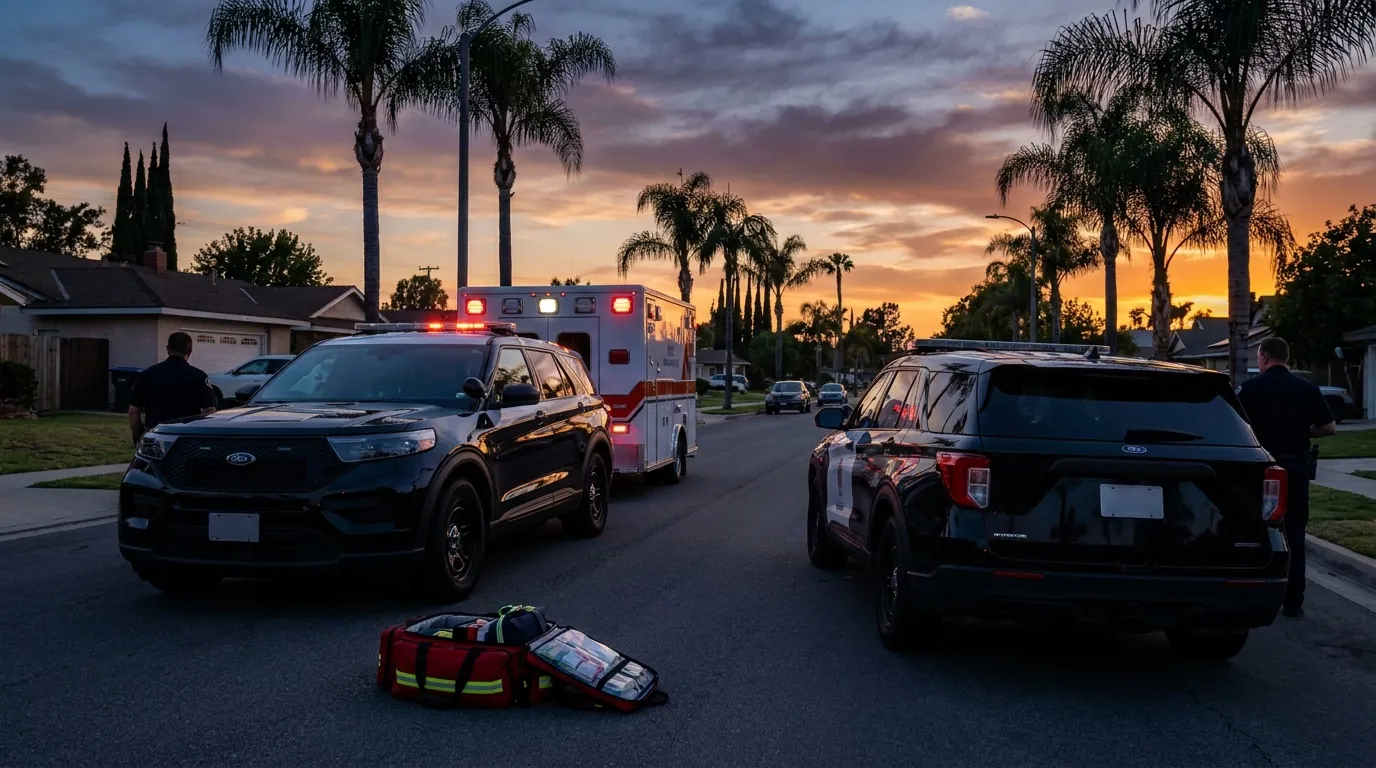

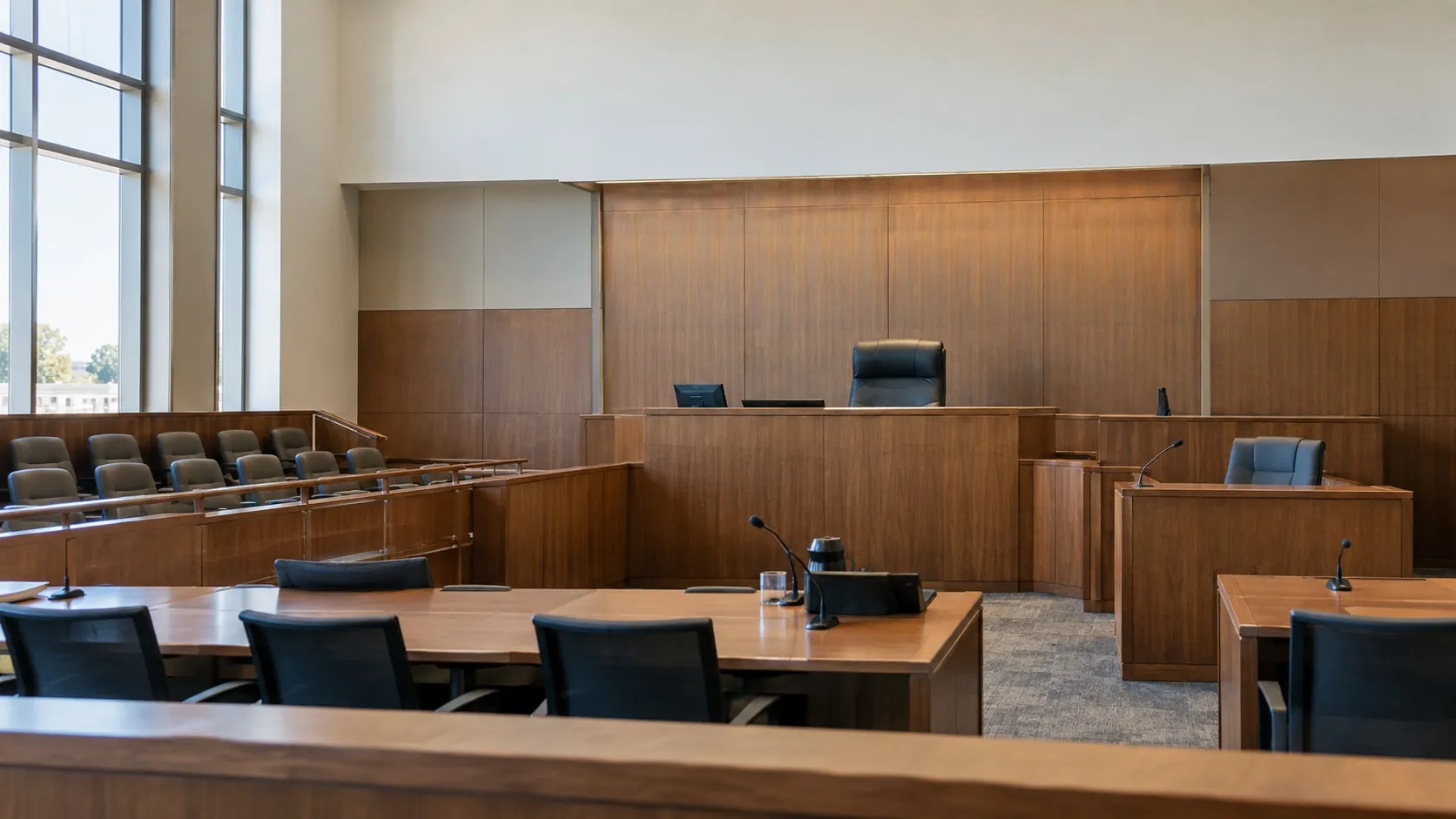
One of the things that most surprises Brazilian officers when Palavrão Tático talks about the American daily routine is how close the people on the street are to the people in the courthouse. In episode 45, Eliel Teixeira, Edwin Wu, and guest Marcelo Bini talk about it plainly: in the United States, the officer calls the judge in the middle of the night to request a warrant, texts the prosecutor, and, for lesser offenses, sets bail by checking a schedule. And when the case goes to trial, they face a defense attorney whose job is to attack exactly the credibility of whoever made the arrest. None of this depends on a law degree — it depends on knowing the procedure and writing a report that can hold up under the theater of the courtroom.
The judge on the phone: a warrant at any hour
The most common example is drunk driving. When a suspected driver refuses the test, the officer often needs a search warrant to draw blood — and needs it fast, because the alcohol keeps metabolizing. The guest recalls that, making many DWI arrests in Texas, waking the judge up in the middle of the night was routine.
This isn't informality — it's a constitutional requirement. In Missouri v. McNeely (2013), the Supreme Court ruled that the natural dissipation of alcohol in the blood does not, by itself, create an emergency that excuses the warrant requirement; the rule is to seek judicial authorization whenever it can be obtained in time. In Birchfield v. North Dakota (2016), the Court drew a distinction: a breathalyzer test after arrest can be done without a warrant; drawing blood cannot.
To make this workable, states built fast-track procedures. In California, Penal Code section 1526 allows the sworn statement and warrant request to be transmitted to the magistrate by fax, email, or electronic server, with a digital signature, and lets the signed warrant received by the officer count as the original. Many counties keep a judge on call specifically for this kind of request.
Bail by the schedule: who sets the amount
In the episode, the three of them talk about how, for lower-level offenses, the officer himself "sets bail" by checking a schedule — and how that doesn't require legal training, just attention whenever a new schedule comes out. It's worth spelling out how this works in California, because the mechanism is more precise than it sounds:
- The amounts are set by judges. Penal Code section 1269b requires the judges of each county to approve a countywide bail schedule, with an amount for every offense and a general clause for anything not listed. The schedule is reviewed periodically.
- Who applies it can be the officer. The same section authorizes the officer in charge of the jail, officers or deputies designated to accept bail, and the court clerk's office to accept bail at the amount set in the warrant, the schedule, or a court order.
- For many misdemeanors, there's no bail at all. Penal Code section 853.6 provides for release on citation (cite and release) for most misdemeanors: the person signs a promise to appear and is released on the spot.
- The amount is no longer purely mathematical. Since the California Supreme Court's decision in In re Humphrey (2021), keeping someone in custody solely because they can't afford bail requires the judge to consider ability to pay and less restrictive alternatives.
In Texas, where the guest worked, setting bail goes through a magistrate, under parameters set by the state Code of Criminal Procedure. That's why the description "the officer sets bail" always needs to be paired with the state and the type of offense.
The prosecutor, by text message
In the Los Angeles area, part of an officer's routine is presenting the case to the prosecutor for a charging decision — what's known as filing. The hosts explain that's actually how they met: working in different jurisdictions, they kept running into each other at the same courthouse. The working relationship with the prosecutor's office is ongoing, and questions flow both ways. One of the hosts mentions that, during the recording itself, a Los Angeles prosecutor was texting him with practical questions about a case.
"They call the person on the front line directly to find out, day to day, what it's really like."
The reason is simple: the prosecutor knows the law but didn't live the stop. How long a detention lasted, the order things happened in, what's plausible in the field — that practical knowledge is what lets you judge whether a case holds up. Legal training, discussed in the show's previous episode, isn't what gives you that knowledge; the street does.
The courtroom as theater — and the target is credibility
The third part of the conversation is the trial. The three describe the courtroom as "very theatrical," where the defense strategy often goes after the officer's credibility rather than the facts themselves. The guest gives an example of a question he got about the walk-and-turn test, one of the standardized field sobriety tests set by NHTSA, the federal traffic safety agency:
"How thick was the line you asked my client to walk on?"
The question has nothing to do with whether the driver was drunk. It has to do with making the officer look hesitant on a detail in front of the jury — and from there, planting doubt about everything else. Standardized field sobriety tests (SFST) follow an NHTSA training manual precisely so the administration is standardized and defensible; an officer who knows the manual answers with confidence and can explain what the protocol requires and what it doesn't specify.
Twelve hours of interrogation aren't worth a confession
Another technical point in this segment is the difference in weight between a two-minute detention and a two-hour one, and between a 20-minute interview and a confession obtained after 12 hours without a lawyer. As they sum it up: even with Miranda rights read, a confession pulled after 12 hours "lands on any prosecutor's or judge's desk and is worth nothing."
The legal basis is old and solid. Since Ashcraft v. Tennessee (1944), when the Supreme Court threw out a confession obtained after roughly 36 hours of continuous interrogation, admissibility of a confession has depended on its voluntariness, judged by the totality of the circumstances — duration, sleep and food deprivation, age, mental condition. Miranda v. Arizona (1966) added the requirement to warn suspects of their right to remain silent and to an attorney, but reading those rights doesn't "shield" an abusive interrogation. In California, Penal Code section 859.5 still requires full electronic recording of custodial interrogations in homicide cases — which leaves the length and tone of every conversation documented for the judge to see.
The lesson running through the whole segment is the same: the American officer works close to the judge and the prosecutor, but is being evaluated by them the entire time. An accurate report, the right sequence of events, and respect for the limits are what turn a good arrest into a conviction.
Sources and verification
U.S. Supreme Court: Missouri v. McNeely, 569 U.S. 141 (2013); Birchfield v. North Dakota, 579 U.S. 438 (2016); Ashcraft v. Tennessee, 322 U.S. 143 (1944); Miranda v. Arizona, 384 U.S. 436 (1966). California Supreme Court: In re Humphrey, 11 Cal.5th 135 (2021). California Penal Code, sections 853.6, 859.5, 1269b, and 1526. NHTSA, Standardized Field Sobriety Test (SFST) training manual. The accounts about calling judges, talking with prosecutors, and questions faced at trial come from the episode's guests and are reproduced as personal experience.
Who's speaking here: Eliel Teixeira and Edwin Wu are active-duty police officers in the Los Angeles, California area — Brazilian-born, U.S. citizens, with long careers in law enforcement. In this episode, they're joined by Marcelo Bini, who worked as a police officer in Texas.
Heads up: everything described here applies to California rules — and, on several points, to each officer's specific department. In other U.S. states (Texas, Florida, New York…) the rules can be quite different.
Watch this part of the episode:
The direct relationship between police, judges, and prosecutors in the U.S. — starting at 6:38 · Palavrão Tático
This article is a reference edition of episode 45 of Palavrão Tático and is subject to edits and editorial additions. For the full conversation, watch the episode. — Updated on 16/09/2026.