
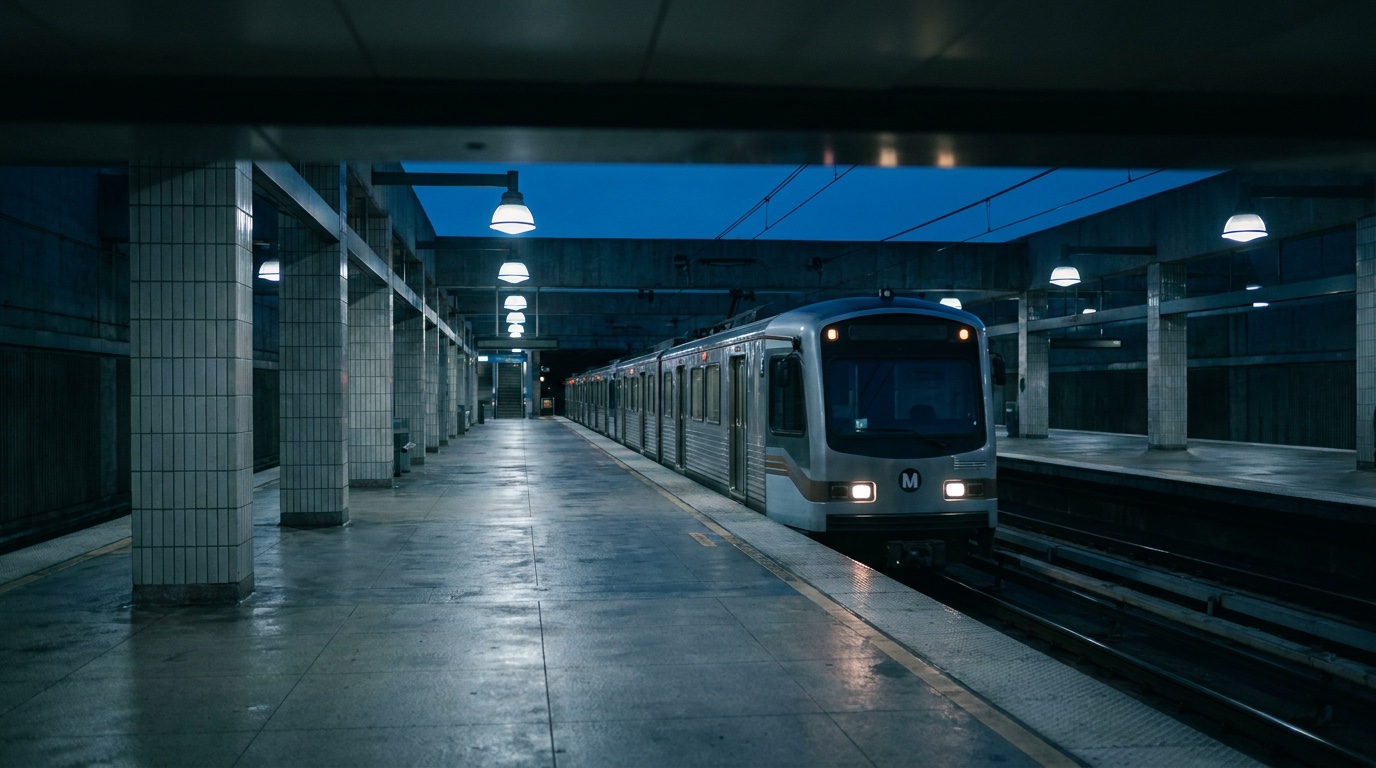
Anyone following public safety in Los Angeles has seen the ads: the transit police — the police force for public transportation — is back and hiring. What looks like news is actually the third chapter of a story that says a lot about how policing is (not) managed around here.
Chapter 1: it existed, and it was shut down
LA once had its own rail and bus police force — with jurisdiction over every crime tied to public transportation: inside the cars, on the buses and in the stations. Back then the bill got heavy: payroll, retirement, contributions. The solution was to contract out the whole thing to the sheriff's department for a flat fee.
Chapter 2: the contract sliced in three
At renewal, they decided to break the contract into three, by geographic region: one piece for Long Beach PD (the line runs through the city), one for LAPD and one for the sheriff. In theory, the closest officer responds faster. In practice, they forgot one detail: the train moves. A call that starts in Los Angeles jurisdiction and ends in Long Beach still belongs to whoever had it at the origin — and that agency is the one who cleans it up, even if the other one is standing right there on the platform where it ended. It turned into the mess we have now.
Chapter 3: rebuild from zero — at the worst possible moment
Now the new crop of transit commissioners has decided to go back 30 years: stand the rail police force back up. The problem: building a police department from scratch is enormously expensive — and California is living through a historic hiring shortfall; no agency can fill its openings. The announced way out is to fish in someone else's tank: the postings are only for laterals — already-certified officers from other agencies (that certificate that cost $300,000 to issue) — with a starting salary in the range of $110,000/year.
The elephant in the rail car
None of this solves what riders complain about most: the constant presence of homeless people and drug users on the trains and buses, which drives away exactly the people who depend on transit to get to work. The money is there — the transit agency even funds civilian "ambassadors" for social outreach — but the transit administration's own policy discourages strict enforcement inside the system. A uniformed officer in the car, with no backing to act, becomes decorative. Good luck to the new department.
Who's talking here: Eliel Teixeira and Edwin Wu are working police officers in the Los Angeles area, California — born in Brazil, American citizens, with long careers in law enforcement. On Palavrão Tático they talk cop to cop, for officers and enthusiasts, without translating any of it into civilian language.
Heads up: everything described here follows the rules of California — and, on several points, the specific department each of them works for. In other American states (Florida, Texas, New York…) the rules can be quite different.
Watch this part of the episode:
LA's transit police: disbanded, contracted out and now rebuilt (approximate segment) — starting at 43:40 · Palavrão Tático
This article is a reference edition of episode 40 of Palavrão Tático and is subject to edits and editorial additions. For the full conversation, watch the episode. — Updated on 06/08/2026.