



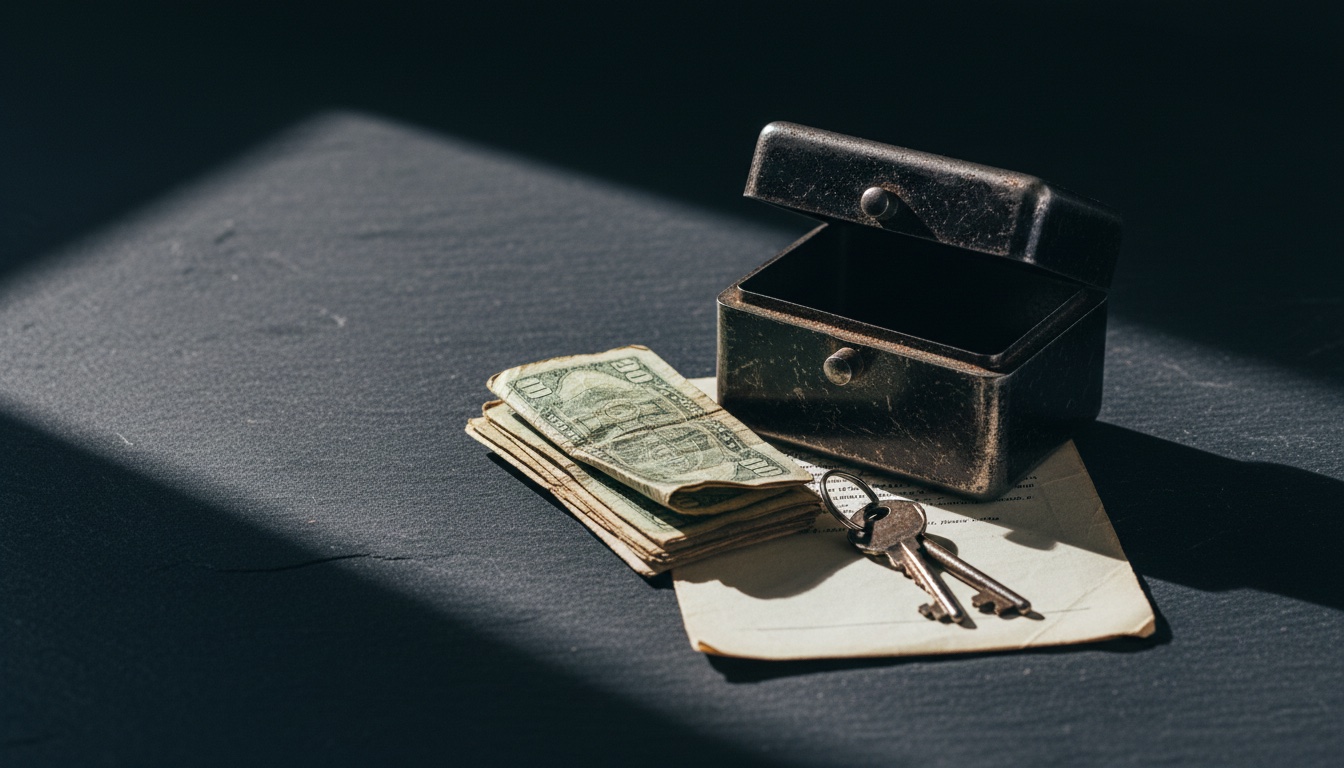
If you buy a $1 million house in California and offer $100,000 as a deposit, those $100,000 do not go to the homeowner's account. They go to a company that is neither yours nor theirs, and they sit there, tied to the contract.
"Nobody touches the money, not you, not the owner of the house," Sammy Veicer says in the episode. That company is called escrow, and it is the piece that most surprises anyone who has bought property in Brazil.
Escrow is not a bank, a notary or an agent
Escrow is a figure specific to the American system: a neutral depositary that holds the money and documents of a transaction and executes, to the letter, the written instructions both parties signed at the start.
In California this is not informal. Independent escrow companies are licensed and supervised by the Department of Financial Protection and Innovation (DFPI), under the Escrow Law of the state Financial Code. Title companies that provide the service have additional oversight from the state Department of Insurance.
And there is one rule that defines everything: the escrow officer is barred from advising or favoring either side. They are not the buyer's ally, nor the seller's. They are the executor of the instructions.
One detail the episode mentions and that is worth recording: escrow is not exclusive to real estate. Buying a business, for example, uses the same mechanism.
The comparison the episode makes with Brazil
In Brazil, the deposit usually goes straight to the owner. If the deal stalls, the buyer has to ask for it back — and often negotiate or litigate to get it. The burden falls on whoever already paid.
In the California model the burden is reversed. The money never left neutral ground. If a condition set out in the contract was not met, the way back is an instruction to escrow, not a demand to a person. That is the answer to the question in the episode's title: the money is safe because it was never in the other side's hands.
How the money goes in and how it comes out
The sequence is simple to describe and strict to follow:
- Offer accepted. The clock starts.
- Deposit of the earnest money. The contract default is 3 business days to transfer the amount to escrow — what the episode calls "performing." It is not market slang: it is delivering what your own offer promised.
- The escrow period. Every document goes through it: offer, counteroffers, reports, seller disclosures, lender instructions.
- Closing. Once the conditions are met, escrow releases the money to the seller, records the deed and the house is yours.
The strong point is the middle stage. "Escrow has access to every document too," Sammy says. And if something happens outside what is documented, the transaction freezes — escrow releases nothing until the parties resolve it through the path the contract sets out.
When the money comes back — and when it does not
The refund is neither automatic nor unconditional. It depends on you being inside an active contingency — the exits your offer provided for:
- Inspection. The report flagged something you do not accept and no agreement was reached: you can walk.
- Appraisal. The bank valued the house below the price and there is no agreement on the difference.
- Financing. The credit did not come through by the lender's decision. "It is not your fault," Sammy sums up in the episode.
- Disclosures. A mandatory document revealed something relevant — a flood zone, for instance — that changes your decision.
What changes the outcome is the calendar. A contingency that has been removed — in writing or by an expired deadline, as the contract provides — no longer protects. Walking away after that is a fight over the deposit, not a smooth refund.
What to check when your escrow opens
- Confirm the company's license — an independent escrow must appear as licensed with the DFPI.
- Read the escrow instructions before signing. It is the document the officer will follow literally.
- Watch out for wire fraud. The classic scam: a fake email with swapped banking details on the eve of the deposit. Confirm the details by phone, at a number you have used before.
- Keep the receipts for every transfer. Every movement is recorded; it is good for you to have your own copy.
This text is informational. Conditions for the return of the deposit depend on the signed contract and on the deadlines actually met.
Sources and verification
- California Financial Code, Division 6 (Escrow Law) — licensing requirement for independent escrow companies.
- California Department of Financial Protection and Innovation (DFPI) — regulator of escrow licensees in the state.
- Legal prohibition on the escrow officer advising or favoring either party; action bound to the written instructions signed by both.
- California Association of REALTORS® — default period of 3 business days to deliver the initial deposit to escrow after acceptance of the offer.
- Transcript of episode CM018 of the Cadê Moradia podcast, with Sammy Veicer.
Watch this part of the episode:
The Role of Escrow — starting at 4:01 · CADÊ BRAZIL
This article is a reference edition of episode 18 of the podcast and is subject to edits and editorial additions. For the full conversation, watch the episode. — Updated on 10/08/2026.