



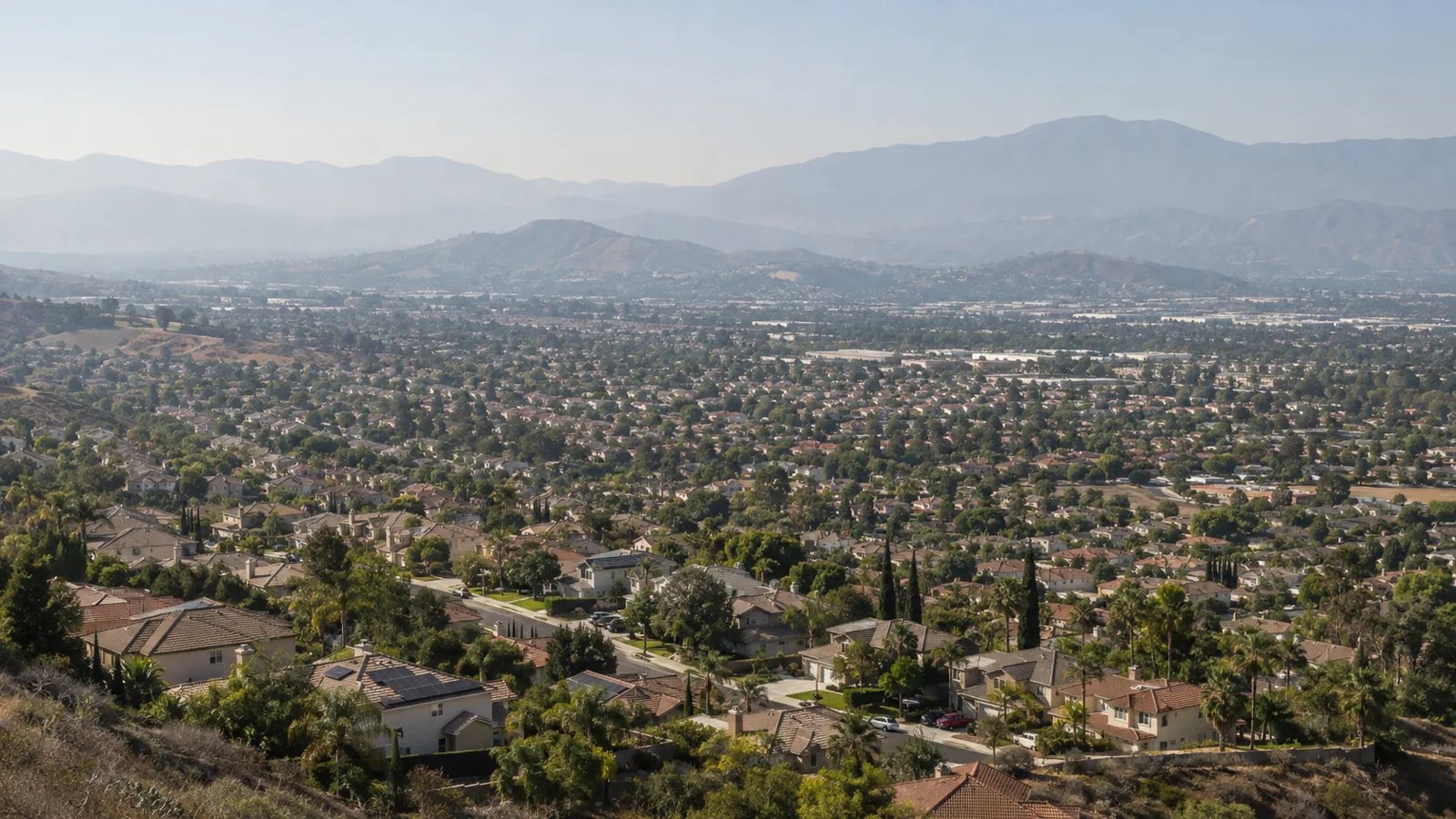
It's the question that comes up most in the show's comments, and it was the first one answered on the episode: are home prices going to drop? The realtors' answer, given in April 2026 and focused on Greater Los Angeles, is that they don't expect a drop — but they don't expect the recent years' run-up to repeat either.
"I don't believe prices are going to drop, at least not here in California. What I do believe is that prices are more stable right now." — one of the show's realtors, on the episode
This article lays out the realtors' reasoning and adds the context needed: price forecasts are opinions, and this market has already surprised plenty of people.
Stability, not a drop
The realtor acknowledges hearing about drops in parts of Florida and Texas, but says he doesn't see that in his own region. The reason is tight supply: with few homes coming onto the market, prices hold up even with fewer buyers due to higher interest rates. Demand, he says, still outpaces supply.
What he doesn't expect is another run-up like the recent one, which the realtors estimate at 45% to 50% over a few years — something "off the charts." The realtors even note that would be good for the market: prices that are too high shrink the pool of people who can actually buy.
The other realtor agrees for her own area — the city of Los Angeles, the Beach Cities, and the South Bay — and describes slower appreciation, averaging around 3.5% a year. She cites Manhattan Beach as an exception, with appreciation that, in her view, still hits double digits in some cases. In a high-end neighborhood with little inventory, a handful of sales can swing the average a lot, which is why numbers like that bounce around so much year to year.
Why housing is scarce: the construction timeline
The realtors point out that California's housing stock is smaller than what the population needs, and that building isn't fast: from the moment a builder buys the land to the day units are delivered, it can take four, five, six years. In that span, people get married, have kids, move to the state. The gap, they say, is constant.
The market's response has been to build smaller: more apartments and townhomes than single-family houses, plus backyard units (ADUs), which the state government has been encouraging.
Could 2008 happen again?
A lot of people connect this question to the 2008 crash. The realtors argue that the real problem back then was credit — "all you had to do was fog a mirror" to get financing — and that the industry has since been restructured. Today, you have to document income, employment, credit, and even the source of the down payment money. That makes the market more resistant to a chain-reaction collapse. What's changed in the rules since the crisis is covered in more detail in another article in this paper.
Rates and prices move in opposite directions
One of the realtors adds a market-dynamics argument: when prices fall, it's usually because rates are high; and when prices ease, more people can suddenly afford to buy, competition comes back, and prices rebalance. That's why, in their reading, any correction tends to be small. The same logic works in reverse: lower rates bring back buyers who had been sitting on the sidelines.
Where prices have already corrected: the Airbnb desert
Asked whether they know of regions with falling prices, the realtors mention what they've heard about parts of the desert, around Palm Springs. In recent years, a lot of people bought homes there planning to run short-term rentals. With cities restricting that kind of rental, some of those properties lost their intended use — and there isn't always local demand for long-term rentals to fill the gap. In those markets, from what they've heard, prices have corrected.
The case makes an important point: home prices depend on the local economy and local rules. The realtors are careful to note they're speaking about Greater Los Angeles, not Florida, Texas, or other states.
What buyers can do with this information
- Don't buy betting on appreciation: buy because the home works for your life and fits your budget, even if the price sits flat for years.
- Look at your area's own numbers: inventory, average time on market, and price per square foot for the type of property you're after.
- Be skeptical of forecasts, including optimistic ones. California's market has dropped sharply before, in cycles like the early 1990s and 2008.
- Plan to stay put: anyone who needs to sell quickly is more exposed to swings.
This text reflects the realtors' assessment during the recording (April 2026) and does not constitute a price forecast or investment advice.
Sources and verification
- California Department of Housing and Community Development — Statewide Housing Plan: the state's structural housing shortfall.
- Consumer Financial Protection Bureau — the Ability-to-Repay/Qualified Mortgage rule, adopted after the 2008 crisis.
- Appreciation percentages cited: the realtors' assessment on the episode (April 2026).
- Transcript and chapters from episode 11 of the Cadê Moradia podcast (recorded April 2026), with the show's realtors.
Watch this part of the episode:
Are Home Prices Going to Drop in California? — starting at 1:53 · CADÊ BRAZIL
This article is a reference edition of episode 11 of the podcast and is subject to edits and editorial additions. For the full conversation, watch the episode. — Updated on 17/09/2026.