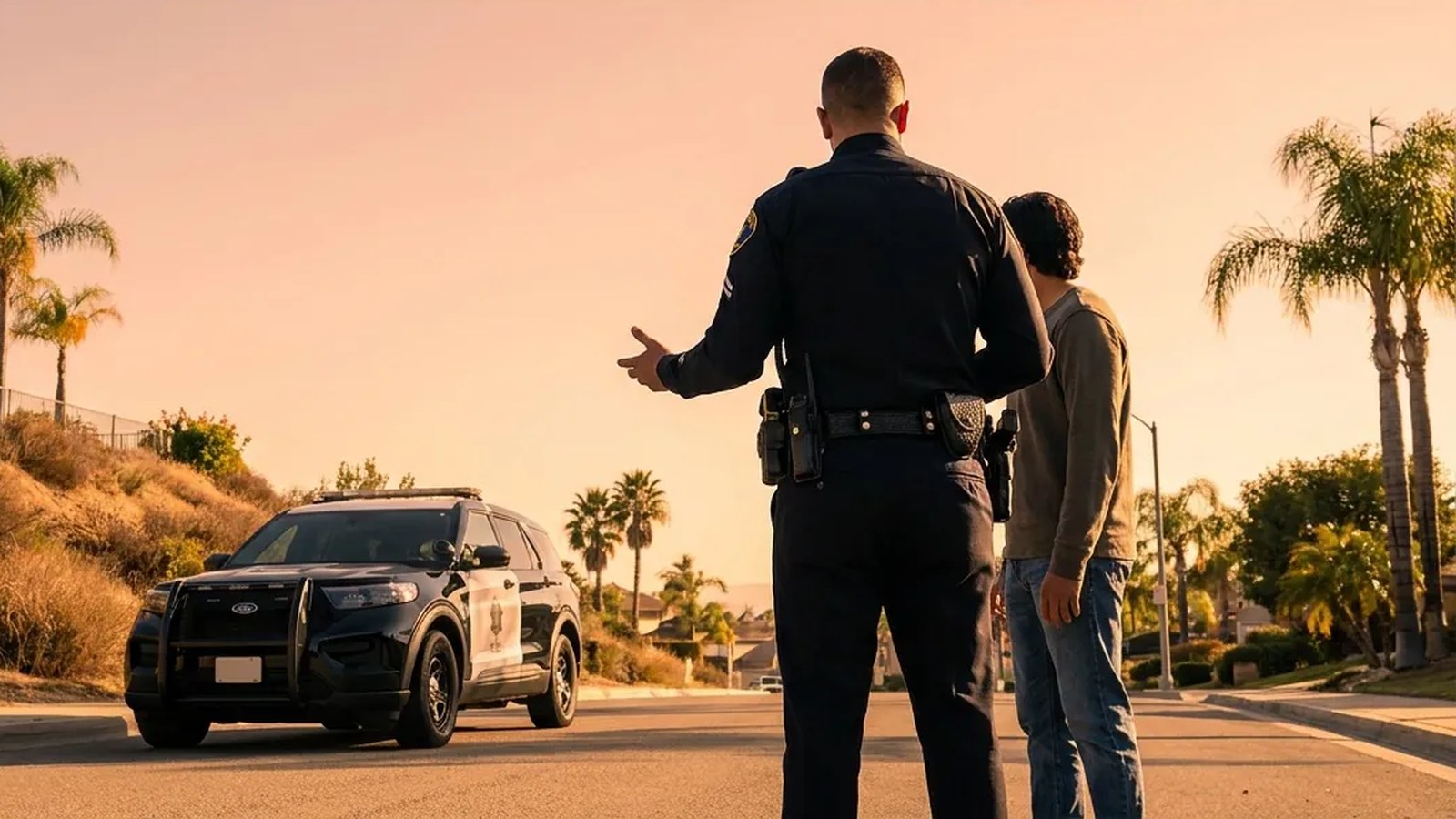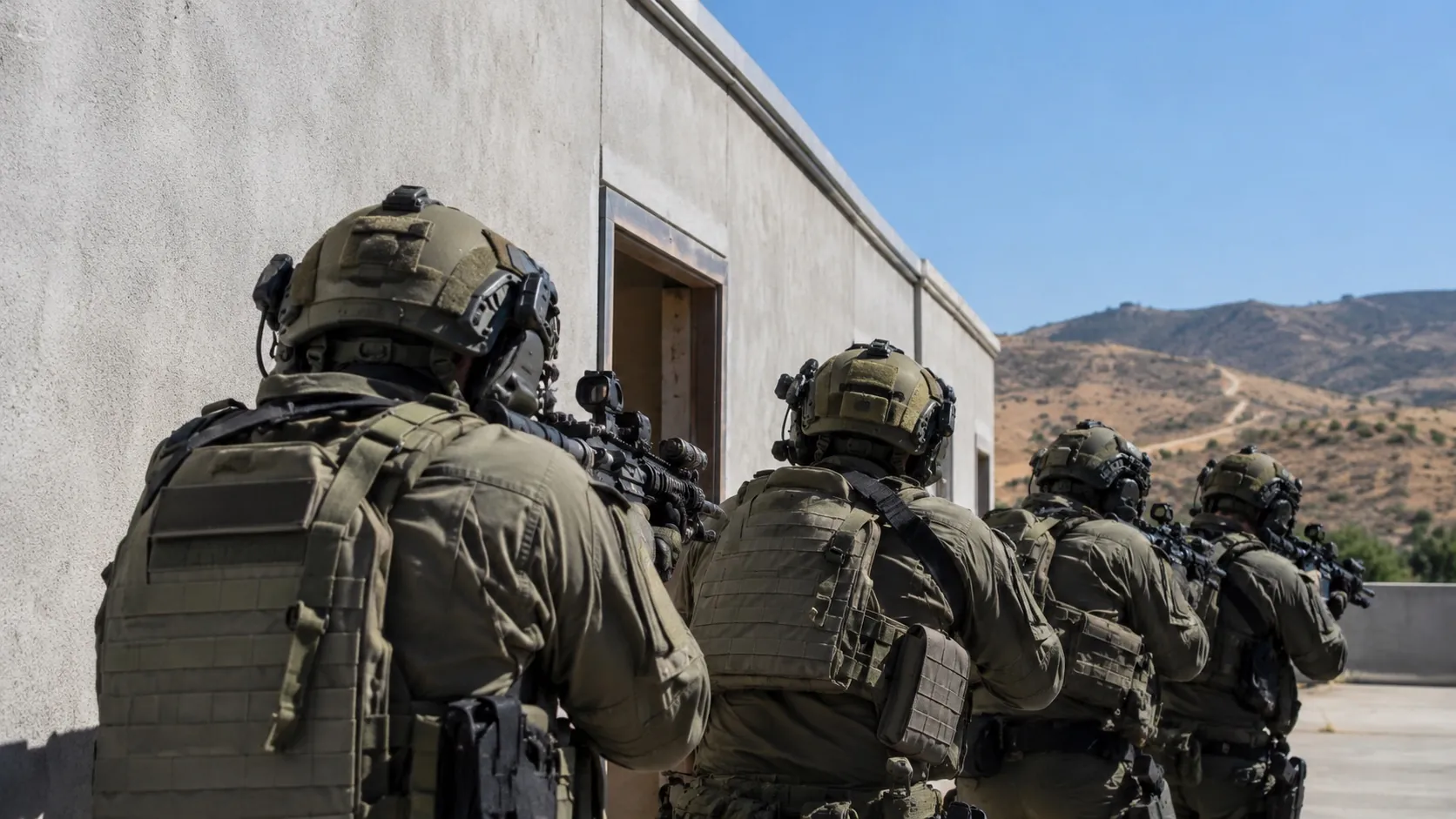

One of the guests on episode 47 of Palavrão Tático recalls that, during a team run through the streets of Los Angeles, people on the sidewalk stopped to applaud. In Brazil, he says, the very same scene once earned a complaint to internal affairs — because the group was holding up traffic. The conversation between Eliel Teixeira, Edwin Wu and Federal District police officers Paulo Brandão and Felipe Teixeira starts there and moves into something few people outside law enforcement know about: how the United States remembers the officer who dies in the line of duty.
Respect you can see on the street — and at the funeral
The hosts are careful to note that everywhere there are people who don't like the police. But in their experience, respect for the uniform in the United States is visible, and it becomes even clearer at a police funeral. Anyone who has been to one, they describe, sees a "sea of cops" and a sea of patrol cars from agencies all over the region, sometimes from other states. It is a sad ceremony and, at the same time, proof that the department does not forget its own.
Police Week: a week set by law
That culture has a date on the calendar. In 1962, President John F. Kennedy signed the federal law that made May 15 Peace Officers Memorial Day and the week in which it falls Police Week. Ever since, Washington has hosted every year, in the first half of May, a series of ceremonies honoring officers killed in the line of duty the previous year.
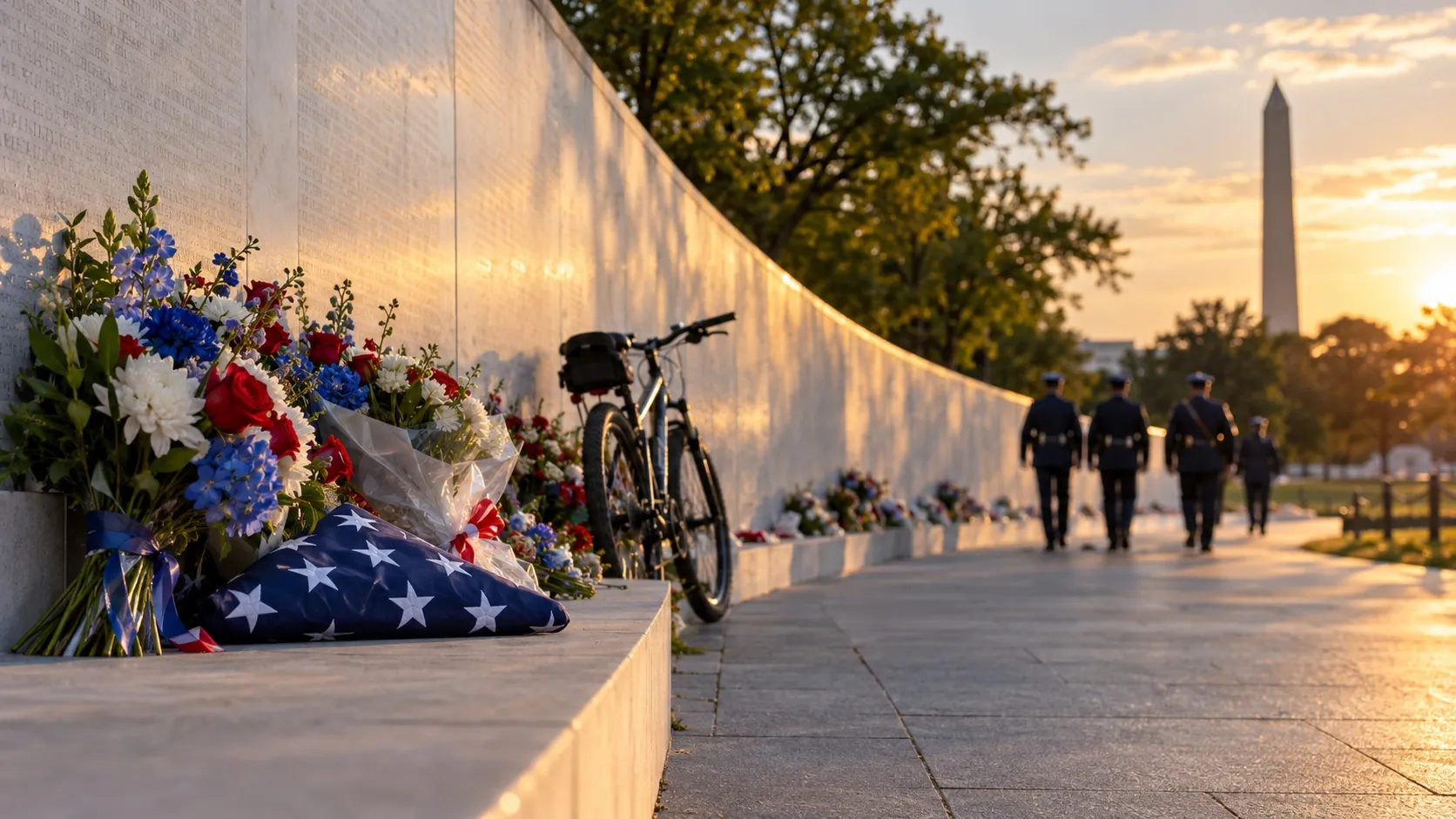
The heart of the tributes is the National Law Enforcement Officers Memorial, dedicated in 1991 at Judiciary Square in Washington: walls engraved with the names of more than 23,000 officers killed in the line of duty throughout the nation's history. Next to it stands the National Law Enforcement Museum, opened in 2018. On the night of the candlelight vigil, the names added that year are read aloud. "Washington gets taken over by cops," the host sums up — tens of thousands of officers, families, colleagues.
California has its own version. The California Peace Officers' Memorial, in Capitol Park in Sacramento, holds the names of the state's officers killed in the line of duty, and every May a ceremony adds the new names.
The Police Unity Tour: riding with a name
One of the week's events is the Police Unity Tour. Founded in 1997 by a New Jersey police officer, it started with a handful of cyclists and grew into one of the largest fundraising efforts for the memorial and the museum. Teams of officers leave from several points across the country and ride for days to Washington, where they enter the memorial together, welcomed by families and colleagues.
Each rider rides in memory of an officer killed in the line of duty. One of the hosts did the ride: roughly 100 miles a day, for three days. On each leg, he says, the group takes a "tactical pause" of a few minutes to drink water and rest, and that is when each rider introduces the others to the officer he is honoring.
The Federal District officer remembered in Washington
The officer he chose was Brazilian. The guests remember a colleague from their unit, known as Dentinho, who died in a bicycle accident during the World Police and Fire Games in the United States — by the participants' recollection, the 2015 edition, held in the Washington area, in Fairfax, Virginia. To his Federal District colleagues, he was an exceptional cop.
The host, who is also from Brasília, asked the organizers whether he could carry his memory. His argument: "He was representing his agency, technically on duty, and he fell on American soil. Why would we treat him any differently?" The answer came right away — "do it for Dentinho." During the breaks along the route, he told the Brazilian officer's story to his American colleagues. Two years later, when the World Games were held in Los Angeles in 2017, he met several Federal District officers who had served with Dentinho. The guests say the welcome he received in Brazil was all the warmer precisely because of what had been done here.
Brasília, December 25, 2000
The guests bring a similar tradition from home. On Christmas night in 2000, three officers from their unit were killed when two patrol cars responding to a call collided and ended up under a bus at the Plano Piloto bus terminal. Ever since, every operational course in the unit that runs through downtown Brasília stops beneath the terminal to remember the three. "It's been made eternal," one of them says.
Grassroots, not official
What ties the two stories together is who does the honoring. In the United States, the hosts observe, the memorial, the museum, the ride and the ceremonies are initiatives of officers themselves and of organizations they created — leadership and government support them, but don't lead them. "If you wait for the government to recognize you, you'll die old," one of them says. Support for families also comes from that network: C.O.P.S. (Concerns of Police Survivors), founded in 1984, assists the spouses, children and parents of officers killed in the line of duty.
The reason is stated plainly in the episode. Institutionally, an officer is a badge number. When one doesn't come home, the news spreads fast on social media and fades just as fast; months later, only those who worked alongside still remember. The family carries the absence forever. Keeping alive the story of those who died is the job of those who remain.
What the two of them think about it
In the episode, Eliel Teixeira and Edwin Wu talk about Police Week as people who have been there, and one of them extends the invitation: anyone who wants to see American officers from across the country gathered together should go to Washington in May. Dentinho's story, told by the man who rode with his name, deserves to be heard in the voice of the one who lived it.
Sources and verification
Public Law 87-726 (1962), which established Peace Officers Memorial Day (May 15) and Police Week. National Law Enforcement Officers Memorial Fund — memorial dedicated in 1991 (Judiciary Square, Washington, D.C.) and National Law Enforcement Museum, opened in 2018. Police Unity Tour — founded in 1997. California Peace Officers' Memorial Foundation — memorial in Capitol Park, Sacramento. Concerns of Police Survivors (C.O.P.S.), founded in 1984. World Police and Fire Games — 2015 edition in Fairfax, Virginia, and 2017 edition in Los Angeles. The death of the officer known as Dentinho, the December 25, 2000 accident in Brasília and the Police Unity Tour ride are accounts from the episode's participants and have not been independently verified.
Who's talking here: Eliel Teixeira and Edwin Wu are active-duty police officers in the Los Angeles area, California — Brazilian-born, American citizens, with long careers in law enforcement. In this episode they host Paulo Brandão, a police officer in Brazil's Federal District for 27 years, and Felipe Teixeira, a police officer in the Federal District for 16 years, who came to Los Angeles for SWAT School.
Note: everything described here applies to California rules — and, on several points, to each officer's specific department. In other U.S. states the rules change; in Brazil, each police force has its own organic law and internal regulations.
Watch this part of the episode:
starting at 16:00 · Palavrão Tático
This article is a reference edition of episode 47 of Palavrão Tático and is subject to edits and editorial additions. For the full conversation, watch the episode. — Updated on 02/10/2026.