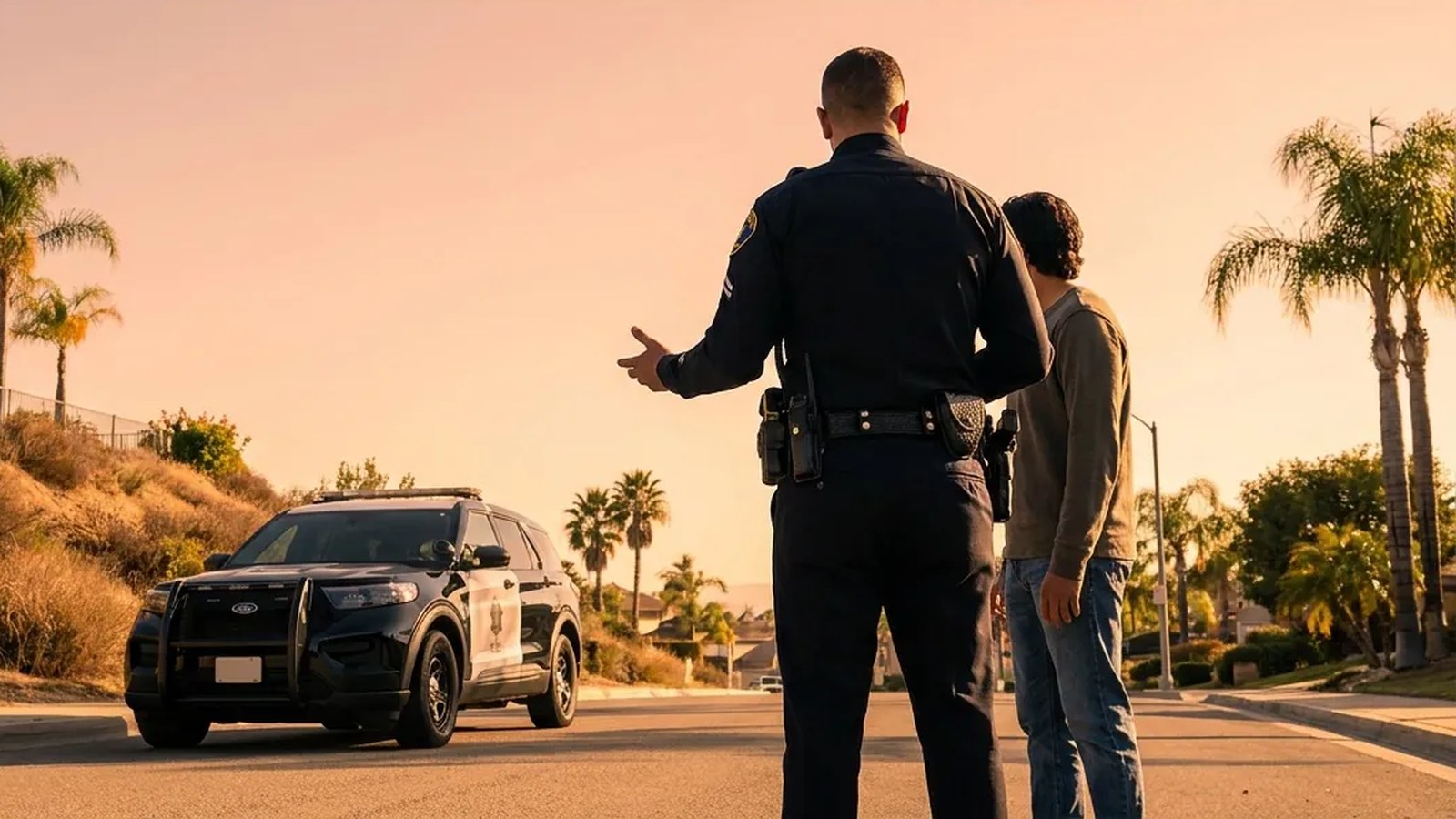

"American police kill too many people." The line shows up in social media debates, in news stories and in bar conversations — in Brazil and in the United States. In episode 47 of Palavrão Tático, Eliel Teixeira and Edwin Wu, active-duty officers in the Los Angeles area, talk with their guests from Brazil's Federal District, Paulo Brandão and Felipe Teixeira, about how to put that kind of claim in perspective — and about the other side of the coin: the officers who throw their careers away.
The size of the system
To understand any number about American policing, you need to know how big it is. There is no such thing as "the U.S. police": according to the latest census of agencies from the Bureau of Justice Statistics (BJS), part of the Department of Justice, the country has about 18,000 state and local law enforcement agencies — from departments with thousands of officers to small-town agencies with a handful of deputies — and close to 700,000 full-time sworn officers, not counting federal agencies. California alone has hundreds of agencies.
That fragmentation is what the hosts point to when someone generalizes from a single case: the experience of one agency, however bad, is not the experience of 18,000.
Contacts, force and deaths
The same BJS measures contact between police and the public through a national survey. In 2018, about 61.5 million Americans age 16 or older — 24% of that age group — had at least one contact with police during the year: a traffic stop, a call for service, a crash, a "good morning" on the street. Among those who had contact, about 2% reported threats or the use of nonfatal force.
Deaths in police shootings are tracked by independent databases, since for years there was no complete official count. The most cited one, built by The Washington Post starting in 2015, has recorded around a thousand deaths a year — the vast majority of them people who were armed. Set against tens of millions of contacts, that comes to a fraction on the order of thousandths of a percentage point — the reasoning the hosts walk through in the episode: the odds of a police contact ending in a death are tiny compared with the volume of interactions.
On the other side, the FBI records every year, through its LEOKA program (Law Enforcement Officers Killed and Assaulted), dozens of officers feloniously killed in the line of duty and tens of thousands of assaults on officers. The hosts point out that a large share of deaths caused by police happen precisely when someone is trying to kill the officer or a third party.
Perspective is not absolution. Every death is investigated — in California, by law, the state attorney general investigates police killings of unarmed civilians — and the absolute number remains high by international standards. What the hosts argue for is a discussion that starts from the real size of the system, not from anecdotes.
The filter at the door
The same care applies to misconduct. One of the hosts points out that American officers go through a rigorous funnel before they get in: at his agency, out of every thousand candidates who apply, only about one and a half end up being hired. Background investigation, credit check, interviews, a polygraph at many departments, a psychological evaluation — the filter exists precisely to stop people who don't fit the profile.
When an officer throws the career away
Even so, there are cases that seem inexplicable. In the episode, the participants mention career officers, well paid, arrested for shoplifting — in the United States and in Brazil as well. "It's a personality disorder, it's some kind of problem," says one of the guests. The hosts also talk about cases they followed over their careers at agencies in the region, including some involving command staff — and about how that is exactly why punishment has to exist.
The participants land in the same place: human conduct is fallible, each person answers for their own actions, and these cases are the exception, not the rule. "It's the exception to the rule of law," one of them sums up.
What California does with those who cross the line
Until 2021, California was one of the few U.S. states with no mechanism to revoke an officer's certification — someone fired for misconduct could be hired by another agency. SB 2, signed that year, changed that: POST gained a division dedicated to investigating serious misconduct (excessive force, dishonesty, abuse of authority, crimes, among others) and can suspend or revoke certification, which removes the officer from the profession statewide.
There is also the pension cost. Under California's public employee pension law (PEPRA), a public employee convicted of a felony related to the job forfeits the retirement benefits accrued from the date of the crime. Over a theft of a few thousand dollars, an entire career — and the pension — can be gone.
What the two of them think about it
In the episode, Eliel Teixeira and Edwin Wu talk about use of force and misconduct cases drawing on decades on the street in Los Angeles. The stories they tell — and the way they tell them, as people who lived each one — are the part of the conversation worth hearing in the episode.
Sources and verification
Bureau of Justice Statistics (BJS), Census of State and Local Law Enforcement Agencies, 2018 (about 18,000 agencies and close to 700,000 full-time sworn officers). BJS, "Contacts Between Police and the Public, 2018" (61.5 million people with contact; about 2% with threats or use of nonfatal force). The Washington Post, "Fatal Force" database (people shot and killed by police since 2015, around a thousand a year). FBI, LEOKA program (Law Enforcement Officers Killed and Assaulted). California Assembly Bill 1506 (2020), investigation by the California Department of Justice of police killings of unarmed civilians. California Senate Bill 2 (2021), decertification by POST. California PEPRA, Government Code § 7522.72. The share of candidates hired at the host's agency and the misconduct cases mentioned are accounts from the episode's participants, not independently verified.
Who's talking here: Eliel Teixeira and Edwin Wu are active-duty officers in the Los Angeles area, California — Brazilian-born, American citizens, with long careers in law enforcement. In this episode, they host Paulo Brandão, a police officer in Brazil's Federal District for 27 years, and Felipe Teixeira, a police officer in the Federal District for 16 years, who came to Los Angeles for SWAT School.
Note: everything described here applies to California rules — and, in several points, to each officer's specific department. In other U.S. states the rules change; in Brazil, each police force has its own organic law and internal regulations.
Watch this part of the episode:
starting at 30:00 · Palavrão Tático
This article is a reference edition of episode 47 of Palavrão Tático and is subject to edits and editorial additions. For the full conversation, watch the episode. — Updated on 02/10/2026.