

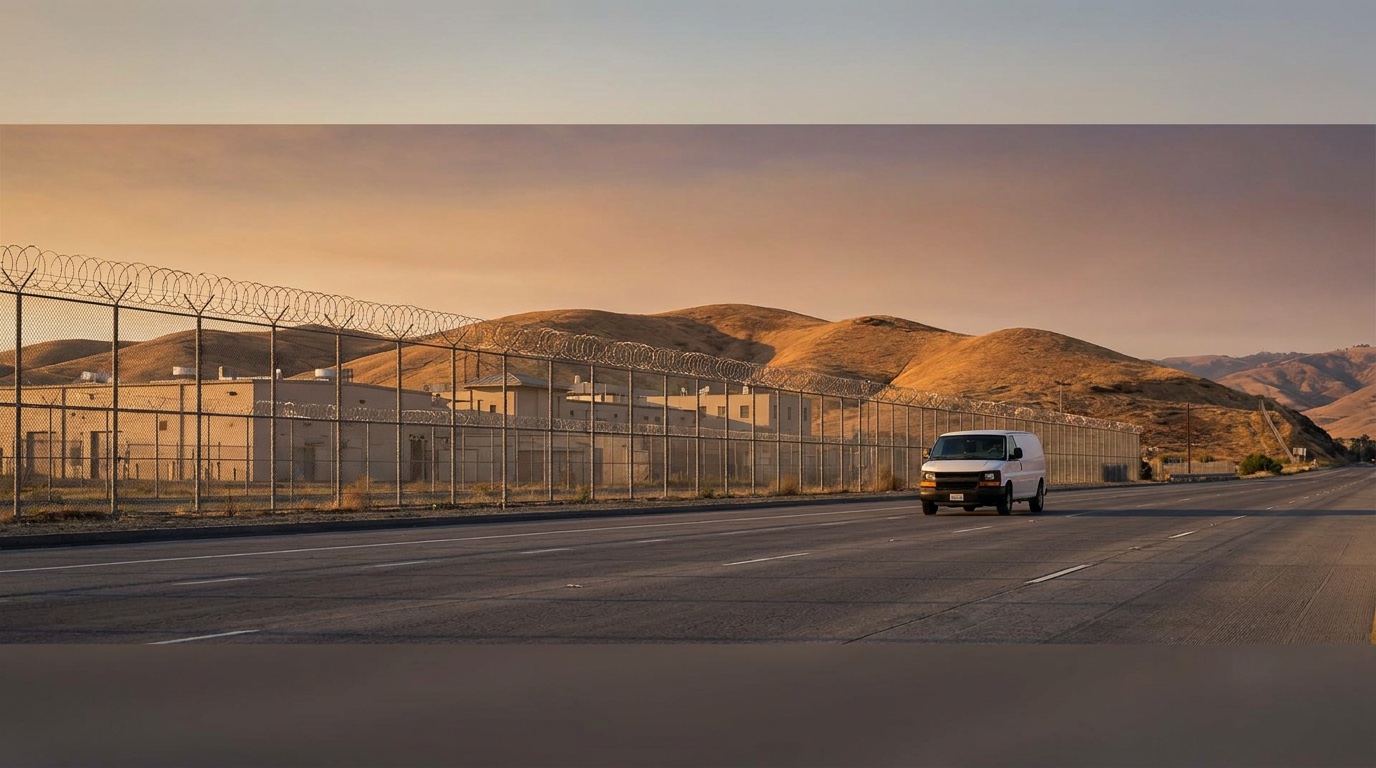
A question that comes up a lot: how can a private company run a jail, or even patrol a city? The answer lies in a difference in understanding between Brazil and the United States.
Regulating isn't the same as monopolizing
In Brazil, the understanding is: "public safety is the State's exclusive domain." Here, it's different — the State reserves the right to regulate police work, not the activity itself. In other words: it sets the minimum standard and enforces it; it doesn't necessarily have to be the one carrying it out.
Private prisons under the same rulebook
Private prisons exist — but under the same rules as a public jail. All custody in the state is regulated by Title 15, which defines what's acceptable: how many inmates per cell, hours of yard time, all of it. A private jail officer goes through the same training academy and receives state certification; the only difference is who signs the paycheck. The training curriculum is the same as a public officer's.
Outsourced extradition and transport
A small county with few officers can't afford to pull people off the street to go pick up a fugitive on the other side of the country. The solution: they contract specialized extradition companies, which transport the inmate from point A to point B — by van or by plane. It's cheaper than keeping a dedicated team for something that doesn't happen every day.
Even patrol can be outsourced
And yes: a city — or even a private company — can hire a private police force to handle patrolling, as long as it stays within the standard the State regulates. The government reserves the right to regulate, outsource, and do it "however it sees fit" — not the obligation to be the police itself.
\\nWho's speaking here: Eliel Teixeira and Edwin Wu are active-duty police officers in the Los Angeles, California area — Brazilian-born, U.S. citizens, with long careers in law enforcement. On Palavrão Tático, they talk cop to cop and to enthusiasts, with no translation into civilian language.
Note: everything described here applies to California rules — and, on several points, to each one's specific department. In other U.S. states (Florida, Texas, New York…) the rules can be quite different.
Watch this part of the episode:
Private prisons: outsourcing and state regulation — starting at 28:50 · Palavrão Tático
This article is a reference edition of episode 39 of Palavrão Tático and is subject to edits and editorial additions. For the full conversation, watch the episode. — Updated on 16/08/2026.