



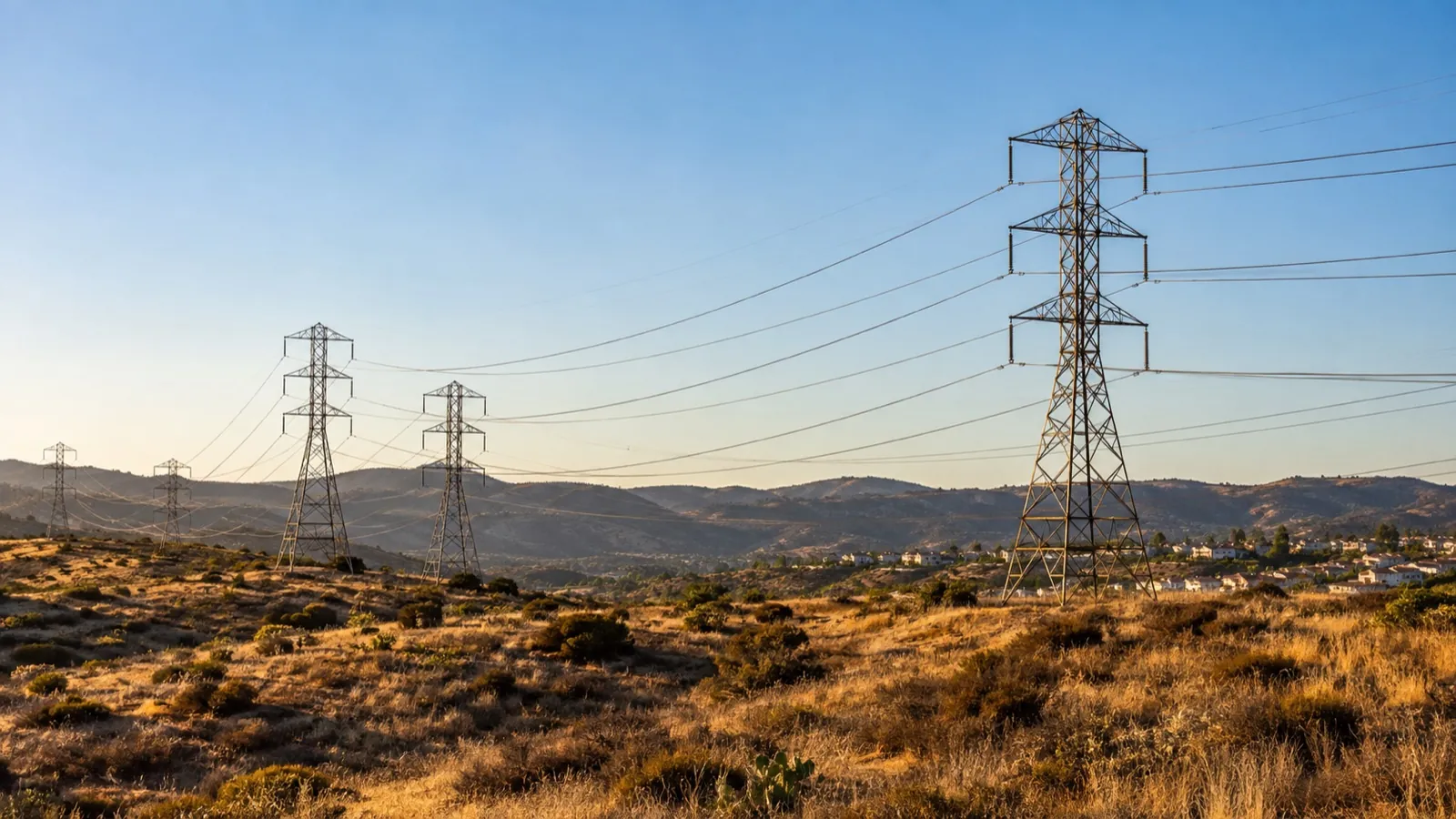
Anyone living in Southern California feels it in their wallet: the electric bill is among the most expensive in the United States. In the episode, guest Tharsio Theodoreli compares it with the rate back when he started installing solar panels.
"Back then it was 17 cents per kilowatt-hour. Today the average is 42 to 50. It tripled." — Tharsio Theodoreli, in the episode
Official numbers confirm the trend, with a methodological caveat: the average rate and the peak-hour rate are different things.
How much rates actually rose
In mid-2026, Southern California Edison's (SCE) average residential rate was around 34.5 cents per kWh. In October 2025, the company applied an increase of about 13%, which raised the average from 31.2 to 35.3 cents. Analyses based on published rates show a cumulative increase above 100% over eight years. In 2018, the average was in the 15-to-17-cent range.
The 42-to-50-cent figures Tharsio cites show up on the bills of heavy users or people who use energy during peak hours. On SCE's time-of-use plans, a late-afternoon kilowatt-hour can cost much more than the average. That's why two families on the same street can feel their rates are very different.
What pushes the bill up
Dina asks whether the increase could be the utilities' reaction to losing revenue to solar. Tharsio rules out that explanation and points to general factors: inflation, wars and oil. Public reports on California rates add causes specific to the state:
- Wildfire prevention and liability: undergrounding lines, vegetation management, safer equipment and damage payments. It has been one of California utilities' biggest cost items in recent years.
- Investment in transmission and distribution: the grid needs to be expanded and modernized to handle more renewable energy and more consumption.
- Fuel and wholesale energy costs, which move with natural gas prices.
- Public programs built into the rate.
A note on one point in the episode: Tharsio says the United States mainly burns coal to generate electricity. According to the Energy Information Administration (EIA), the main source today is natural gas, at about 40% of the country's generation. Coal is around 15% and has been losing ground for years. In California, coal plays an even smaller role.
Demand is growing again, and fast
For almost two decades, electricity consumption in the United States stayed practically flat. That has changed. Tharsio's central argument is that demand is rising on several fronts at once:
- Data centers. The artificial intelligence race has multiplied connection requests from large customers. A 2025 report by the consulting firm Grid Strategies shows that the five-year forecast of peak demand growth jumped from 24 GW in 2022 to 166 GW, with about 90 GW tied to data centers. In California, the Energy Commission projects 1.8 GW of additional data center load on the state grid operator's system by 2030.
- Electric cars, which add thousands of kilowatt-hours a year to each home's consumption.
- Home electrification: heat pumps, induction stoves and electric heaters replacing gas.
- Robots and new technologies, which Tharsio cites as a trend for the coming years.
The effect shows up on hot days. In the California grid operator's energy conservation alerts (Flex Alerts), the request is to cut back on air conditioning and appliances between 4 p.m. and 9 p.m., when solar production drops and consumption stays high. Tharsio mentions the billboards with that request in the San Fernando Valley during summer.
Why rooftop generation helps the grid
Tharsio makes a point that rarely gets discussed: even if a large power plant were built overnight, the transmission grid couldn't handle distributing all that energy. Generation spread across rooftops, close to where energy is consumed, eases the load on lines and substations.
"When you generate energy in homes, you're distributing energy generation. That's helping the grid too." — Tharsio Theodoreli, in the episode
That is, according to him, one of the reasons California began requiring solar panels on new construction: not out of generosity toward the solar industry, but out of necessity for a grid that has to grow.
What this means for buyers and residents
- Put the electric bill in the home budget, alongside the mortgage payment, taxes and insurance. Ask the seller for the consumption history.
- Check your rate plan. A time-of-use plan suited to your usage pattern can lower the bill.
- Shift heavy usage outside the peak: charge the car overnight and run the dishwasher and dryer outside the late afternoon.
- Evaluate solar and batteries with real numbers, not with the promise of a zero bill (see this newspaper's articles on sizing, NEM 3.0 and return on investment).
Who speaks in the episode: Tharsio Theodoreli, a Brazilian who has lived in the United States for more than 20 years and founder of Solar Freedom USA, a solar design and installation company in the Los Angeles area, where he has worked since 2018. The assessments attributed to him reflect the experience of someone working in the industry.
Rates change often and depend on the plan you're on; confirm current prices directly with your utility. Demand projections are estimates and subject to revision.
Sources and verification
- Southern California Edison and analyses of published rates — average residential rate of about 34.5 cents per kWh (June 2026); increase of about 13% in October 2025 (from 31.2 to 35.3 cents).
- California Public Advocates Office (CPUC) — reports on the drivers of electricity rate increases in California, including wildfire-related costs.
- Grid Strategies — National Load Growth Report 2025: five-year peak demand growth forecast of 166 GW, about 90 GW associated with data centers.
- California Energy Commission — data center load projection in the CAISO area (1.8 GW by 2030).
- California ISO — Flex Alerts, typically between 4 p.m. and 9 p.m.
- U.S. Energy Information Administration (EIA) — share of sources in U.S. electricity generation (natural gas as the main source).
- Transcript and chapters of episode 14 of the Cadê Moradia podcast (May 2026), with Dina Silveira and guest Tharsio Theodoreli (Solar Freedom USA).
Watch this part of the episode:
Why the cost of energy tripled and the trend for the future — starting at 14:55 · CADÊ BRAZIL
This article is a reference edition of episode 14 of the podcast and is subject to edits and editorial additions. For the full conversation, watch the episode. — Updated on 16/09/2026.