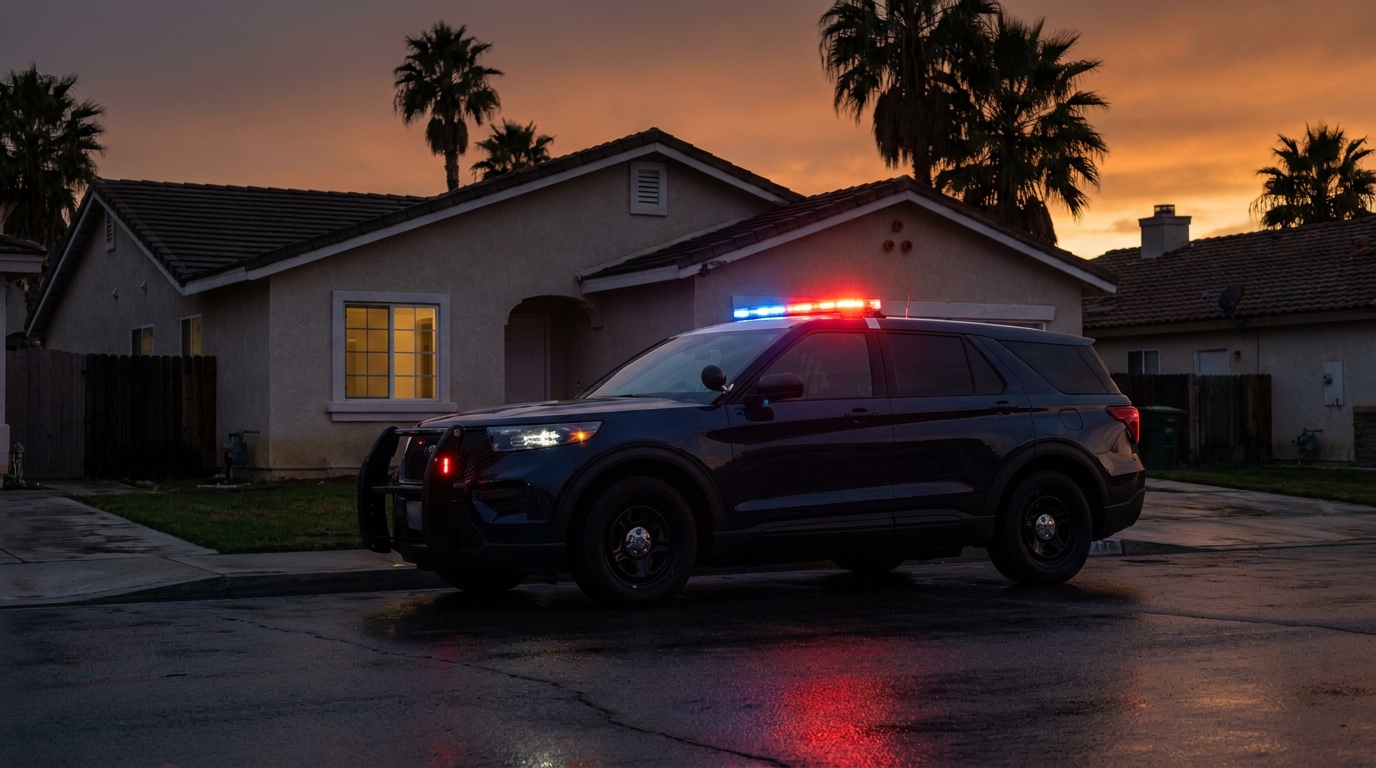
The call came in as a top-priority run: an 18-month-old baby, unresponsive to any stimulus. The officer who took it — a combat medic in the U.S. Army before he became a cop in Texas — ran to the address with no idea the ambulance would take nine minutes to get there. In infant CPR (cardiopulmonary resuscitation), nine minutes is an eternity.
Why police respond to medical calls
In the United States, a 911 call for cardiac arrest, a drowning, or a serious injury usually dispatches police, fire and EMS at the same time — not one after the other, and not as a judgment call the officer makes on the fly. That is simultaneous dispatch: because patrol units are normally spread wider across a city than ambulances are, the police car often gets there first and has to work the call until the medical crew takes over.
"For the folks in the audience who don’t get it: here in the United States, any call that gets fire or the paramedics rolling gets the police rolling too. Usually."
The baby, the monitor cord and nine minutes
In the call he describes, the baby had gotten tangled in the baby-monitor cord inside the crib while the father was playing video games in the next room. The officer got there first, found the child blue and unresponsive, and started CPR by himself, on the bedroom floor, with the father in shock beside him. To get the father out of that scene without physically pushing him away, he used a move common among people who work emergencies: he gave him a concrete task — "go heat up a gallon of water" — just to keep his hands and his head busy for a few minutes.
The ambulance, which felt like half an hour to the man doing CPR, actually took nine minutes — and the paramedic who finally arrived tripped stepping out of the rig and broke his leg, delaying advanced care even further.
The baby survived — and the officer carried the doubt
The child survived after days in the ICU, but was left with hearing damage. The officer received a rescue-of-the-year award from a regional medical school — given to him and to the partner who arrived right after him, not to the EMS crew that ran late. And he carried, on his own, a question with no easy answer: did the rescue breaths, done mouth-to-mouth because no barrier mask was available, contribute to the baby’s hearing loss?
"I had to make peace with myself, with the mother, to work out: was it me who caused this? Because that’s survivor’s guilt (the guilt of the one who walked away fine when someone else in the same situation didn’t), right?"
Moral injury: the name the profession rarely uses
Police mental-health literature has been adopting, over the last few years, a specific term for this kind of wear: moral injury — distinct from post-traumatic stress disorder, though related to it. Where PTSD grows out of fear and the threat to your own life, moral injury grows out of guilt and moral doubt: having made, in seconds, a choice you can never be sure was the right one, in a situation where every choice carried a cost.
It is that weight — not exposure to physical risk itself — that emergency professionals (police, fire, EMS, military) carry quietly, often with no language of their own for what they feel. Recognizing the term is the first step toward treating the damage for what it is: occupational, not personal weakness.
Who is talking here: Eliel Teixeira and Edwin Wu are active-duty police officers in the Los Angeles area, California — Brazilian-born, American citizens, with long careers in law enforcement. On Palavrão Tático they talk about policing to cops and to people who follow the job, with no translation into civilian language.
Heads up: everything described here applies to California rules — and, on several points, to each of their specific departments. In other states (Texas, Florida, New York…) the rules can be very different.
Watch this part of the episode:
Infant CPR, dual dispatch and moral injury (approximate timestamp) — starting at 55:50 · Palavrão Tático
This article is a reference edition of episode 43 of Palavrão Tático and is subject to edits and editorial additions. For the full conversation, watch the episode. — Updated on 15/08/2026.