



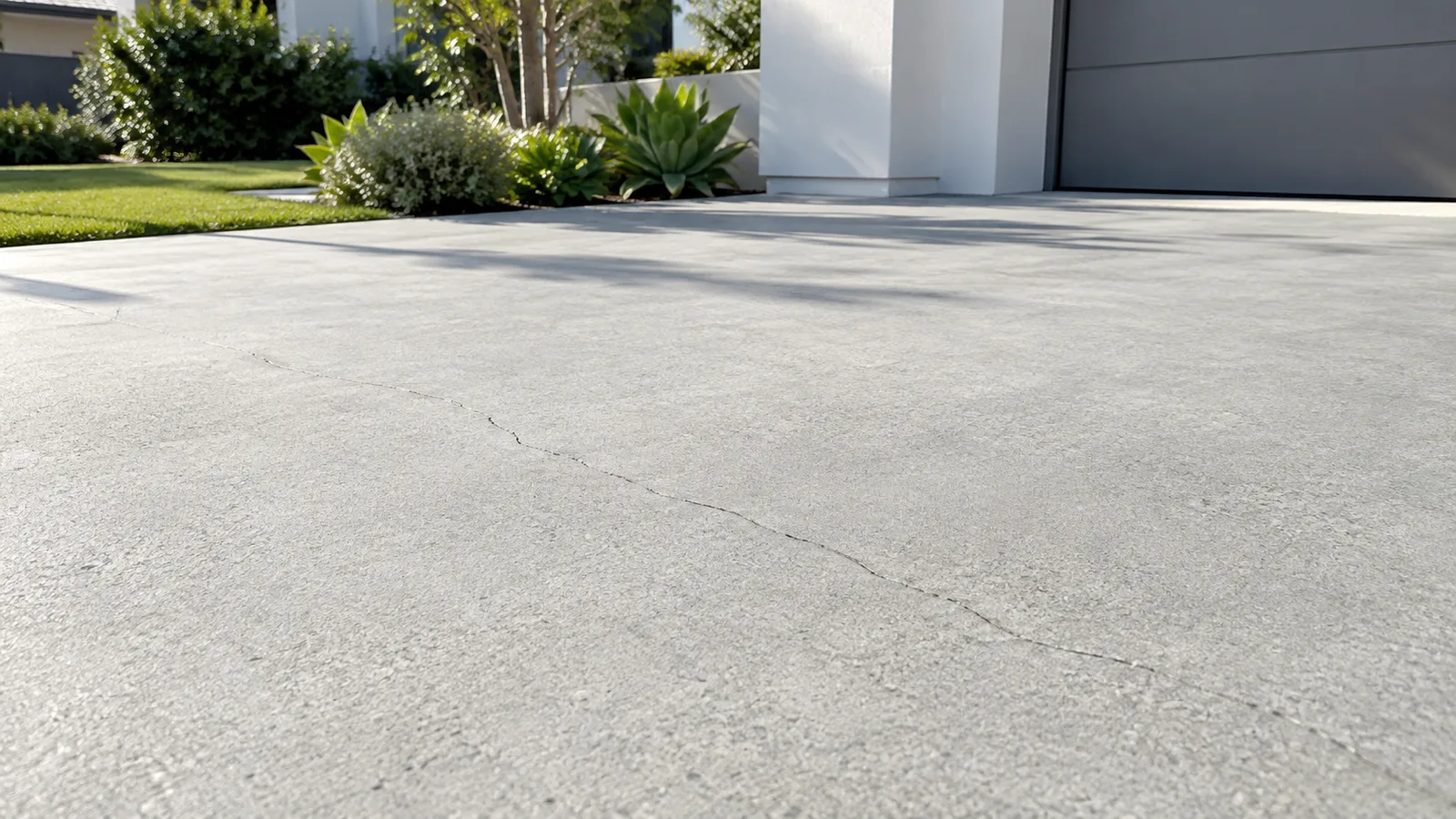
Few things scare a first-time buyer like the word "crack" in a report. In the episode, inspector Aguiar says he hears the same question all the time — "do you think it's going to come down?" — and that the answer, the vast majority of the time, is no.
California is earthquake country, and houses move. What the buyer needs to learn is how to tell a normal crack from a sign that calls for a specialist.
A state that shakes every day
Aguiar says in the episode that California records an average of a hundred earthquakes a day. The exact figure varies with the source and the measurement criteria, but the core idea is right: the seismographic network records dozens of tremors a day in Southern California alone, and the U.S. Geological Survey (USGS) counts around 10,000 earthquakes a year in that region — the vast majority far too small to be felt.
Add to that clay soil that expands and contracts with moisture, tree roots, the natural shrinkage of concrete and the age of the house. The result: hairline cracks in the exterior stucco, in the slab and in the driveway (driveway) are almost universal. One of the show's realtors confirms it: every driveway he visits has cracks, including the one at his own house.
Two kinds of foundation, two readings
To read cracks, it helps to know what the house is sitting on:
- Concrete slab (slab foundation): the house is built directly on a concrete pad. There is no space underneath, so the inspector can't see the foundation — only indirect signs.
- Raised foundation (raised foundation): the wood framing sits on a concrete base, with a gap underneath, the crawl space. The inspector can get in and look at the base, the supports, the moisture and the plumbing.
When it's normal
The cases told in the episode help calibrate:
- At one property owned by a realtor on the show, built on a slab, pulling up the carpet revealed the entire floor cracked, with wide fissures. But the doors and windows opened and closed normally, with no cracks in the walls. The inspector explained the concrete had been poured with too much water — a workmanship defect that causes shrinkage, with no structural damage.
- On another purchase, an inspection through the crawl space found a crack in the foundation. The repair cost about $5,000 and was negotiated with the seller. An inexperienced buyer might have walked away from the house; for someone who knew the subject, it was a one-off repair.
- In San Diego, Aguiar counted 15 cracks in the concrete foundation of a house with a crawl space. None of them, in his view, meant the house was at risk of coming down; the fix is done with bolted-on metal reinforcements.
"That doesn't mean your house is going to fall down. That doesn't mean anything." — Aguiar, in the episode
When to call a structural engineer
One of the show's realtors sums up the practical sign she usually gives clients, and Aguiar confirms it: doors and windows that start sticking, with cracks running out of the corners, can point to structural movement. The most widely accepted warning signs are:
- doors and windows that stopped closing properly, especially with diagonal cracks at the corners;
- wide cracks — Aguiar's reference point is an opening you can fit your hand into, down in the crawl space — or cracks that grow over time;
- a noticeable slope in the floor or a step between the two sides of a crack;
- exterior walls that bulge or lean;
- cracks that line up with moisture, a leak or erosion of the ground.
In those cases, the path isn't for the general inspector to hand down a verdict, but to refer you to a licensed structural engineer, who evaluates the cause and, if needed, the repair. Within the contingency window, that report can support a repair request, a credit or walking away.
The bolts the insurer wants to see
Aguiar mentions a detail of houses with a raised foundation: the piece of wood sitting on the concrete base has to be bolted to it. He has gone back to a house just to photograph the bolts an insurer demanded to see.
The reason is seismic. In older houses, especially those built before 1980, the framing may simply be resting on the foundation — in a strong earthquake, it slides off. The standard retrofit combines anchor bolts and, when there are short walls in the crawl space (cripple walls), bracing with plywood panels. California has a program, the Earthquake Brace + Bolt, that offers a grant of up to $3,000 for that retrofit in selected ZIP codes.
A buyer's checklist
- Open and close every door and window during the showing.
- Ask whether the house has a crawl space and whether the framing is bolted to the foundation.
- Ask for photos of the relevant cracks in the report, with something for scale.
- Call a structural engineer when the warning signs are there — don't wait for closing.
- Check the history: foundation retrofits and repairs should have a city permit.
This text is for informational purposes and does not replace an evaluation by a licensed structural engineer.
Sources and verification
- U.S. Geological Survey (USGS) and Southern California Earthquake Data Center — frequency of recorded earthquakes in Southern California (about 10,000 a year, most imperceptible).
- California Earthquake Authority — Earthquake Brace + Bolt program: a grant of up to $3,000 for anchoring and bracing houses with a raised foundation.
- Transcript of episode 8 of the Cadê Moradia podcast (April 2026). The timestamp given is approximate, interpolated between the chapters "Cuidado com a maquiagem" (25:55) and "Como funciona a inspeção de mofo" (39:53).
Watch this part of the episode:
Cracks and foundation (approximate timestamp) — starting at 33:25 · CADÊ BRAZIL
This article is a reference edition of episode 8 of the podcast and is subject to edits and editorial additions. For the full conversation, watch the episode. — Updated on 17/09/2026.