

In the second episode of the segment "911: Emergency in Los Angeles", when the conversation reaches the "bare essentials" every Brazilian should leave organized, Pastor Miguel Albanês puts the doctor right next to the family: besides the contacts of relatives and friends, you need a doctor — and someone who knows who that doctor is. Host Jason Lanzarini uses himself as an example of what not to do.
"I don't have a doctor"
Jason says that, a few days before the recording, he checked his blood pressure and got 160 over 112. He has health insurance — "because it's mandatory in California" — but has never been to a doctor here, and nobody knew about his condition. "If something happens to me, at least someone will know I had high blood pressure." The American Heart Association classifies pressure of 140 over 90 or higher as stage 2 hypertension, which calls for medical follow-up, and 180 over 120 or higher as a hypertensive crisis, which calls for immediate care.
What a doctor has to do with death
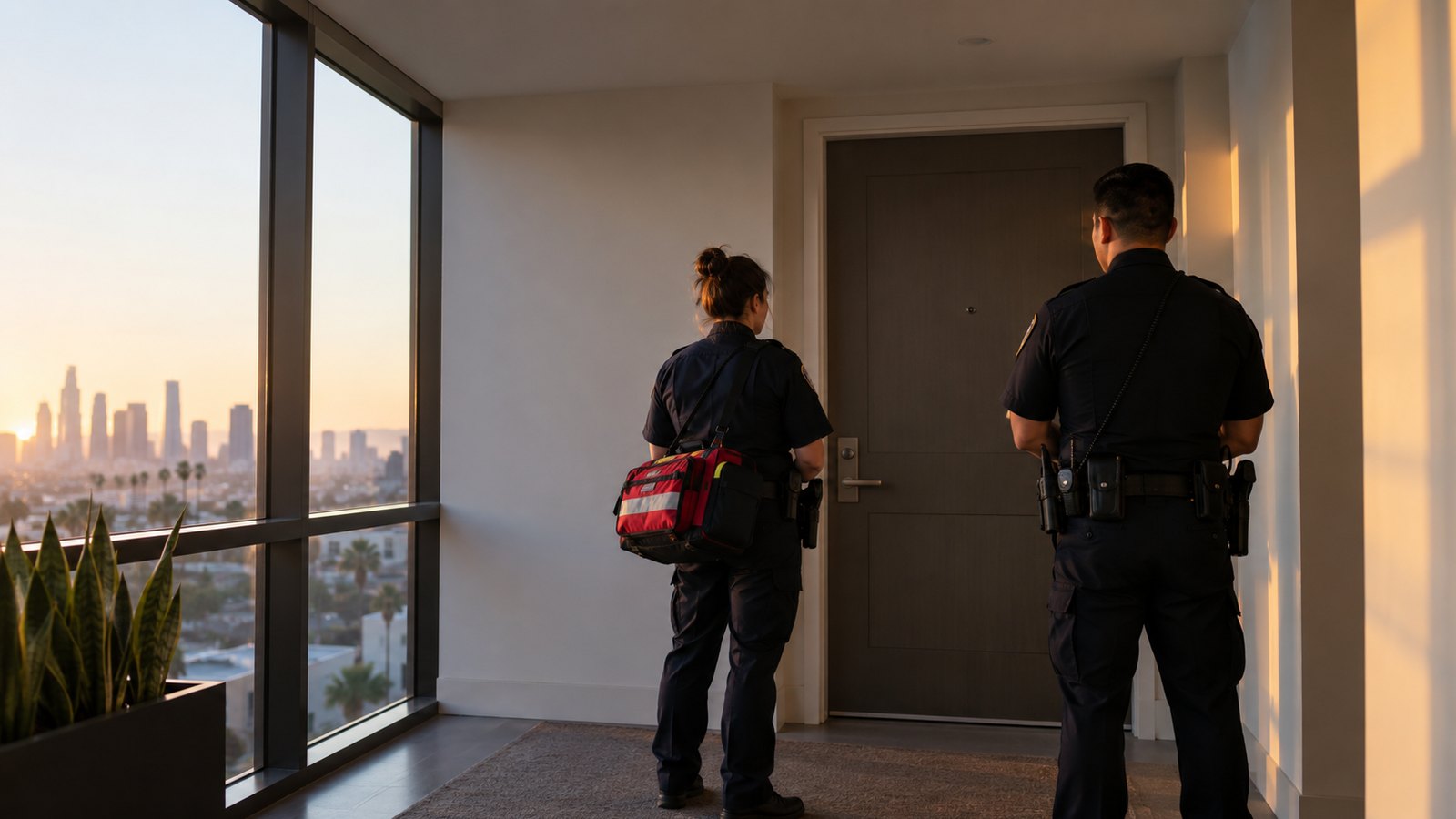
The reason, explained in the case that opened the segment, is practical. Under California law, the county coroner investigates sudden or "unattended" deaths — when the person was not under a doctor's care, or had not seen one in the previous 20 days. When there is a doctor who knows the history and confirms the death is consistent with the illness they were treating, the coroner can release the body without taking it in for examination, and the doctor signs the cause of death. That is what happened with Maria, the pastor's friend: the paramedics assessed her, the doctor confirmed, and the body went straight to the funeral home.
Without that, the body goes to the Medical Examiner, may undergo an autopsy, and the release takes longer — and, as explained in another article in this series, every day of waiting costs the family money. In the following episode, the pastor adds: besides the doctor's name and phone number, someone should know what medications you take and what you are allergic to. "Every time you go to a doctor here, the first question is: what medications are you taking?"
Health insurance is mandatory in California
Jason is right about the mandate: since 2020 California has required residents to have health coverage throughout the year, with a penalty on the state income tax return, unless they qualify for an exemption. Those without coverage through work can buy a plan through Covered California, the state's official marketplace, often with an income-based subsidy. Having insurance, however, is not the same as having a doctor: many plans require you to choose a primary care physician (PCP) — and to book the first appointment.
Medi-Cal: what changed for immigrants
In the episode, the pastor points out that many people in California have Medi-Cal, the public health program, "for free", and that nobody should pass up that opportunity. The picture has changed since the recording, and it is worth updating:
- In 2024, California became the first state to offer full Medi-Cal to low-income adults of any age, regardless of immigration status.
- With the 2025-26 state budget, the state froze, starting January 1, 2026, new enrollment in full Medi-Cal of adults 19 and older without satisfactory immigration status. Those already enrolled can stay, as long as they renew on time. The same package provided for ending dental coverage for this group in July 2026 and charging a monthly premium starting in 2027.
- Emergency Medi-Cal (coverage limited to emergencies and pregnancy) remains available to anyone who meets the income criteria, whatever their status.
Public program rules change with every budget. Before concluding you don't qualify, check the Medi-Cal website or the county social services office.
No insurance and no Medi-Cal: there are still options
- Community clinics (the so-called federally qualified health centers) charge on a sliding scale based on income, without asking about immigration status.
- In Los Angeles County, the My Health LA program provides free primary care to low-income residents with no other coverage, whatever their status.
- In any emergency, hospitals are required by federal law to screen and stabilize the patient, whether or not they can pay.
What to do with this
Turning the episode's advice into tasks:
- get a primary care physician and go to the first appointment;
- write down their name, phone number and address;
- leave this information, your list of medications and your allergies with the people in your emergency network — and in your phone's Medical ID.
Sources and verification
- California Government Code, section 27491 — deaths the coroner investigates, including those without medical attendance in the previous 20 days.
- California Department of Health Care Services (DHCS) — Medi-Cal: expansion to adults of any immigration status (2024) and changes in the 2025-26 budget (freeze on new enrollment starting in 2026).
- Covered California and Franchise Tax Board — state health coverage mandate and penalty.
- Los Angeles County Department of Health Services — My Health LA program.
- American Heart Association — blood pressure categories.
- Emergency Medical Treatment and Labor Act (EMTALA) — federal emergency care obligation.
Who is speaking here: Brasileiros em Los Angeles is the podcast of the Brazilian Community in the Los Angeles area, hosted by Jason Lanzarini, who since 2014 has run the Community's Facebook groups in California. In this second episode of the segment "911: Emergency in Los Angeles", he talks with Pastor Miguel Albanês of the First Brazilian Baptist Church of Los Angeles (PIBBLA), who for years has supported Brazilian families through emergencies and deaths.
Please note: the rules described apply to California and, on several points, to Los Angeles County. Procedures change in other states. This text is general information, not legal or medical advice: for a specific case, consult a professional licensed in California.
Watch this part of the episode:
The need to have a regular doctor and to tell someone about your health condition — starting at 26:55 · ☆ Brasileiros em Los Angeles
This article is a reference edition of episode 2 of the podcast and is subject to edits and editorial additions. For the full conversation, watch the episode. — Updated on 07/10/2026.