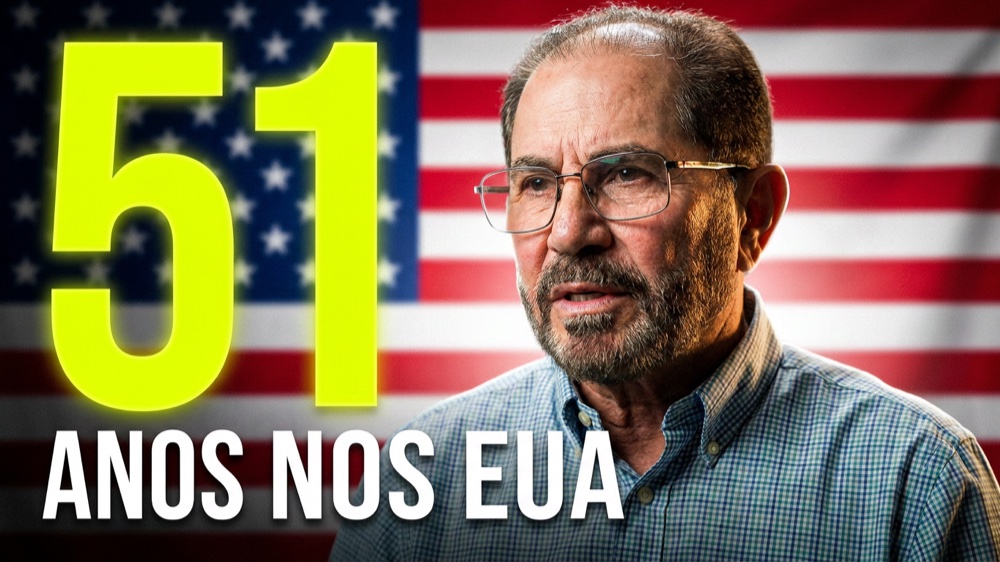

In the middle of a conversation about death and paperwork, the second episode of the segment "911: Emergency in Los Angeles" turns to an emergency nobody in California can ignore: the earthquake. "And what if both of them die in the accident?" asks Pastor Miguel Albanês, about couples who assume one will take care of the other — and from there the conversation moves to the day the ground really shakes.
Northridge, 1994: what the pastor found
The pastor arrived in Los Angeles shortly after the Northridge earthquake of January 17, 1994, and settled in Newhall, near the epicenter. He speaks as a witness to what he saw in Northridge and as someone who supports families through emergencies, not as an emergency expert. The quake, magnitude 6.7, struck at 4:31 a.m., killed dozens of people and caused tens of billions of dollars in damage. One of the symbols of the tragedy was the collapse of the interchange connecting Interstate 5 to State Route 14: an LAPD motorcycle officer riding to work in the dark did not see that the roadway had fallen. The interchange now bears his name — Clarence Wayne Dean.
The pastor recalls that for months he had to drive on narrow roads because the freeway was unusable, and that he saw buildings that "pancaked" onto the cars. It is an accurate memory of a well-known problem: apartment buildings with open ground-floor parking held up by thin columns — the type of construction that collapsed in Northridge and that the City of Los Angeles, since 2015, has required owners to retrofit. The rule applies to specific building types, on deadlines set by the city.
The "Big One"
Scientists at the U.S. Geological Survey (USGS) have spent decades modeling a major earthquake on the San Andreas Fault in Southern California — the so-called "Big One." There is no way to predict the date. What is known is that a quake of that size would leave entire regions without water, power and gas for days, with roads cut off and hospitals overwhelmed. That is the window in which residents have to fend for themselves.
CERT: the free course that prepares residents
Host Jason Lanzarini says that in 2017 he took CERT (Community Emergency Response Team) training with a Brazilian who was a volunteer instructor, and that he holds the certificate: the course does not give anyone authority to replace a paramedic or firefighter. CERT is a national program run locally by fire departments — in Los Angeles, by the city's Fire Department (LAFD), and in cities such as Santa Monica, by the local departments. The basic course is free and teaches, over a few weeks, what to do in the first hours after a disaster: basic first aid, light search and rescue, putting out small fires, shutting off gas and water, and organizing your block. You sign up through your own city's fire department website.
One lesson from the course, recalled in the episode, sums up the logic: in a serious disaster, even police officers and firefighters will take care of their own families first. That is why every household needs to be able to sustain itself for a while. Those without room to store supplies can arrange the basics with neighbors or keep a small go-bag ready.
What emergency agencies recommend
- Early warning on your phone: California has a public earthquake early warning system (ShakeAlert). The free MyShake app and wireless emergency alerts can give a few seconds of warning before the shaking arrives — time to get down and protect yourself.
- During the shaking: drop, cover your head and neck, and hold on (drop, cover and hold on). Do not run outside while the ground is shaking.
- Supplies: water (the federal guideline is one gallon, about 3.8 liters, per person per day for at least three days; California agencies recommend more), non-perishable food, medication, a flashlight, a battery-powered radio, a portable charger and cash. Also diapers and infant formula, hygiene items and pads, ongoing prescriptions and pet food.
- Family plan: a meeting point and a contact outside the region — the same logic as the emergency network discussed in the episode.
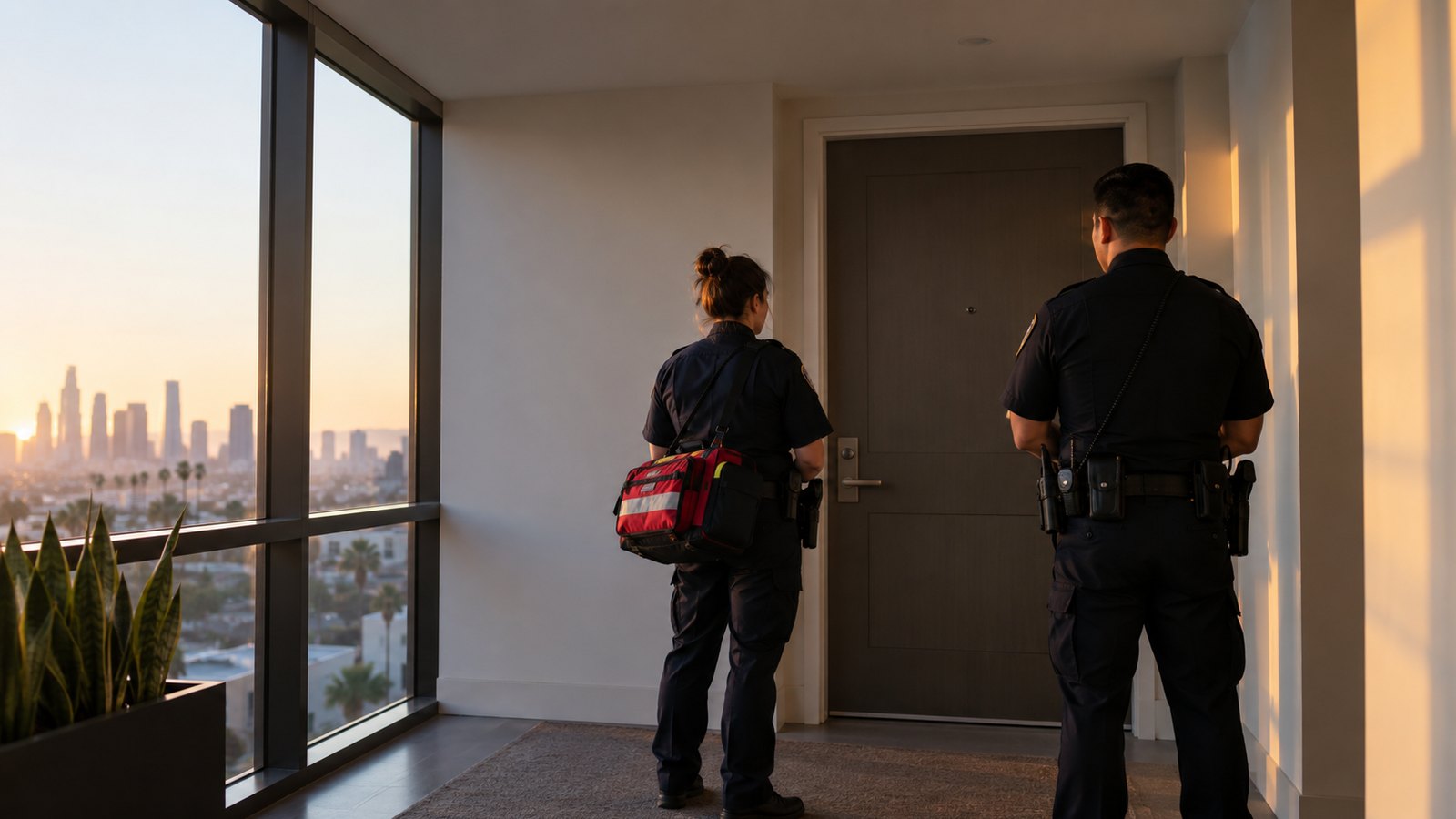
- Help for anyone: in an emergency, call 911 and seek shelter: help does not depend on immigration status.
- Insurance: as a rule, homeowners insurance does not cover earthquake damage — check your own policy. Coverage is separate, offered by insurers and by the California Earthquake Authority.
Public order after a disaster
Jason and the pastor also talk about the 1992 unrest in Los Angeles and the fear of looting in a chaotic scenario — it is worth having emergency contacts written down on paper and agreeing with someone in your network who checks on whom in the first hours. The takeaway is preparation: people who live alone and don't yet speak English are the most exposed when services stop — which is why the network around you matters so much. Knowing your neighbors and being part of a network — church, group, building — is part of the kit.
What the episode covers
What you can do today is the simplest part: put together an emergency kit and download MyShake on your phone. The CERT instructor will join a future episode of the segment to revisit the training and explain how the city turns into chaos after a major earthquake.
Sources and verification
- U.S. Geological Survey (USGS) — 1994 Northridge earthquake (magnitude 6.7) and San Andreas Fault scenarios.
- California Department of Transportation / City of Los Angeles — Clarence Wayne Dean Memorial Interchange (I-5/SR-14).
- City of Los Angeles — mandatory seismic retrofit program for vulnerable building types (2015).
- Los Angeles Fire Department — CERT program; FEMA — Community Emergency Response Team.
- Cal OES — MyShake and the ShakeAlert system; Ready.gov — emergency kit; California Earthquake Authority — earthquake insurance.
Who's talking here: Brasileiros em Los Angeles is the podcast of the Brazilian Community in the Los Angeles area, hosted by Jason Lanzarini, who since 2014 has run the Community's Facebook groups in California. In this second episode of the segment "911: Emergency in Los Angeles," he talks with Pastor Miguel Albanês of the First Brazilian Baptist Church of Los Angeles (PIBBLA), who for years has supported Brazilian families through emergencies and deaths.
Note: the rules described apply to California and, in several respects, to Los Angeles County. Procedures differ in other states. This text is general information, not legal or medical advice: for a specific case, consult a professional licensed in California.
Watch this part of the episode:
Natural disaster preparedness: earthquake risk in California and CERT training (emergency response teams) — starting at 33:44 · ☆ Brasileiros em Los Angeles
This article is a reference edition of episode 2 of the podcast and is subject to edits and editorial additions. For the full conversation, watch the episode. — Updated on 07/10/2026.